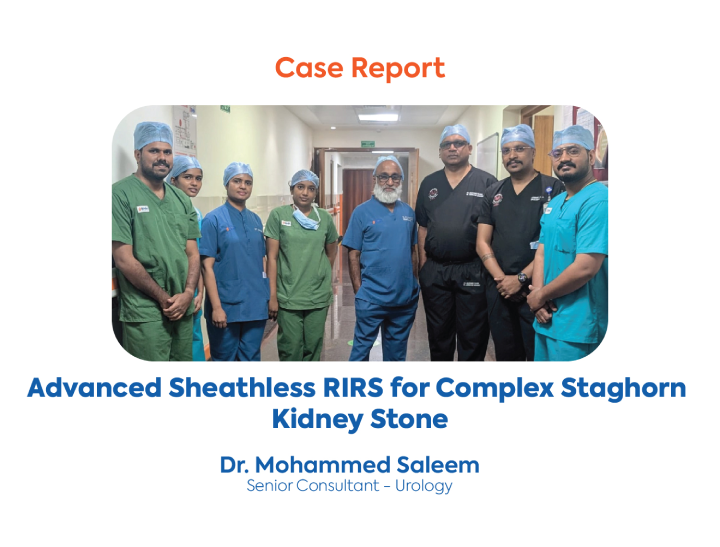
Published with the inputs from Dr Bichu Joseph Maliakal, Associate Consultant, Urology, Baby Memorial Hospitals- Kozhikode
Retrograde Intrarenal Surgery (RIRS) is a minimally invasive procedure used to treat kidney stones and certain kidney conditions. It involves passing a flexible ureterorenoscope through the urinary tract (without any cuts on the body) to access the kidney. Using a laser, stones are broken into fine dust and removed, allowing safe and scarless treatment.
What is RIRS?
RIRS is a endoscopic, scarless surgery where a flexible ureterorenoscope is passed via the urethra bladder and ureter into the kidney. A laser is then used to fragment and dust kidney stones.
When is RIRS recommended?
RIRS is advised for patients with:
Kidney stones less than 2 cm or larger stones in certain circumstances
Multiple stones in different locations of the kidney
Stones in difficult-to-reach locations of the kidney
Yes. RIRS is safe and highly effective when performed by expert urologists. Risks like kidney infection, bleeding, or ureteral injury are rare and manageable.
What is the recovery like after RIRS?
Most patients go home after surgery
Minimal pain compared to other surgeries
Return to routine activities in 1-2 days after discharge
Ureteric Stent may be placed temporarily to keep the ureteric wide open and help the stone fragments and stone dust pass out with the urine
What size stones can RIRS treat?
RIRS can treat stones up to 2 cm effectively. For larger stones, PCNL may be recommended, but RIRS remains an option in selected cases, but one may need more than one sitting
How does RIRS compare to other kidney stone treatments?
PCNL: Recommended for very large stones; more invasive
Medical Dissolution Therapy: For smaller radiolucent stone.
ESWL: Uses shockwaves, but not effective for all stones, was commonly used earlier, but now ESWL is out of vogue. Choice depends on stone size, location, and patient profile.
Can kidney stones come back after RIRS?
Yes, kidney stones can recur due to metabolic or dietary factors. Preventive steps include hydration, dietary modifications, and regular follow-ups with a urologist.
Connect with Our Experts Today
If you are suffering from kidney stones or recurrent urinary problems, the Urology Team at Baby Memorial Hospital (BMH) provides advanced RIRS (Retrograde Intrarenal Surgery) with safe, scarless treatment, quick recovery, and expert long-term care.
We use cookies to enhance your browsing experience and provide personalized content.
By continuing to use our website, you consent to our use of cookies.
Read our Cookie Policy