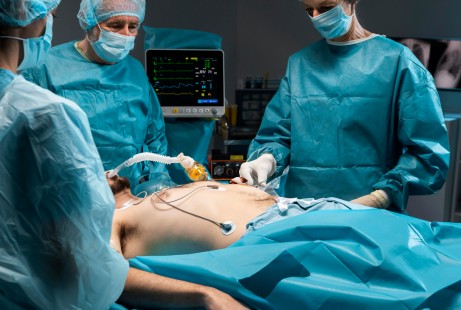
When someone hears the word surgery for a digestive issue, it feels unexpected. Because in the mind, stomach problems and surgery don’t usually go together. Most digestive problems don’t start as something serious. They begin small. Acidity that comes and goes. A little discomfort after meals. Occasional bloating. You manage it. Adjust food. Maybe take medicines for a few days. And most of the time, it settles. That’s why we don’t think about it as a serious concern.
Not every GI problem needs surgery
This is important to understand early. Most gastrointestinal (GI) conditions are treated without surgery. Doctors usually start with:
- Medicines
- diet changes
- lifestyle adjustments
And for many people, that works well. Conditions like acidity, mild infections, or early-stage issues often improve with proper care. So if you are thinking, will this lead to surgery?
The answer, in most cases, is no.
Then why does surgery come into the picture?
It usually comes later. Not at the beginning. Surgery is considered when:
- symptoms don’t improve despite treatment
- the condition keeps coming back
- or the problem is structural, not just functional
That last part matters. Because some problems are not just about how the system is working; they are about something physically wrong inside. And medicines alone cannot fix that.
A simple way to understand it
Think of it like this. If the problem is irritation, medicines help. If the problem is blockage, growth, or damage, then something more may be needed. That “something more” is where GI surgery comes in.
Common situations where surgery may be needed
Not every patient will go through this, but certain conditions often lead to surgical treatment.
Gallbladder problems
Gallstones are common. Some people have them without symptoms. But when they start causing repeated pain, infection, or blockage, surgery becomes the better option. Removing the gallbladder is a standard procedure in such cases.
Hernias
A hernia doesn’t heal on its own. It may stay stable for a while, but it doesn’t reverse. Over time, it can increase in size or cause discomfort. That’s why surgery is usually advised at some point.
Appendicitis
This is one of the clearer cases. Once the appendix is inflamed, delaying treatment can lead to complications. So, surgery is often done early.
Intestinal issues
Some conditions affect the intestines directly. Blockages, severe inflammation, or certain diseases may require surgical correction. This is not very common in general cases, but it does happen.
Liver and pancreas conditions
These are more complex. In cases like tumors, severe damage, or certain chronic conditions, procedures like liver resection BMH or advanced interventions may be required. Similarly, pancreatic conditions may need specialised care, including pancreatic surgery Kozhikode in advanced centres. These are not first-line treatments, they are carefully planned steps when needed.
One important example; Whipple surgery
Some patients may hear about Whipple surgery Kerala. It sounds complicated, and honestly, it is. This procedure is usually done for conditions affecting the pancreas or nearby organs. It involves removing part of the pancreas, small intestine, and other surrounding structures. But here’s the key point, it is done only when clearly required. Not for routine digestive problems.
How doctors decide surgery is needed
This decision is not made in one visit. It builds over time. Doctors look at:
- symptoms
- test results
- response to previous treatment
If medicines are not helping…if the condition is worsening…if scans show something that needs correction…
Then, surgery becomes a logical step. Not a sudden one.
A common situation many patients face
This happens often. A person keeps having the same issue for months. Takes medicines. Feels better. Then symptoms return. This cycle continues. At some point, tests show a clear cause. And that’s when the discussion changes. From “managing symptoms”
to “fixing the problem.”
Fear around surgery; where it comes from
Most people don’t fear the treatment. They fear the unknown.
Questions like:
- How serious is it?
- How long will recovery take?
- Will life be normal again?
These are natural. But it helps to understand that modern GI surgery has improved a lot. Techniques are more precise. Recovery is often smoother than before.
Recovery; not the same for every case
This is something patients should keep in mind. Recovery depends on:
- the type of surgery
- overall health
- the organ involved
Some procedures have faster recovery. Others, especially complex ones, take time. But in both cases, following medical advice makes a big difference.
Life after GI surgery
Most patients return to normal routines gradually. But there may be some adjustments. Diet changes. Regular follow-ups. Medication, if needed. The body adapts. And over time, things become more stable.
One mistake people make
They delay. Either they ignore symptoms too long… or they hesitate even after doctors advise surgery. Both can create problems. Because early treatment is usually simpler. Delayed treatment becomes more complex.
And another mistake; rushing into surgery
On the other side, some people panic. They hear about surgery and want it done immediately. Without full understanding. That’s also not ideal. Surgery should be a planned decision. Not a reaction.
So what is the right approach?
Somewhere in between. Observe symptoms. Try medical treatment properly. Follow doctor advice. And when surgery is suggested, understand why. Ask questions. Clarity helps reduce fear.
Final thought
Most digestive issues don’t need surgery. But some do. The difference lies in how the condition behaves over time. GI surgery is not a failure of treatment. It is a step taken when it becomes the most effective solution. Whether it’s a simple procedure or something advanced like Whipple surgery Kerala, liver resection BMH, or pancreatic surgery Kozhikode, the goal is the same, to treat the problem at its root. And sometimes, that step brings long-term relief that medicines alone cannot provide.