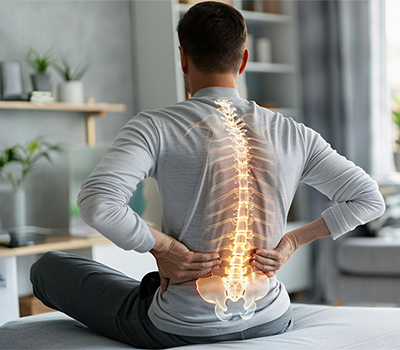
Back and neck pain are not abstract problems. They are about sitting without bracing. They are about driving without the shoulder tightening. They are about sleep that breaks at 3 a.m. It is about a leg that starts to tingle, then starts to feel weak. It is about a hand that loses grip. It is about work, stairs, and daily movement shrinking to whatever your spine will tolerate.
What “spine specialist” actually means
“Spine specialist” is not a single job title. It usually refers to one of these roles:
- Orthopaedic spine surgeon (orthopaedic surgery): treats structural spine disease; operates when anatomy and symptoms justify it.
- Physiatrist (PM&R) / spine medicine: non-surgical spine care; coordinates rehab, exercise-based recovery, and guided injections when appropriate.
- Pain specialist: focuses on pain control strategies, interventional procedures, and function restoration.
- Physiotherapist: the backbone of conservative care—when the diagnosis is stable and the plan is movement-based.
The right “spine specialist” depends on whether your problem is primarily mechanical, neurologic, or urgent.
The milestones that evolved spine care
Imaging became selective instead of automatic
A major modern shift is this: most uncomplicated low back pain does not require early imaging. Multiple Choosing Wisely recommendations advise avoiding routine imaging in the first weeks unless red flags exist, because early imaging does not improve outcomes and increases downstream over-treatment.
Evidence replaced bed rest as the default
Guidelines moved routine management away from prolonged rest and toward structured noninvasive care (activity, physical approaches, and targeted medications where appropriate), with escalation when symptoms persist or neurological issues appear.
Orthopaedic surgery became more targeted
Surgery did not “replace” conservative care. It became more precisely indicated: severe or progressive deficits, instability, cord compression (myelopathy), and persistent radicular pain with correlating imaging after appropriate nonoperative management.
When to see a spine specialist
See a spine specialist soon if any of these are true:
- Pain lasts more than a few weeks, limits function, or keeps recurring.
- Pain travels down an arm or leg with numbness/tingling (suggests radiculopathy).
- You have objective weakness (foot drop, grip weakness, repeated tripping).
- You have symptoms that suggest spinal stenosis (leg pain/heaviness with walking that improves with sitting or bending forward).
- Neck pain plus hand clumsiness, balance problems, or gait changes (possible cervical myelopathy—needs prompt assessment).
- History of trauma.
- Back pain associated with tumour / malignancy.
- Back pain associated with fever.
Do not wait for an outpatient appointment if you have red flags
Seek emergency evaluation if you have signs consistent with cauda equina syndrome, such as new urinary retention/incontinence, loss of sensation around the saddle area, or significant/progressive leg weakness. Red-flag pathways also include severe or progressive neurological deficits and suspicion of serious underlying pathology.
What happens at a proper spine evaluation
A high-quality consult is structured. It does not start with MRI.
-
Classify the pain pattern
- Mechanical pain: worse with certain movements/positions; often localized.
- Radicular pain: shoots down arm/leg with numbness/tingling; follows a nerve root pattern.
- Myelopathic pattern (cord): clumsy hands, balance issues, gait change, hyperreflexia.
-
Perform a neurological exam
Strength testing, reflexes, sensation, gait, and root-level mapping. This determines urgency and whether imaging is actionable.
-
Decide whether imaging changes management
Guidance discourages routine early imaging in uncomplicated low back pain without red flags.
Imaging becomes appropriate when:
- red flags exist, or
- symptoms persist and escalation is being considered, or
- neurological deficits are present and you need anatomical correlation for intervention.
The common conditions spine specialists treat
- Lumbar strain / facet-related pain (often improves with time + targeted rehab)
- Disc herniation with sciatica (leg-dominant pain; sometimes improves without surgery)
- Lumbar spinal stenosis (walking-limited symptoms)
- Cervical radiculopathy (arm pain/numbness from neck)
- Degenerative spondylolisthesis / instability (mechanical pain ± nerve symptoms)
- Compression fractures (especially with osteoporosis)
- Spinal deformity (scoliosis, kyphosis, listhesis)
- Spinal tumors / malignancy
- Spinal infection
The goal is not a label. The goal is matching symptoms to anatomy and choosing the least risky path that restores function.
When orthopaedic surgery becomes relevant
Orthopaedic surgery enters the conversation when there is a structural reason to operate and a functional reason to accept surgical risk.
Common surgical triggers include:
- Progressive or severe neurological deficit (weakness worsening)
- Cord compression patterns (myelopathy)
- Cauda equina syndrome (emergency decompression pathway)
- Persistent radicular pain with correlating imaging after structured conservative treatment
- Instability or deformity producing persistent symptoms or neurologic compromise
A practical routing rule that works
- Pain without red flags + no objective weakness: start with conservative spine care (physiotherapy/rehab + clinician-guided plan).
- Pain with arm/leg radiation, numbness, or mild weakness: spine specialist evaluation.
- Progressive weakness, bladder/bowel changes, saddle numbness, severe neurologic signs: emergency evaluation the same day.
Quick routing table
| Situation |
Best first step |
| New back/neck pain without red flags; function mostly intact |
Conservative care + monitored follow-up |
| Pain radiating down arm/leg with numbness/tingling |
Spine specialist evaluation |
| Objective weakness (foot drop, grip weakness), worsening over days/weeks |
Spine specialist urgently; imaging likely |
| New urinary retention/incontinence or saddle numbness |
Emergency evaluation (possible cauda equina) |
| Persistent pain >4–12 weeks affecting life despite structured care |
Spine specialist for escalation options |
Conclusion
Back and neck pain become easier to manage when the route is disciplined: identify the pattern, rule out emergencies, avoid low-value early imaging, and escalate only when symptoms, deficits, and anatomy line up.
FAQs
1) When is back or neck pain “normal strain” and when is it a reason to see a spine specialist?
Most new back or neck pain is mechanical and improves over days to a few weeks with activity modification and structured physiotherapy. It becomes specialist-level when pain persists beyond a few weeks, keeps recurring, limits daily function, or starts showing a nerve pattern—such as pain traveling into an arm or leg, numbness/tingling, or weakness—because those features suggest compression or irritation that may need targeted evaluation.
2) What is the difference between mechanical pain, radicular pain, and cord-related symptoms?
Mechanical pain is typically localized and linked to movement or posture, while radicular pain follows a nerve path and often shoots down an arm or leg with tingling or numbness. Cord-related symptoms can include hand clumsiness, balance changes, gait disturbance, and coordination issues, especially in the neck, because they can indicate spinal cord compression and require prompt assessment.
3) Why don’t good clinicians order an MRI immediately for every episode of back pain?
Because early imaging in uncomplicated back pain often does not change outcomes and can create anxiety and unnecessary procedures by highlighting age-related changes that are common even in people without pain. Imaging becomes valuable when red flags exist, neurological deficits are present, or symptoms persist long enough that escalation is being considered.
4) What symptoms should be treated as urgent or emergency spine warning signs?
New bladder or bowel control issues, urinary retention, saddle-area numbness, rapidly progressive leg weakness, or severe neurologic deficits should be treated as emergencies because they can represent serious compressive syndromes where timing affects recovery.