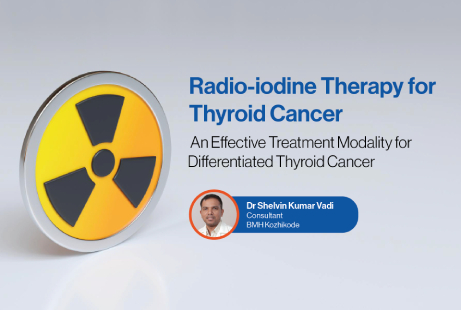
Radioiodine therapy (I-131) is one of the most proven and effective treatments for differentiated thyroid cancer, especially the papillary and follicular types that form the majority of thyroid cancer cases. After thyroid surgery, many patients are advised to undergo this targeted treatment to safely eliminate any remaining thyroid tissue or hidden cancer cells. In this article, we explain what radioiodine therapy is, when it is recommended, how the procedure works, its safety, possible side effects, and the essential precautions to follow. With proper treatment and timely follow-up, most patients achieve excellent long-term outcomes - making thyroid cancer one of the most treatable cancers today.
What is radioiodine therapy and what is it used for?
Radioiodine therapy constitutes the clinical use of radioactive iodine isotope I-131 for treatment of thyroid cancer patients. Among the prevailing four different types of thyroid cancer, this is an effective treatment modality for the differentiated types of thyroid cancers (Papillary and follicular variants), which form the bulk of thyroid cancer subtypes.
What we mean by the term differentiated thyroid cancer?
Papillary and follicular thyroid cancers together known as differentiated thyroid cancer constitute more than 90% of all types of thyroid cancer. "Well-differentiated" means the cancer cells resemble the normal cells from which they grew. Well-differentiated cancers grow more slowly and have a better prognosis than undifferentiated cancers, which are more aggressive and have poorer outcomes. When a patient is diagnosed with a differentiated thyroid cancer, he/she should know that they are having a cancer type with highly effective treatment modalities available offering excellent prognosis and survival rate. This knowledge should alleviate most of their worries.
Where does the role of Radioiodine therapy fit in the treatment algorithm for thyroid cancers?
In most cases, diagnosis of thyroid cancer is the result of an evaluation process of a nodule or mass detected in the front of the neck, in most cases by patient or sometime on an incidentally detected thyroid nodule in a neck ultrasound or CT. When clinically suspected, A needle biopsy or fine needle aspiration of the nodule is needed to obtain cells for careful evaluation under a microscope to determine if a nodule is benign (not cancer) or malignant (cancer). Once diagnosed as thyroid cancer, the most effective and definite treatment modality is almost always surgery (total removal of both lobes of the thyroid by an elective surgery called total thyroidectomy). Role of radioiodine therapy almost always begin once the definitive surgery is done.
What are the roles/instances in which radioiodine therapy is needed?
> This treatment can be used to ablate (destroy) any thyroid tissue not removed by surgery or
> To treat thyroid cancer that has spread to lymph nodes or other parts of the body.
Do all patients after total thyroidectomy need radioiodine therapy?
It depends on the risk profile of the patient after total thyroidectomy. Small cancers of the thyroid gland that do not seem to have spread, which can often be removed completely with surgery, usually does not require radioactive iodine therapy. These patients are usually put on suppressive doses of thyroxine and are followed up with regular biochemical tests and neck ultrasound.
What is the role of a diagnostic whole body radioiodine scan prior to initiating radioiodine therapy?
Whenever a patient is referred for a radio-iodine therapy, first thing to do is a diagnostic whole body radioiodine scan. It requires a time gap of around 3 weeks after the surgery (without supplementing thyroid hormone) to do a diagnostic study. This time gap is given to allow for the TSH (Thyroid stimulating hormone) to rise above a reasonable level post-surgery. For RAI therapy to be most effective, you must have a high level of thyroid-stimulating hormone (TSH or thyrotropin) in the blood. This hormone is what makes thyroid tissue (and cancer cells) take up radioactive iodine. Once the TSH level is above a certain level, the diagnostic study is done with a very small oral dose of 131-Iodine (same drug with which treatment is done). After a gap of 24 hour the scan is done. This scan diagnoses whether patient has any significant residual thyroid left after surgery and also the presence of cancer spread in the form of unremoved neck nodes or distant spread in the lung, bone or any other part of the body.
What is recombinant TSH and does everybody need it before diagnostic scan?
A downside of the time gap given for increasing your TSH level is that it can cause the symptoms of hypothyroidism, including tiredness, depression, weight gain, sleepiness; constipation, muscle aches, and reduced concentration. While these can be mild in a normal patient, those with uncontrolled diabetes or severe cardiac disease etc may experience worsening of symptoms. So the other way to raise TSH levels without withholding thyroid hormone is to give an injectable form of thyrotropin (Thyrogen) before the scan. But this drug is available at a high cost at present.
Once the diagnostic scan is done, how does the radio iodine therapy carried out?
Depending upon the finding on your diagnostic whole body study, as well as considering your risk profile (estimated upon result of your blood tests/cancer subtype and aggressiveness of your cancer) the dose or the amount of radioiodine to be given is first estimated. If you have more disease burden the dose also is increased accordingly.
The radioactive iodine I-131 is taken orally in the form of a drink in liquid form or capsule. After taking it, patient might be releasing radioactivity outside, which is why he/she is recommended to stay alone in a single room under constant observation. Only after the radioactivity levels have come down below the prescribed levels, the patient is allowed to come out of the room. So most of the patients may need an admission for one or more days after the procedure. A post therapy whole body scan is also done after one or two days of taking therapy to confirm the absorption of radioiodine in the desired sites of tumor spread.
Does every patient need to get admitted for radioiodine therapy?
No. Those patients with a limited disease mostly in the surgical bed of thyroid may need a minimum fixed dose to ablate (destroy) it. These patients need not get an admission and can go home after the therapy.
What are the precautions or preparations one should take on course of radio-iodine therapy?
Before taking radio-iodine
If you are female of reproductive age group, you must be confirming that your are not pregnant as pregnancy is an absolute contraindication for this therapy. If you are not confident it is always better to rule out pregnancy with a urine pregnancy test. Couple who intent to plan for a child need to delay it for a minimum of 6 month after taking radio-iodine. These steps are taken to avoid any potential harm the unborn child (fetus) may get from radio-iodine, though the chances are less.
Nursing mothers breastfeeding their child also need to report to your doctor. Since radio-iodine is concentrated in breast milk you need to stop breastfeeding after taking therapy.
Along with not starting thyroxine supplementation after surgery until the therapy is done, certain foods rich in iodine (seafood, certain multivitamin capsules) need to be avoided prior to the procedure. All other food can be taken normally. Some topical formulations (like Iodex) contain high concentration of iodine and should be avoided.
After taking the radioactive iodine
Radio-iodine is taken in an empty stomach. The patient is restricted from eating or drinking anything for some time (~ 2 hour), so that the body is given it’s time to absorb the iodine. Post the absorption, he/she can eat normally. The patient is advised to drink plenty of fluids and urinate frequently. Intermittent use of sour candies/sialagogues is advised to increase saliva secretion to eliminate radioiodine from salivary glands post therapy. He/she is advised to follow certain radio-safety precautions for approximately 2 weeks post radioiodine therapy, to reduce radiation exposure to the patients close relatives and family members and to the common public. Patient needs to physically distant with others. This is to be strictly followed when you have a pregnant lady or young children at home. However no strict isolation is needed. Patient can talk with their caretakers keeping a distance of 2 meters and spending minimum needed time as possible. Since radioiodine is excreted in urine and sweat, it is advised to flush the toilets twice after using. Clothes of the patients may be washed separately. He/she is advised not to do any cooking work. All these precautions may be taken for a maximum of 2 weeks post taking radioiodine. There is no dietary restriction and patient can take the food of their choice. Post radioiodine therapy you will be started on suppressive dosed of thyroxine (thyroxine hormone) which have to be taken once daily in early morning.
How does radioiodine work?
After taking radioiodine, it is absorbed from the stomach and is specifically taken by the thyroid gland or its remnants and also in the thyroid cancer metastases if any. Once taken by these cells, radioiodine destroys them with the radiation released. This occurs slowly over a couple of weeks or months. Most of the radioiodine in other parts of the body is eliminated in few days through urine. Very smaller amounts are released in sweat or saliva.
Do I need to worry over the side effects of radioiodine therapy?
Radioiodine therapy is a safe, well tolerated, time tested and established form of therapy for thyroid cancer which is implemented all over the world. Most of the patients taking radioiodine don’t complain any side effects. Minor side effects may include mild pain or tenderness over the neck, nausea or sometimes vomiting which can be controlled with medications. Sometime there may be pain or swelling to salivary glands which can be avoided with frequent use of sialagogues post therapy (chewing gum, sour candies or tamarind). Most of the time patients are worried about the long term side effects like developing secondary cancer or the radiation specific side effects. Long term studies show very minimal risk of long term side effects (like development of cancer) and may occur after cumulative doses of large doses of radioiodine (this may require multiple doses). In a patent needing multiple doses, initiation of radioiodine therapy is done always looking at the risk benefit ratio and if the benefit outweighs the risk then only therapy is given.
Men who receive large total doses of radiation because of many treatments with RAI may have lower sperm counts or, rarely, become infertile. Sperm banking is advised to such patients requiring multiple doses of radioiodine or after a large cumulative dose. Radioiodine is never given to pregnant or lactating women. It is also recommended to postpone pregnancy for ~6 months after treatment, to avoid the potential chances of risk to the fetus. At same time, No ill effects have been noted in the children born to parents who received radioactive iodine in the past. Temporary hair loss which may occur after chemo or radiotherapy DOES NOT occur with radioiodine therapy.
What follows after radioiodine therapy?
After a dose of radioiodine, doctor prescribes you with thyroxine (thyroid hormone) with appropriate dosage according to your weight. Patient need to strictly adhere to thyroxine intake and non-compliance or stopping thyroxine for long term may result in potential chance of growth of cancer cell if any. Regular medical follow-up with your treating doctor is needed. A radioiodine whole body scan is done after 6 month of radioiodine therapy to see the effect of therapy. Depending upon the result of the whole body scan and other blood tests further treatment or follow up is planned.
Will I need more than one dose of radio-iodine?
In most of the patients with low disease burden (residual thyroid or neck nodes only) a single dose of radioiodine is sufficient to destroy the remaining tumor cells. In patients with large disease burden (post-surgery) in form of cancer spread to other organs of the body, more than one dose may be needed.
What should be a patient’s right approach towards thyroid cancer?
A thyroid cancer patient should understand that it is a very treatable and curable form of cancer with excellent prognosis, except for some rare variants. Surgery is almost always the definitive treatment followed by radioiodine therapy if required. With right form of treatment and regular follow-up, a quality life can be lived like a normal person and all the worries of being diagnosed with cancer should not refrain patients from taking the right treatment at the right time.