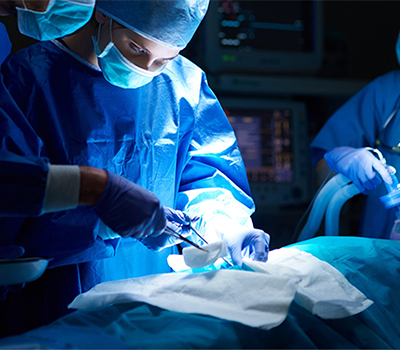
Choosing laparoscopic surgery is a practical decision. It is about fixing the condition without a long recovery from the incision. It is about getting out of bed sooner. It is about breathing deeply without guarding. It is about returning to food and routine sooner when the case is uncomplicated. It is about fewer wound-related problems when the patient and procedure are a good match.
Inside the operating room, results depend on choices the patient never sees. The method of entry. The placement of ports. The pressure used to create working space. The quality of the camera view. The certainty of anatomy before anything is cut or sealed. The control of bleeding through long instruments. The handling of inflamed tissue without tearing. The containment of contamination in infected cases. The closure of port sites to prevent bleeding and hernia. These are not minor steps. Mistakes here produce specific complications: bowel or vessel injury, bleeding, wound infection, port-site hernia, persistent pain, and longer hospitalization.
Laparoscopic surgery changed the access route. It replaced a large incision with small ports and camera-guided work. It reduced abdominal wall trauma. It reduced wound pain in many routine operations. The surgeon still makes the final decisions and still converts to open surgery when safety requires it, but the default path became less disruptive.
What that made laparoscopy routine
Laparoscopy did not become “modern” because of one invention. It became modern because several constraints were removed in sequence.
1901–1910: the concept becomes clinical.
Georg Kelling performed early laparoscopic work in animals (1901), and Hans Christian Jacobaeus published early clinical experience in humans (1910). This established the core idea: visualize inside the abdomen using an endoscopic approach.
1971: safer entry becomes teachable.
Harrith Hasson described the open (Hasson) technique for laparoscopic access, aimed at reducing blind-entry injury risk. Entry became a defined step, not a gamble.
1980: general surgery cases enter the laparoscopic era.
Kurt Semm performed the first laparoscopic appendectomy (reported as 1980), showing that laparoscopy could move beyond “look” to “treat.”
1987: laparoscopic cholecystectomy changes expectations.
Philippe Mouret performed the first laparoscopic cholecystectomy in 1987. This procedure became the inflection point that accelerated training, equipment, and patient demand.
After that, laparoscopy became a standard route for many common operations, not a niche technique.
What laparoscopic surgery actually is
Laparoscopic surgery is surgery performed through small abdominal ports using a camera (laparoscope) and long instruments. The abdomen is usually insufflated with gas to create working space. The surgeon operates by direct visualization on a screen.
It is not “minor surgery.” It is major surgery performed through smaller access points.
Benefits of laparoscopic surgery
The benefits are not marketing claims. They map to predictable effects of smaller incisions and reduced tissue disruption.
Less pain and faster functional recovery
In appendicitis, a Cochrane review reported laparoscopic appendectomy advantages over open appendectomy in adults, including reduced postsurgical pain and more rapid return to normal activities, along with shorter hospital stay.
Lower wound infection risk in many settings
The same Cochrane evidence summary reported a reduced risk of wound infection with laparoscopic appendectomy compared with open appendectomy.
Shorter hospital stay and shorter convalescence for selected procedures
For gallbladder surgery, Cochrane summaries have reported laparoscopic cholecystectomy advantages over open cholecystectomy in hospital stay and convalescence, with similar mortality and complication rates in the trials analyzed.
Less chronic groin pain in inguinal hernia repair (in many comparisons)
An overview of systematic reviews and meta-analyses reported laparoscopic inguinal hernia repair being associated with a lower risk of chronic groin pain compared with open repair.
Common laparoscopic procedures a general surgeon performs
If you are searching “general surgeon near me,” these are the high-frequency laparoscopic operations typically offered, depending on the patient and the center.
Laparoscopic appendectomy (appendicitis)
This is one of the most common emergency laparoscopic operations. It removes the inflamed appendix. It is often chosen because it allows diagnosis confirmation, washout if needed, and smaller incisions.
Laparoscopic cholecystectomy (gallbladder removal)
Used for symptomatic gallstones, gallbladder inflammation, and related complications when surgery is indicated. It became a turning point for laparoscopy adoption globally.
Laparoscopic hernia repair (inguinal and selected ventral hernias)
Used when the anatomy and surgeon expertise make it a good fit. One practical driver is chronic pain reduction in certain comparisons versus open repair.
Diagnostic laparoscopy and other abdominal procedures
Used when imaging is inconclusive and direct visualization is necessary, or when combined procedures are planned.
What happens during a laparoscopic appendectomy
A laparoscopic appendectomy follows a controlled sequence:
Access and port placement (small incisions; ports placed under defined technique)
Camera inspection to confirm anatomy and assess contamination
Appendix mobilization and control of blood supply
Appendix removal in a retrieval bag
Irrigation if contamination is present
The key decision point is not the number of ports. It is whether the anatomy is clear and the infection is controlled.
Recovery: what patients should expect
Recovery is determined by two variables more than anything else: what was found and what had to be done.
Uncomplicated cases (no perforation, limited contamination)
Discharge is often possible within a short stay in many centers, depending on pain control, vitals, and oral intake.
Complicated cases (perforation, abscess, widespread contamination)
Red flags after discharge
Seek urgent evaluation for fever, worsening abdominal pain, persistent vomiting, spreading redness/pus from wounds, fainting, or inability to pass urine.
When laparoscopy is not used, or when it is converted to open surgery
Conversion is not a “failure.” It is a safety decision.
- unclear anatomy (high risk of bile duct/bowel injury)
- uncontrolled bleeding
- dense adhesions from prior surgery
- severe contamination where exposure and control require open access
The goal is the same: complete the operation safely.
Laparoscopic surgery became routine because key constraints were solved: visualization became clinical, access became safer, and common operations proved feasible through small ports—appendectomy and cholecystectomy being major accelerators.
For patients, the practical benefits are consistent: less incision trauma, faster functional recovery, and—depending on the procedure—lower wound infection risk and lower chronic pain risk.
1) What does “robotic knee replacement” actually mean, and does the robot perform the surgery?
Robotic knee replacement means the surgeon uses a robotic-assistance system to execute a pre-planned approach with tighter control over bone preparation, alignment, and balance checks. The robot does not operate on its own or make clinical decisions; the surgeon builds the plan, verifies accuracy during surgery, and remains responsible for final implant position, while the system helps deliver the plan more consistently and reduces out-of-plan cuts.
2) How is robotic knee replacement different from conventional total knee replacement in practical terms?
The difference is the level of measurement and control during execution. Conventional knee replacement depends on manual jigs and the surgeon’s assessment for bone cuts and soft-tissue balance, while robotic assistance adds real-time mapping and boundary-guided cutting that helps keep preparation within a defined plan. The practical aim is fewer alignment and balancing outliers that can contribute to stiffness, instability, uneven loading, or persistent discomfort.
3) Are outcomes actually better with robotic knee replacement, or is it mainly a technology upgrade?
Robotic assistance can improve surgical precision, and some patients experience better early functional milestones, but it is not a universal guarantee of superior long-term outcomes. Pain relief and satisfaction still depend on factors like rehab quality, baseline strength, weight, overall health, pain sensitivity, and expectations. The most accurate framing is that robotics can reduce variability in surgery, while outcomes still require the full system—good planning, good rehab, and realistic goals.
4) Does robotic knee replacement reduce pain and speed up recovery?
It may reduce certain early barriers for some patients because improved alignment and balance can lower mechanical irritation during movement. However, recovery still follows normal healing biology, including swelling, muscle inhibition, and stiffness in the first weeks. Robotic assistance can support a smoother early course in select cases, but it does not remove the need for consistent physiotherapy and a recovery timeline measured in months.
5) Who is the best candidate for robotic knee replacement, and who may not need it?
The indications are broadly the same as standard total knee replacement: significant arthritis pain and functional limitation despite conservative treatment. Robotics may be particularly helpful when anatomy, deformity, or alignment challenges make precision and balancing more complex, or when the surgeon uses robotic planning to optimize fit and alignment targets. Some straightforward knees do extremely well with conventional techniques, so the more useful question is which approach your surgeon and hospital can execute most reliably for your specific knee.