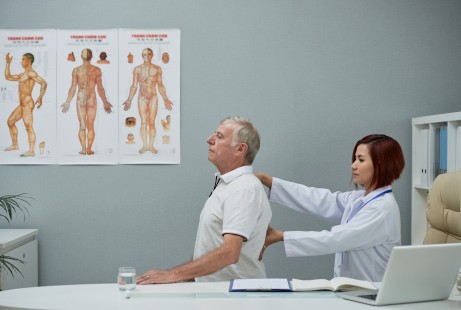
Chronic back pain has a way of slowly shrinking your life. First you stop long drives. Then you avoid stairs. Then you start planning your day around a chair, a pillow, and a painkiller. Many people live like this for months because they keep hoping it will “settle on its own.”
Sometimes it does. Sometimes it doesn’t. And when pain starts traveling down the leg, or weakness starts showing up, it’s usually the spine asking for a proper plan and not just rest.
This is where Spine Surgery becomes a question. Not the first option. Not the “quick fix.” But the right option for the right patient, at the right time.
Step 1: First, understand what kind of pain you really have
Back pain is not always the same problem.
Some pain stays in the lower back and feels dull, stiff, or achy. That often links to muscle strain or wear-and-tear changes.
Another type of pain shoots from the back into the buttock and leg, like burning, tingling, or electric pain. This often happens when a nerve gets pinched—commonly from a herniated disc or narrowing in the spine.
That difference matters, because surgery decisions mostly depend on the nerve side of the story.
Step 2: Give “good non-surgical care” a real chance
Most back and disc-related symptoms improve with time and proper conservative care. Even herniated disc symptoms often settle as the body reduces inflammation and pressure on the nerve.
This is why many spine teams start with a structured plan like pain control, guided physiotherapy, posture correction, and activity modification—unless there are danger signs.
And yes, it can feel slow. But when it works, it avoids surgery completely.
Step 3: Know the red flags when surgery stops being “optional”
Back pain becomes more serious when it comes with nerve warning signs.
If weakness is increasing, if numbness spreads, if walking becomes unstable, or if bladder/bowel control changes, you should not “wait and watch.” These can point to significant nerve compression and need urgent medical evaluation.
Also, if pain stays severe despite proper treatment and starts disabling daily life, that’s another point where surgery discussions become reasonable. Mayo Clinic notes b B ack surgery may be considered when other treatments haven’t worked and pain is disabling.
Step 4: Herniated disc treatment—when surgery is usually considered
A herniated disc is like a jelly-filled cushion that bulges or leaks out and irritates a nearby nerve. It can cause sciatica-type pain down the leg, with numbness or weakness.
When the main problem is leg pain from a pinched nerve, a common surgery option is microdiscectomy or endascopic disectomy . It removes the disc portion pressing on the nerve to reduce pain and nerve symptoms.
The key detail many people miss: surgery is usually aimed at nerve pain (leg pain) more than simple back ache. That’s why proper diagnosis matters before any decision.
Step 5: “Minimally invasive spine surgery” — what it really means
People hear “minimally invasive” and think it means “minor.” That’s not always true.
Minimally invasive spine surgery often means smaller cuts and less muscle disruption, using special tools to reach the problem area through a narrow path. It was developed to reduce injury to normal tissues and can mean less bleeding and shorter hospital stay in selected cases.
But not everyone is a candidate. The spine condition, anatomy, and surgical goal decide whether minimally invasive methods make sense.
Step 6: When fusion enters the conversation (and why recovery needs planning)
Fusion is not done for every back pain case. It is usually considered when the spine needs stability like certain cases of spinal stenosis with instability, deformity, or other structural problems where simply “making space” is not enough. Mayo Clinic notes that Ddecompression surgeries like laminectomy sometimes involve linking vertebrae with hardware and bone graft in some cases.
Fusion recovery is real recovery. It takes patience, physiotherapy, and careful movement habits. Hospital teams typically teach exercises and safe movement patterns as part of recovery planning after lumbar fusion.
So if you’re thinking about fusion, the best question is not only “Will it reduce pain?” but also “Am I ready to follow a structured recovery plan?”
Step 7: How doctors decide if spine surgery is the right choice for you
A careful spine decision usually follows a simple logic:
- First, symptoms must match the scan. A scan alone is not a reason to operate, because many people have disc bulges without symptoms.
- Second, the team checks how long symptoms have lasted, how much they limit life, and whether conservative treatment has truly been tried properly.
- Third, they check for nerve deficits (weakness, numbness, walking changes). Progressive deficits make surgery more time-sensitive.
This is why “spine surgery” is not a single decision. It’s a process of matching the right problem with the right solution.
Final words
Chronic back pain can make you feel stuck, but the path forward doesn’t have to be confusing.
Start with a proper diagnosis. Give non-surgical care a genuine try. Watch for nerve red flags. And if surgery becomes part of the plan—whether herniated disc treatment, minimally invasive spine surgery, or planning recovery after fusion—make sure it’s based on clear findings, realistic expectations, and a structured recovery strategy.