
Head and neck cancers, affecting areas such as the mouth, throat, voice box, and salivary glands, are among the most common cancer groups worldwide. Early detection plays a critical role, as many cases diagnosed at an early stage have significantly better treatment outcomes. Recognising warning signs such as persistent neck lumps, voice changes, or non-healing mouth sores can lead to timely diagnosis and care.
This article walks you through everything you need to understand about head and neck cancer: what it is, who is at risk, the symptoms to watch for, how it is diagnosed and staged, and the full spectrum of modern treatments available, including what makes Baby Memorial Hospital's NAVA Cancer Institute in Kozhikode one of the most advanced and accessible destinations for this condition in India, for both domestic patients and those travelling from the Gulf, Bangladesh, and Sri Lanka.
What Is Head and Neck Cancer?
Head and neck cancer is an umbrella term for malignancies that originate in the squamous cells lining the mucosal surfaces of the head and neck, including the oral cavity, pharynx, larynx, nasal cavity, paranasal sinuses, and salivary glands. In oncology, these are collectively referred to as Head and Neck Squamous Cell Carcinomas (HNSCC).
Cancers of the brain, eyes, thyroid, and skin of the face are technically separate categories, even though they physically sit within the head and neck region.
Types of Head and Neck Cancer
The anatomy of the head and neck is complex, and each subsite has a distinct clinical profile. The table below outlines the main types, their location, and their most common associated risk factors:
| Cancer Type | Location | Most Common Risk Factors |
|---|---|---|
| Oral Cavity Cancer | Lips, tongue, inner cheeks, gums, floor/roof of mouth | Tobacco, areca nut, alcohol, poor oral hygiene |
| Oropharyngeal Cancer | Soft palate, tonsils, base of tongue | HPV-16, tobacco, alcohol |
| Nasopharyngeal Cancer | Upper throat behind the nose | Epstein-Barr Virus (EBV), salted fish diet (South/SE Asia) |
| Hypopharyngeal Cancer | Lower throat near the oesophagus | Heavy tobacco and alcohol use; often late-stage at diagnosis |
| Laryngeal Cancer | Voice box and vocal cords | Smoking (primary), alcohol |
| Salivary Gland Cancer | Parotid, submandibular, sublingual glands | Radiation exposure, genetic factors |
| Nasal Cavity & Sinus Cancer | Inside the nose and surrounding skull bones | Woodworking dust, nickel, formaldehyde exposure |
Each type has a distinct clinical presentation, risk profile, and treatment pathway, which is why multidisciplinary oncology teams, like those at BMH evaluate every case comprehensively.
Causes and Risk Factors
Head and neck cancers rarely develop without an identifiable contributing cause. The leading risk factors are well-established, and most are modifiable, meaning that lifestyle changes and vaccination can meaningfully reduce risk.
1. Tobacco Use
Smoking cigarettes, cigars, or pipes and even smokeless tobacco (chewing tobacco, betel quid) is the single greatest modifiable risk factor. Tobacco carcinogens directly damage the mucosal lining of the mouth and throat over time. Heavy smokers face a risk up to 15 times higher than non-smokers for developing oral or laryngeal cancer.
2. Alcohol Consumption
Alcohol acts as a co-carcinogen, and its risk multiplies significantly when combined with tobacco. People who drink heavily and smoke face a risk up to 35 times higher than those who neither drink nor smoke.
3. HPV (Human Papillomavirus)
High-risk strains of HPV, particularly HPV-16, are strongly linked to oropharyngeal cancers, especially those of the tonsil and the base of the tongue. HPV-related head and neck cancers tend to occur in younger, non-smoking patients and often carry a better prognosis than tobacco-linked cancers. This is a growing category globally.
4. Other Notable Risk Factors
- Betel nut (areca nut) chewing, highly prevalent in South and Southeast Asia, including Kerala
- Chronic poor oral hygiene and ill-fitting dentures
- Prolonged sun exposure to lips
- Radiation exposure to the head and neck (e.g., prior radiotherapy)
- Epstein-Barr Virus (EBV), associated with nasopharyngeal cancer
- Occupational exposure to wood dust, asbestos, or nickel (paranasal sinus cancers)
- Family history and genetic susceptibility
Recognising the Symptoms: What to Watch For
The challenge with head and neck cancer is that early symptoms are often dismissed as minor ailments, a sore throat blamed on the weather, or a hoarse voice attributed to overuse. The rule of thumb oncologists follow is: any symptom persisting beyond three weeks warrants a medical evaluation.
Mouth (Oral Cavity)
- A sore or ulcer in the mouth that does not heal within 3 weeks
- A persistent red or white patch (leukoplakia or erythroplakia) on the gums, tongue, or inner cheek
- Unexplained bleeding from the mouth
- Tooth loosening or difficulty wearing dentures
- Numbness or pain in the tongue or lip
Throat (Pharynx and Larynx)
- Persistent sore throat not responding to antibiotics
- Hoarseness or change in voice lasting more than 3 weeks
- Difficulty or pain when swallowing (dysphagia or odynophagia)
- A sensation of something stuck in the throat (globus sensation)
- Ear pain without any apparent ear infection (referred pain)
Neck
- A painless lump or swelling in the neck that persists for more than 3 weeks
- A previously noted lump that is growing
Nose and Sinuses
- Chronic nasal blockage affecting only one side
- Persistent nosebleeds without obvious cause
- Reduced sense of smell
- Pain or pressure around the eyes, cheeks, or forehead
General/Systemic Symptoms
- Unexplained, persistent fatigue
- Unintentional weight loss
- Night sweats
Important: Many of these symptoms can have benign explanations. However, any symptom lasting beyond 3 weeks, especially in someone with tobacco or alcohol use history, should be evaluated by an ENT specialist or oncologist without delay.


Diagnosis: How Is Head and Neck Cancer Detected?
Accurate diagnosis requires a systematic combination of clinical examination, imaging, and tissue confirmation. At NAVA Cancer Institute, BMH, every suspected head and neck cancer case goes through a structured diagnostic protocol.
Step 1: Clinical Examination
An ENT surgeon or head and neck oncologist performs a thorough visual and manual examination of the oral cavity, oropharynx, and neck. Flexible nasolaryngoscopy, a thin, flexible scope passed through the nose, allows direct visualisation of the nasopharynx, larynx, and hypopharynx.
Step 2: Imaging
- CT Scan with contrast, evaluates local extension of the tumour and lymph node involvement
- MRI Scan, superior soft-tissue detail for tongue, floor of mouth, and skull base tumours
- PET-CT Scan, detects distant metastasis and evaluates nodal disease. BMH uses the
- Ultrasound of the neck, guides fine-needle aspiration of suspicious nodes
Step 3: Biopsy and Histopathology
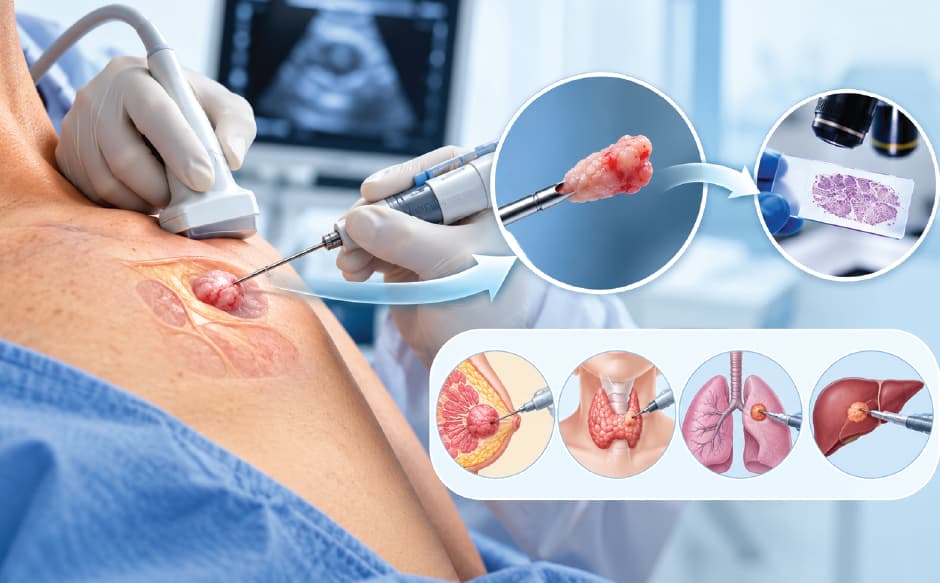
Tissue diagnosis is mandatory. Depending on the site, biopsy may be performed under local or general anaesthesia, via fine-needle aspiration cytology (FNAC) for neck nodes, or through an endoscopic procedure. Histopathology confirms cancer type, grade, and HPV status.
Step 4: Staging
The TNM staging system (Tumour, Nodes, Metastasis) classifies cancers into Stages I through IV:
- Stage I: Tumour ≤2 cm, confined to origin site, no nodal involvement
- Stage II: Tumour 2–4 cm, no spread beyond the primary site
- Stage III: Tumour >4 cm OR spread to one lymph node on the same side (≤3 cm)
- Stage IVA/B: Tumour spreads to nearby structures and/or multiple lymph nodes
- Stage IVC: Distant metastasis to lungs, bones, or liver.
Accurate staging directly determines the treatment plan, and is one area where advanced imaging (like PET-CT) makes a decisive difference.
Treatment Options for Head and Neck Cancer
Modern head and neck cancer care is not a single treatment, it is a personalised, multidisciplinary strategy. Treatment decisions depend on the cancer's anatomical site, stage, histology, the patient's overall fitness, and goals such as functional preservation (speech, swallowing, appearance).
1. Surgery
Surgery remains the cornerstone of treatment for most head and neck cancers, particularly oral cavity tumours.
- Open surgical resection; for larger tumours or those requiring wide margins
- Transoral laser microsurgery (TLM); minimally invasive removal of laryngeal/pharyngeal tumours via laser
- Transoral robotic surgery (TORS); robotic-assisted surgery through the mouth, ideal for oropharyngeal cancers. This approach preserves swallowing and speech better than open surgery.
- Neck dissection; surgical removal of lymph nodes in the neck, performed when nodal spread is confirmed or suspected
- Reconstructive surgery; free flap reconstruction (using tissue from the arm or thigh) restores function and appearance after major resections.
Baby Memorial Hospital has the Da Vinci X Robotic Surgery System, one of the most advanced surgical platforms in South India enabling precision head and neck surgeries with reduced blood loss, faster recovery, and better functional outcomes.
2. Radiation Therapy
Radiation therapy is used as a primary treatment (for early laryngeal cancers), as adjuvant therapy post-surgery, or concurrently with chemotherapy (chemoradiation) for advanced cases.
| Radiation Technique | What It Does | Used For |
|---|---|---|
| IMRT (Intensity-Modulated Radiation Therapy) | Shapes dose precisely around the tumour, reducing dose to salivary glands and spinal cord | Standard of care for most HNC, reduces dry mouth (xerostomia) significantly |
| VMAT (Volumetric Modulated Arc Therapy) | 360° arc delivery, faster and more conformal than conventional IMRT | Most HNC cases; shorter treatment time |
| IGRT (Image-Guided Radiation Therapy) | Real-time imaging before each fraction to verify tumour position | Ensures accuracy across the 6–7 week treatment course |
| SBRT / SRS | High-dose, highly focused treatment delivered in 1–5 fractions | Recurrent disease; oligometastatic nodal disease |
| HDR Brachytherapy | Internal radiation via implant placed adjacent to tumour | Select oral cavity tumours (tongue, floor of mouth, lip) |
Also Read: Difference Between Chemotherapy and Immunotherapy in Cancer Treatment
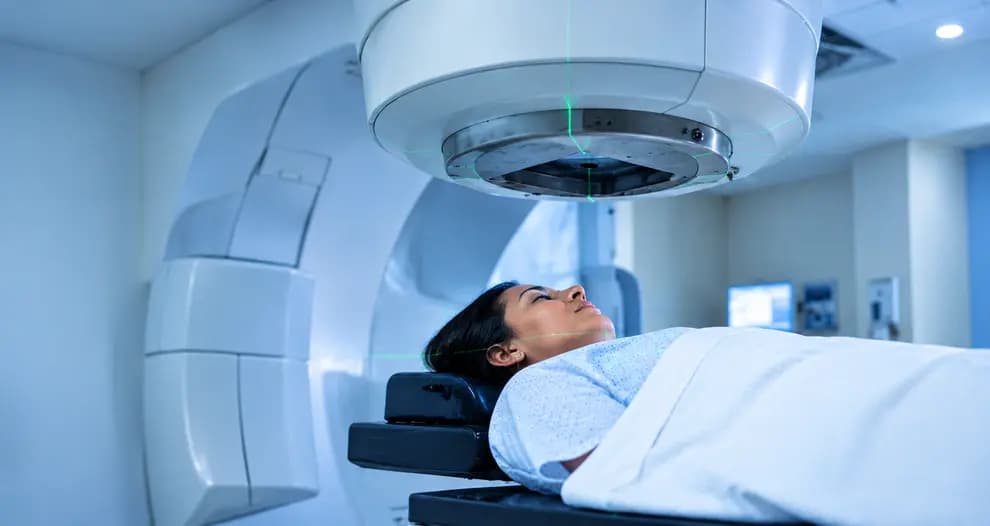
At NAVA Cancer Institute, BMH, radiation is delivered via the TrueBeam Linear Accelerator, a next-generation platform that supports IMRT, VMAT, IGRT, SBRT, and Rapid Arc. TrueBeam's kV/MV imaging capability allows sub-millimetre patient positioning verification before every single treatment fraction, a standard that protects organs at risk (particularly the spinal cord and parotid glands) throughout the treatment course.
The GammaMedplus iX HDR Brachytherapy System at BMH enables internal radiation delivery for select oral cavity tumours, a technique that allows very high local radiation doses while dramatically limiting exposure to surrounding normal tissue.
3. Chemotherapy
Chemotherapy in head and neck cancer is most often used concurrently with radiation (chemoradiation), not alone. Cisplatin-based regimens are standard. For recurrent or metastatic disease, platinum-doublet chemotherapy or immunotherapy combinations are used.
4. Immunotherapy
Immune checkpoint inhibitors, particularly anti-PD-1 agents such as pembrolizumab (Keytruda) and nivolumab (Opdivo), have transformed the treatment of recurrent or metastatic HNSCC. Pembrolizumab is now approved as first-line monotherapy for PD-L1-high metastatic head and neck cancers.
5. Targeted Therapy
Cetuximab, a monoclonal antibody that targets the EGFR receptor, is the most widely used targeted agent for head and neck cancer. It is often combined with radiation or chemotherapy. Molecular testing of tumour tissue helps determine if targeted agents are appropriate for a given patient.
6. Multidisciplinary Tumour Board Review
One of the most important aspects of head and neck cancer care, and one that separates centres of excellence from general hospitals, is the Multidisciplinary Tumour Board (MDT). At BMH's NAVA Cancer Institute, every case is reviewed by a combined team of head and neck oncosurgeons, radiation oncologists, medical oncologists, radiologists, pathologists, speech therapists, and dieticians before treatment begins. This ensures the plan is the best available for that specific patient.
Why Patients Choose Baby Memorial Hospital for Head and Neck Cancer Treatment
Head and neck cancer treatment is one of the most technically demanding areas in oncology. The cancers are anatomically complex, treatment decisions involve trade-offs between cure and function, and outcomes are highly dependent on the skill of the team and the quality of the technology available.
For patients in Kerala, and increasingly for patients from the Gulf, Bangladesh, and beyond, Baby Memorial Hospital's NAVA Cancer Institute in Kozhikode has emerged as a destination of genuine clinical excellence.
Advanced Technology, Under One Roof
- TrueBeam Linear Accelerator delivers IMRT, VMAT, SRS, SBRT for head and neck tumours with sub-millimetre precision
- Da Vinci X Robotic Surgery System enables transoral robotic surgery (TORS) and neck dissections with minimal invasion
- Discovery IQ PET/CT whole-body staging and treatment response assessment at international standard
- GammaMedplus iX HDR Brachytherapy System for select oral cavity tumours requiring high-dose localised radiation
- MAMMOMAT Revelation advanced mammography (relevant for concurrent oncology screening)
Specialist Oncology Team
The NAVA Cancer Institute brings together oncologists with subspecialty training specifically in head and neck cancers. Among the senior specialists:
-
Dr. John J. Alapatt: Senior Consultant, Surgical Oncology. His area of focus are complex head and neck resections; reconstructive surgery; robotic oncosurgery
-
Dr. P.R. Sasindran: Senior Consultant, Radiation Oncology. His area of focus are advanced radiotherapy protocols, IMRT, IGRT, SBRT; head and neck tumour board lead.
Beyond these named specialists, every patient is reviewed by a full Multidisciplinary Tumour Board (MDT), a structured case conference involving surgical oncologists, radiation oncologists, medical oncologists, radiologists, pathologists, speech therapists, nutritionists, and psychosocial support staff. This collective review before treatment begins is the single practice most associated with improved outcomes in head and neck cancer, and it is embedded in NAVA's protocol for every new case.
AHPI Healthcare Excellence Award 2024
Baby Memorial Hospital was recognised with the AHPI Healthcare Excellence Award 2024, acknowledging its commitment to quality, patient safety, and clinical outcomes. This recognition reflects the hospital's position among India's institutions that have earned trust through measurable results, not just infrastructure.
Affordable, Transparent Pricing for All Patients
One of the most common concerns patients and families have is cost. Unlike many of India's large private oncology chains concentrated in metro cities, BMH offers comparable technology and clinical expertise at costs aligned with Kerala's living standards, making world-class head and neck cancer care accessible without requiring patients to travel to Bangalore, Chennai, or Delhi.
For international patients from the Gulf, Sri Lanka, or Bangladesh, BMH provides a dedicated International Patient Care pathway with assistance in treatment planning, visa documentation, accommodation coordination, and Arabic/Malayalam interpreter support.
Patient-Centred, Non-Salesy Care
BMH's philosophy is guided by what the patient needs, not what generates billing. The tumour board reviews every case before any treatment commences. If a patient is better served by a watch-and-wait approach, that is the recommendation they receive. This approach to honest, evidence-based care is what earns the trust of patients who come from outside the city and outside the country.
If you or a family member has symptoms that concern you, or has already received a diagnosis and wants a second opinion, the NAVA Cancer Institute at Baby Memorial Hospital welcomes consultations for both domestic and international patients. Chat with our medical assistant today.
Conclusion
Head and neck cancer is not one disease, it is a group of conditions tied together by anatomy, shared risk factors, and the extraordinary functional importance of the region they affect. A cancer that disrupts speaking, swallowing, or breathing strikes at the very centre of human connection. The good news is clear: when caught early, these cancers respond very well to treatment. The five-year survival rate for localised head and neck cancer exceeds 80%. The challenge is that early symptoms are easy to dismiss, and many patients in Kerala and across India still present at Stage III or IV because of delayed healthcare-seeking. If you have a persistent sore throat, a neck lump, a non-healing mouth sore, or hoarseness lasting more than three weeks, especially if you use tobacco or alcohol, do not wait. Seek an evaluation. Early diagnosis is not just a clinical advantage; it is often the difference between a short course of radiation and a major surgical procedure. At Baby Memorial Hospital's NAVA Cancer Institute, patients have access to the full technology stack for head and neck cancer diagnosis and treatment from PET-CT staging through TrueBeam radiation and Da Vinci robotic surgery supported by a multidisciplinary team that treats every case as a whole person, not just a tumour.
Chat with Our Cancer Care Assistant. Our Cancer Care Assistant is available 24/7 to help you understand your options, navigate the diagnostic process, and connect you with the right specialist.
Medical Disclaimer This article is intended for general health information and educational purposes only. It does not constitute medical advice and should not replace professional consultation with a qualified healthcare provider. Symptoms described here may have multiple causes, and only a trained clinician can evaluate your individual situation. If you are experiencing any of the symptoms described in this article, particularly those lasting more than three weeks, please consult an ENT specialist, oncologist, or general physician promptly.