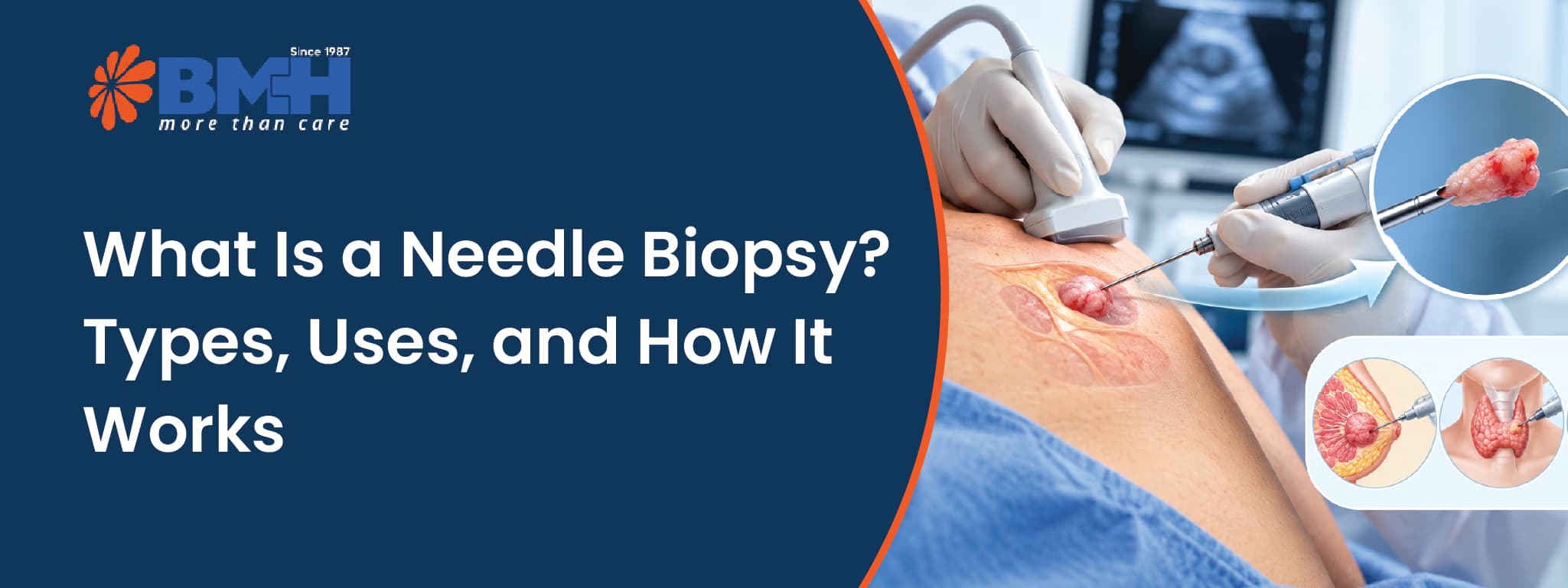

A needle biopsy is a minimally invasive procedure that uses a hollow needle to collect cells or tissue from a lump or abnormal area for laboratory examination.
Depending on what needs to be evaluated, doctors may recommend a fine needle aspiration (FNA) or a core needle biopsy. But how do these two methods differ, and what can you expect during and after the procedure?
This guide explains how needle biopsies work, fine needle vs. core needle biopsy, what the procedure feels like, and how biopsy results are interpreted.
What Is a Needle Biopsy?
A needle biopsy is a minimally invasive procedure that removes a small sample of cells or tissue from a suspicious area so a pathologist can examine it in a lab. It avoids open surgery, and the sample can be taken from many parts of the body.
In fine-needle aspiration, a thin needle and syringe draw out cells or fluid. In a core needle biopsy, a hollow needle removes a small cylinder of tissue.
Why Do Doctors Recommend a Needle Biopsy?
Scans can show that something looks unusual, but imaging usually cannot say what the tissue is. The American Cancer Society notes that in most cases, only a biopsy can confirm a cancer diagnosis.
Doctors typically use a needle biopsy to:
- Find out whether a lump, mass or nodule is benign or malignant
- Identify the cause of an infection or persistent inflammation
- Sample organs such as the breast, thyroid, liver, lungs and lymph nodes
- Drain fluid from cysts or abscesses, in the case of FNA
Fine Needle Biopsy vs Core Needle Biopsy: What's the Difference?
The key difference between fine needle aspiration and core needle biopsy is the type and amount of sample collected, which can affect how much detail the pathologist can see. Here’s a side-by-side comparison:
| Feature | Fine needle aspiration (FNA) | Core needle biopsy (CNB) |
|---|---|---|
| Needle | Very thin, with a syringe | Wider, hollow, often spring-loaded |
| Sample | Cells, fluid, tiny clusters | A small cylinder ("core") of tissue |
| Studied as | Cytology (individual cells) | Histology (tissue structure) |
| Commonly used for | Thyroid nodules, lymph nodes, superficial lumps, cysts | Breast lumps, deeper masses needing more detail |
| Main limit | Sometimes too few cells for a firm answer | Slightly more invasive; may need a tiny incision |
What Is a Fine Needle Biopsy?
"Fine needle biopsy" is another name for FNA, and you may also see FNAC (fine needle aspiration cytology). It is the least invasive type of biopsy, though it has limits. Doctors use it most often on newly found lumps in the breast, thyroid, lymph nodes and skin. With ultrasound or CT guidance it can also reach deeper sites such as the pancreas or lungs.
Which Is More Accurate?
It depends on the body site. One study of 405 bone and soft-tissue samples found 86.6% accuracy for fine needle aspiration versus 93.8% for core needle biopsy.
Core biopsy gives the pathologist more tissue to work with. FNA remains a strong first step in places like the thyroid and neck nodes. Sometimes doctors follow an FNA with a core biopsy to confirm a diagnosis.
How the Needle Biopsy Procedure Works
-
Preparation: The area is cleaned. You usually need no special preparation for FNA, but your doctor will advise you.
-
Numbing: A local anaesthetic numbs the skin. You may feel a pinch or pressure.
-
Guidance: If the lump is deep or cannot be felt, the doctor uses ultrasound, CT or mammography imaging to steer the needle.
-
Sampling: The needle collects the sample. The needle itself is in and out in about a minute, and the whole appointment usually takes 15 to 30 minutes.
-
Finishing: A bandage goes on. Stitches are usually not needed, and a tiny marker clip is sometimes left so the spot can be found again later (Canadian Cancer Society).
-
Lab review: A cytotechnologist screens the cells and a pathologist analyses them. The pathologist's report goes to your doctor.
What Does It Feel Like, and How Long Is Recovery?
Most people describe a brief sting from the numbing injection, then pressure. Afterwards, soreness and bruising are common and usually fade within a couple of days. It is an outpatient procedure, so you go home the same day.
Contact your doctor if you develop fever, pus or redness at the site, or if the lump changes unexpectedly.


Understanding Your Needle Biopsy Results
Results usually take from a few days to about a week, depending on the tests needed. A report may show:
- No abnormal cells: the sample looks normal
- A mix of normal and abnormal cells: more testing may be needed
- Precancerous cells
- Cancerous cells
- Signs of infection
Sometimes the lab asks for additional samples for a clearer answer. A "nondiagnostic" or "inadequate" result does not mean the news is bad. It means the sample did not contain enough usable material, which is why repeat sampling or a core biopsy is sometimes advised. Pathologists can also test samples for molecular markers that show which cancer treatments may work better.
How a Needle Biopsy Fits Into Cancer Diagnosis at BMH
A biopsy is the start of the diagnostic pathway. At Baby Memorial Hospital in Kozhikode, oncology care is organised through the NAVA Cancer Institute, launched in February 2026. It brings together medical, surgical, radiation, paediatric and haemato-oncology, nuclear medicine and bone marrow transplant support, per BMH's comprehensive cancer care page.
What that means for a biopsy patient:
-
Diagnostic tools in one system: PET-CT, oncopathology, immunohistochemistry, biopsy services and tumour marker evaluation.
-
A tumour board: Medical, surgical and radiation oncologists, radiologists and pathologists review imaging, biopsy and staging together before treatment starts.
-
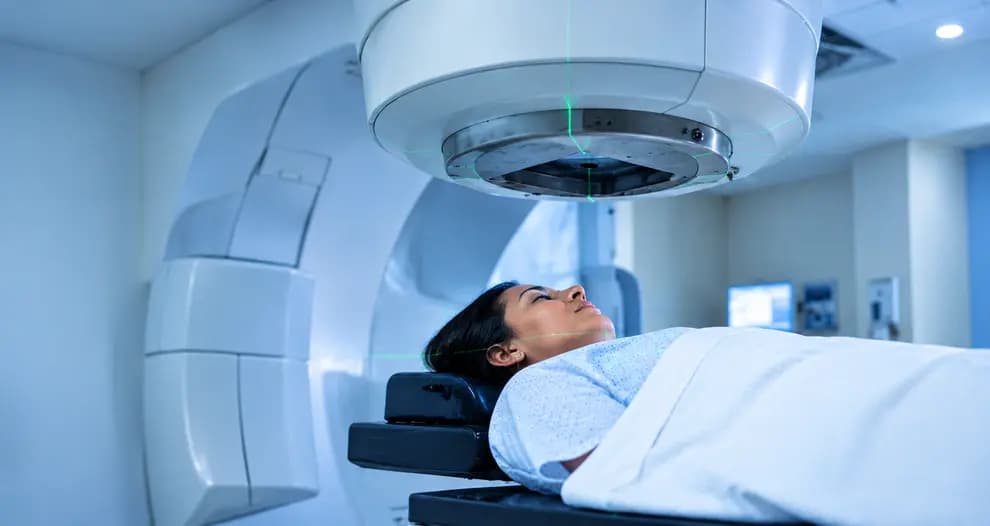
Treatment options under one roof: Medical oncology, surgical oncology (including Da Vinci Xi robotic surgery) and radiation oncology (TrueBeam LINAC).
BMH also performs biopsies outside oncology, such as kidney biopsy and pleural biopsy.
Before Your Needle Biopsy: A Practical Checklist
- List all medicines, especially blood thinners, and any allergy to local anaesthetics
- Ask whether you are having FNA or a core biopsy, and why
- Ask which imaging will guide the needle
- Ask when results are expected and who will explain them
- Bring earlier scans and reports, and consider a companion for the appointment
Conclusion
A needle biopsy is a short, low-risk way to get a clear answer about a lump. FNA gathers cells with a thin needle, and core biopsy takes a small tissue cylinder. Your doctor picks the method based on the lump's location and what the pathologist needs to see.
If you have been advised to have a biopsy, or want a second opinion on a report, BMH's oncology team can review your case.
Chat with the BMH medical assistant to find the right specialist and book a consultation.
Medical disclaimer: This article is for general information and does not replace advice from a qualified doctor. Do not delay or change treatment based on it. Consult a healthcare professional about your own diagnosis and care.