
If you've heard the terms "uterine cancer" and "endometrial cancer" used interchangeably, you're not alone, many patients find them confusing. In reality, endometrial cancer is a type of uterine cancer, not a separate condition, though understanding this distinction is crucial for accurate diagnosis and treatment.
This guide clarifies what each term means, how they differ, and what symptoms warrant specialist attention.
What Is Uterine Cancer? The Umbrella Term Explained
"Uterine cancer" is a broad, location-based term. It refers to any cancer that starts inside the uterus, the pear-shaped organ where a pregnancy develops, regardless of which tissue layer it starts in.
The uterus has two main layers relevant here:
-
The endometrium: the inner lining that thickens and sheds during the menstrual cycle.
-
The myometrium: the thick muscular wall surrounding it.
Cancer can, in theory, start in either layer. That's the entire reason "uterine cancer" exists as a category rather than a single diagnosis, it's a location, not a cell type.
What Is Endometrial Cancer? The Most Common Type of Uterine Cancer
Endometrial cancer specifically begins in the endometrium, the inner lining. It's by far the most frequently diagnosed uterine cancer, and it's typically further split into two broad groups that clinicians still find clinically useful, even as molecular subtyping (the TCGA/ProMisE classification) becomes more common in oncology practice:
-
Type 1 (endometrioid): Usually linked to excess oestrogen exposure, slower-growing, and often caught early because it tends to cause noticeable bleeding.
-
Type 2 (serous, clear cell, and related subtypes): Not driven by hormones, more likely to be aggressive, and more likely to be diagnosed at a later stage.
This is where most confusion starts: because endometrial cancer is so much more common than any other uterine cancer, "uterine cancer" and "endometrial cancer" get used interchangeably in casual conversation, patient pamphlets, and even some clinical notes. It's not technically wrong most of the time, it's just imprecise.
Uterine Cancer vs Endometrial Cancer: Key Differences at a Glance
The terminology can be confusing, so the table below breaks down the differences in where these cancers begin, how they behave, and how they are treated.
| Feature | Uterine Cancer | Endometrial Cancer |
|---|---|---|
| What it is | Umbrella term for any cancer starting in the uterus | A specific cancer type starting in the endometrium |
| Tissue of origin | Endometrium or myometrium | Endometrium only |
| Includes | Endometrial cancer + uterine sarcoma | Endometrioid, serous, clear cell, and related subtypes |
| Share of uterine cancer cases | 100% (by definition) | Roughly 90–95% of all cases |
| Typical growth pattern | Depends on subtype | Often hormone-driven (Type 1); some aggressive subtypes (Type 2) |
| Common first symptom | Abnormal bleeding (shared across types) | Abnormal or postmenopausal bleeding |
| Primary treatment | Varies widely by subtype | Hysterectomy with lymph node assessment; hormone therapy in select early cases |
| General outlook | Depends heavily on subtype and stage | Generally favourable when caught early |


Uterine Sarcoma: The Other, Rarer Type of Uterine Cancer
Uterine sarcoma develops in the myometrium (muscle wall) or the connective tissue supporting it, rather than the lining. It accounts for a small minority of uterine cancer cases but tends to behave differently:
-
It's generally more aggressive and harder to treat than endometrial cancer.
-
It's frequently discovered incidentally, for instance, during surgery for what was thought to be a benign fibroid.
-
Leiomyosarcoma (arising from muscle tissue) is the most recognised subtype.
The overlap in early symptoms between uterine sarcoma and endometrial cancer is exactly why "uterine cancer" as a category exists clinically, a symptom alone often can't tell doctors which type they're dealing with, so both get worked up along a similar initial diagnostic pathway before splitting into different treatment tracks.
Symptoms: What's Shared, and What's a Red Flag
Both endometrial cancer and uterine sarcoma tend to announce themselves the same way early on, which is actually one of the more reassuring facts in gynaecologic oncology, unlike ovarian cancer, which is often silent until advanced, uterine cancers usually cause a symptom most women will notice and act on.
Watch for:
-
Bleeding after menopause (the single most important red flag)
-
Bleeding between periods, or unusually heavy/prolonged periods
-
Watery or blood-tinged vaginal discharge
-
Pelvic pain or a feeling of pressure/fullness
-
Pain during intercourse
-
Unintended weight loss (more associated with advanced disease)
None of these symptoms are exclusive to cancer, fibroids, polyps, and hormonal imbalances cause the same signs far more often. But because bleeding after menopause is abnormal by definition, it should always be evaluated promptly rather than watched.
How Uterine and Endometrial Cancers Are Actually Diagnosed and Staged
Diagnosis typically follows a consistent sequence, regardless of which type is eventually confirmed:
-
Transvaginal ultrasound to measure endometrial thickness and look for structural abnormalities.
-
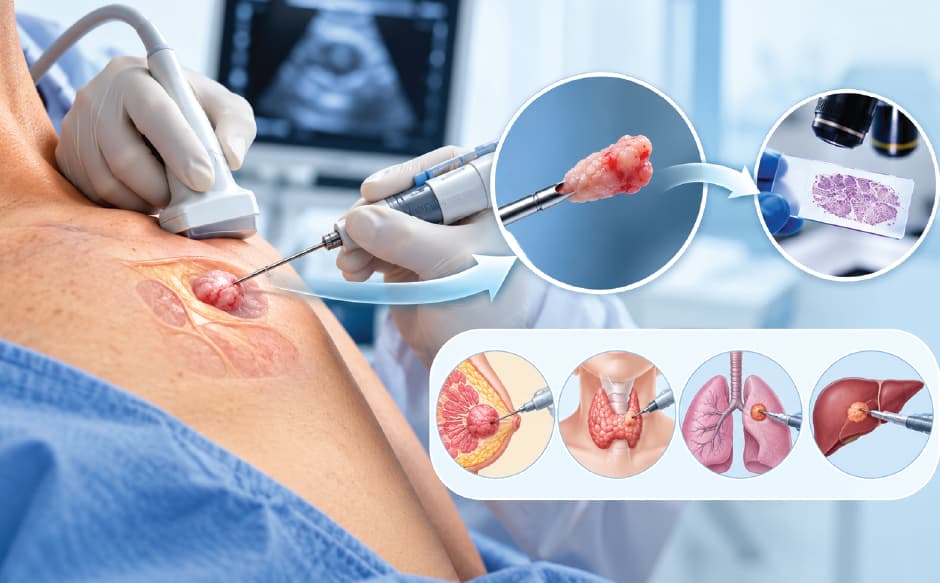
Endometrial biopsy or hysteroscopy with dilation and curettage (D&C) to collect tissue for pathology.
-
Histopathology to confirm whether the cancer is endometrial (and which subtype) or sarcomatous.
-
Imaging (CT/MRI, sometimes PET-CT) to assess whether the disease has spread beyond the uterus.
-
Surgical staging, often the definitive step, since imaging alone can under- or overestimate spread. Staging follows the FIGO system, from Stage I (confined to the uterus) to Stage IV (spread to distant organs).
This is often where the terminology gap becomes visible to patients: a scan report might say "endometrial thickening, suspicious for malignancy," while the surgical pathology report later confirms a specific subtype, and only then does it become clear which "type" of uterine cancer is actually present. It's a normal part of the diagnostic sequence, not a contradiction between reports.
When Should You See a Gynaecologic Oncologist?
Consider specialist evaluation when you have:
- Postmenopausal bleeding
- Persistent abnormal uterine bleeding
- An abnormal endometrial biopsy
- A suspicious uterine mass
- A diagnosis of endometrial cancer
- A suspected uterine sarcoma
- A recurrence after previous treatment
If cancer has already been diagnosed, asking for clarification of the histology, stage and molecular findings can make your consultation much more productive.
Why BMH Can Be a Strong Choice for Uterine Cancer Treatment in India
Choosing a cancer hospital is not simply about finding the hospital with the largest building or the most treatment options listed on a website.
For uterine and endometrial cancer, the more useful question is:
Can the hospital connect diagnosis, pathology, surgery, radiation and systemic treatment into one coordinated plan?
This is where Baby Memorial Hospital's NAVA Cancer Institute in Kozhikode is relevant.
BMH launched the NAVA Cancer Institute in February 2026 as a comprehensive cancer-care centre in North Kerala.
Its oncology ecosystem is designed around multiple disciplines rather than treating cancer as an isolated procedure.
For a patient with suspected or confirmed uterine cancer, that matters because treatment may require coordination between:
- Surgical oncology
- Medical oncology
- Radiation oncology
- Nuclear medicine
- Pathology
- Diagnostic imaging
- Other specialist teams depending on the patient's needs
BMH's cancer-care information describes a multidisciplinary approach and integrated treatment services, including surgery, chemotherapy, radiation therapy, immunotherapy, targeted therapy and precision-oncology approaches where clinically appropriate.
Conclusion
Uterine cancer and endometrial cancer aren't the same term for the same thing, endometrial cancer is a specific, common type of uterine cancer, while uterine cancer also includes the rarer and often more aggressive uterine sarcoma.
The distinction matters most in two moments: when you're trying to make sense of a diagnosis, and when your treatment plan is being decided, since surgery, radiation, and chemotherapy protocols genuinely differ between subtypes.
The reassuring part is that both types most commonly announce themselves through a symptom, abnormal bleeding, that's hard to ignore, which means early evaluation and early treatment are realistically within reach for most patients.
If you or someone you know is dealing with unexplained bleeding or a recent uterine/endometrial cancer diagnosis, getting a second opinion for cancer from a dedicated gynaecologic and surgical oncology team is a reasonable, low-risk next step.
Chat with our medical assistant for guidance on next steps, or book a consultation with our gynaecologic and surgical oncology team.
Medical Disclaimer: This article is intended for general informational and educational purposes only and does not constitute medical advice. It is not a substitute for professional diagnosis, consultation, or treatment. Every patient's condition is different, please consult a qualified oncologist or gynaecologist for guidance specific to your situation. Baby Memorial Hospital and NAVA Cancer Institute assume no liability for decisions made based solely on this content.