
Endometrial cancer, cancer of the uterus lining, traditionally affected older women, but today it's appearing in women in their 30s and 40s. Your hormonal health, weight, and metabolic patterns directly influence whether the cells lining your uterus grow abnormally.
This article breaks down, in plain language, why endometrial cancer develops in young women, which symptoms deserve urgent attention, and what treatment, including fertility-sparing options, actually looks like today.
What Is Endometrial Cancer, Exactly?
The endometrium is the inner lining of the uterus, the tissue that thickens every month in preparation for a possible pregnancy and sheds as your period if pregnancy doesn't occur. Endometrial cancer begins when cells in this lining start growing uncontrollably, forming a tumour that can eventually invade the muscular wall of the uterus and spread beyond it.
It's often confused with cervical cancer (which starts in the cervix, the neck of the uterus, and is strongly linked to HPV) or ovarian cancer (which starts in the ovaries and is notoriously silent in its early stages).
Endometrial cancer is different on both counts: it isn't caused by HPV, and unlike ovarian cancer, it tends to announce itself early, through abnormal bleeding, which is actually a diagnostic advantage if the symptom isn't dismissed.
Why Endometrial Cancer Happens in Young Women: The Real Mechanism
Doctors describe endometrial cancer as a largely hormone-driven disease. To understand why it can occur in a 25- or 35-year-old, you have to understand the hormonal tug-of-war happening inside the uterus every month.
1. The Estrogen–Progesterone Imbalance, Explained Simply
Estrogen tells the endometrium to grow. Progesterone, released after ovulation, balances that signal and tells the lining to mature and eventually shed. When a woman ovulates irregularly, or not at all, progesterone is never released in sufficient amounts to counter estrogen's growth signal.
The endometrium keeps thickening, month after month, without the "stop" signal it needs. Over years, this unopposed estrogen exposure can push normal cells toward abnormal, precancerous, and eventually cancerous change. This single mechanism explains most of the risk factors below.
2. PCOS and Chronic Anovulation: The Single Biggest Driver Under 40
Polycystic Ovary Syndrome is, by a wide margin, the most common reason a young woman develops endometrial cancer. PCOS causes chronic anovulation (infrequent or absent ovulation), which means the estrogen-without-progesterone pattern described above plays out for years, sometimes starting in the teens.
3. Obesity and Insulin Resistance: A Hormonal Problem, Not Just a Weight Problem
Fat tissue doesn't just store energy, it actively converts other hormones into estrogen through an enzyme called aromatase. The more adipose tissue a woman carries, the more "extra" estrogen circulates in her body, independent of ovarian function.
Combine this with insulin resistance (common in both obesity and PCOS), which further stimulates endometrial cell growth, and you have a second, overlapping pathway to the same outcome. This is why obesity and PCOS are frequently found together in young endometrial cancer patients rather than as separate, unrelated risks.
4. Genetics: Lynch Syndrome and Family History
A smaller but medically important subset of young patients, often under 40, carry an inherited condition called Lynch syndrome, which impairs the body's ability to repair DNA errors.
Women with Lynch syndrome have a significantly elevated lifetime risk of both endometrial and colorectal cancer, and their disease can occur a decade or more earlier than average. A strong family history of either cancer is a reason to raise this specifically with a gynecologic oncologist, not just a general physician.
5. Delayed Childbearing and Nulliparity
Pregnancy provides the body with sustained, high progesterone exposure, which is protective against endometrial cancer. As more women delay childbearing into their 30s or choose not to have children, nulliparity (never having given birth) is increasingly recognised as an independent contributor to lifetime endometrial cancer risk
Risk Factors: Young Women vs. Postmenopausal Women
The risk factors for endometrial cancer can differ by age, with hormonal and metabolic factors often playing a greater role in younger women, while age-related and postmenopausal factors become more prominent later in life. The table below highlights how these risk patterns compare:
| Risk Factor | More Relevant in Young Women (<45) | More Relevant Post-Menopause |
|---|---|---|
| PCOS / chronic anovulation | Primary driver | Uncommon |
| Obesity / insulin resistance | Significant | Significant |
| Nulliparity | Rising contributor | Historical factor |
| Lynch syndrome (genetic) | Often presents early | Can present at any age |
| Prolonged unopposed estrogen therapy | Less common | More common |
| Natural age-related endometrial changes | Rare | Primary driver |
| Later age at menopause | N/A | Significant |
Also Read: Uterine Cancer vs Endometrial Cancer: Are They Really the Same?
Symptoms Young Women Ignore And Shouldn't
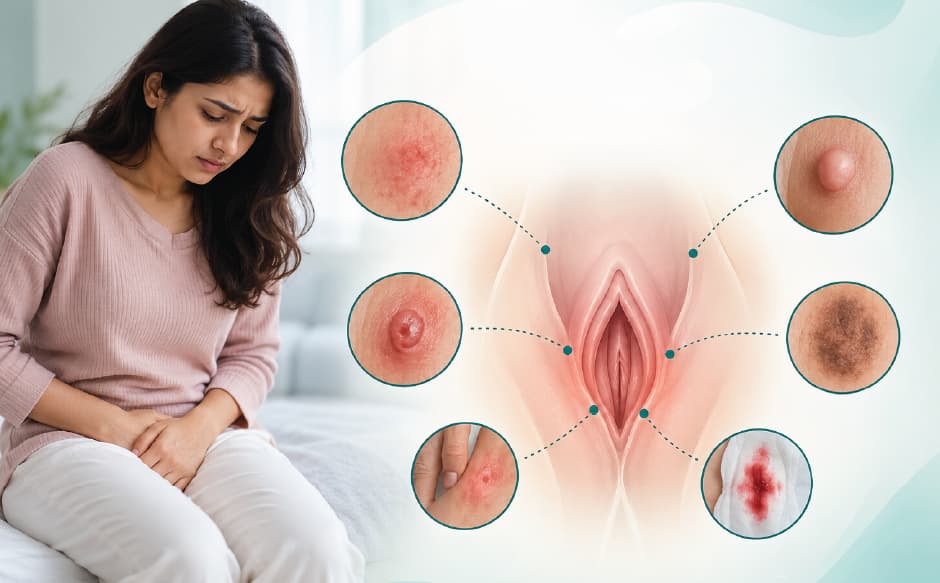
This is where the biggest diagnostic gap lies. In older women, any bleeding after menopause is treated as a red flag by default. In younger women, abnormal bleeding is far more likely to be brushed off as "just my PCOS," "stress," or "irregular periods" by patients and, sometimes, by early consultations too.
Symptoms that warrant an evaluation, especially if persistent for more than a couple of cycles:
-
Heavier or longer periods than your personal normal
-
Bleeding or spotting between periods
-
Bleeding after intercourse
-
Pelvic pain or pressure that doesn't resolve with your usual PCOS or period symptoms
-
Unusual vaginal discharge, particularly if watery or blood-tinged
None of these symptoms confirm cancer on their own, they're common to many benign gynecological conditions. But they are the reason a doctor would recommend an endometrial evaluation rather than simply prescribing hormonal medication and moving on.


Is Endometrial Cancer in Young Women Curable? Treatment Options
The reassuring part of this story: when caught early, which is common in young women because abnormal bleeding tends to prompt investigation sooner than silent symptoms would, endometrial cancer is highly treatable, and fertility can often be preserved.
-
Fertility-sparing hormonal therapy: For early-stage, low-grade disease, high-dose progestin therapy (oral or via an intrauterine device) can reverse abnormal changes in the endometrium, allowing some women to attempt pregnancy before proceeding to definitive surgery later.
-
Surgery: A hysterectomy (removal of the uterus), sometimes with the ovaries and lymph nodes, remains the definitive treatment when fertility preservation isn't appropriate or hasn't worked.
-
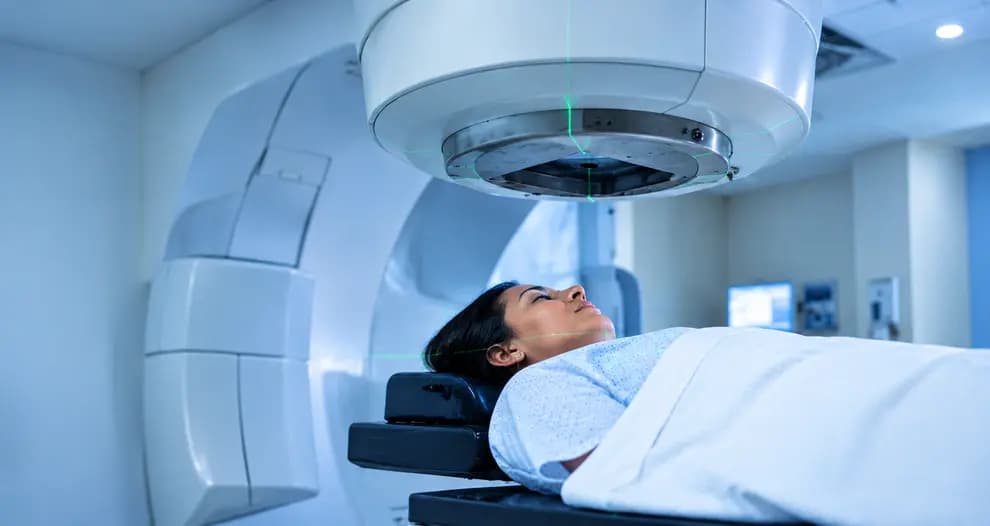
Radiation therapy, including brachytherapy (internal radiation delivered directly to the treatment area), is used post-surgery for certain stages to reduce recurrence risk.
-
Chemotherapy is reserved for more advanced or high-grade disease.
The treatment decision depends heavily on the cancer's stage, grade, and the patient's personal priorities, which is exactly why a multidisciplinary opinion matters more in younger patients than in almost any other age group.
Prevention and Early Awareness: What You Can Actually Do
There's no guaranteed way to prevent endometrial cancer, but risk can be meaningfully reduced:
-
If you have PCOS, don't leave chronic anovulation unmanaged, ask your gynecologist about a management plan even if you're not currently trying to conceive.
-
Track your cycle. "Irregular" is not the same as "anything goes" know what's unusual for your body specifically.
-
Address insulin resistance and weight through medical guidance, not just diet culture advice, this is a hormonal intervention, not a cosmetic one.
-
If you have a family history of endometrial or colorectal cancer, mention it explicitly at your next gynecology visit; ask whether genetic counselling is appropriate.
-
Don't assume you're "too young" to need an endometrial biopsy if bleeding patterns are genuinely abnormal and persistent.
Where Should Young Women Seek Endometrial Cancer Care?
If you or a family member has suspected or confirmed endometrial cancer, where you receive care and who coordinates it can significantly influence treatment planning. A multidisciplinary tumour board can bring together:
-
Gynecologic or surgical oncologists for surgery and fertility-sparing evaluation.
-
Medical oncologists for systemic and hormonal treatment decisions.
-
Radiation oncologists for brachytherapy and external-beam radiation when required.
-
Pathologists and radiologists to help confirm the diagnosis, stage the cancer, and guide treatment.
For younger women, this coordinated approach is particularly important when fertility preservation is being considered, as treatment choices need to be carefully planned around both cancer control and reproductive goals.
At NAVA Cancer Institute, Baby Memorial Hospital (BMH), Kozhikode, multidisciplinary oncology care brings surgical, medical and radiation oncology expertise together. The centre also provides advanced radiation treatments such as HDR brachytherapy and image-guided radiotherapy, while its oncology team manages complex surgical and fertility-sparing evaluations.
For patients travelling from outside Kerala or India, access to coordinated specialist care, case management and international patient support can also make the treatment journey more practical.
Conclusion
Endometrial cancer in young women isn't the medical rarity it's often assumed to be, it's a hormonally-driven disease with well-understood mechanisms, most of them tracing back to PCOS, obesity, and unopposed estrogen exposure. The encouraging reality is that when caught early, which is common because abnormal bleeding is hard to ignore, outcomes are favourable and fertility-preserving treatment is often possible.
The most important shift needed isn't in treatment technology, it's in awareness: recognising that "young" and "at risk" are not mutually exclusive, and that persistent abnormal bleeding deserves a proper evaluation, not just a hormonal prescription and a wait-and-see approach.
You don't have to sort through medical literature on your own. Chat with our assistant for guidance on next steps, or to schedule a consultation with the gynecologic oncology team at NAVA Cancer Institute, Baby Memorial Hospital, Kozhikode.
Medical Disclaimer: This article is intended for general informational purposes only and does not constitute medical advice, diagnosis, or treatment. Endometrial cancer risk, symptoms, and treatment options vary by individual, and only a qualified healthcare provider can assess your specific situation. Please consult a gynecologist or gynecologic oncologist for any concerns regarding your health.