
Not all endometrial cancer is hereditary, about 70-80% of cases occur without a strong genetic link. However, certain inherited mutations and family patterns can significantly raise your risk.
This article breaks down exactly how much of endometrial cancer is inherited, which genetic conditions matter, what your family history is actually telling you, and when genetic counselling makes sense, with practical next steps from the gynaecologic oncology team at NAVA Cancer Institute, Baby Memorial Hospital (BMH), Kozhikode.
What Is Endometrial Cancer, Exactly?
Endometrial cancer begins in the endometrium, the inner lining of the uterus, and is the most common gynaecologic cancer in high-income countries. It is often grouped under "uterine cancer" in Indian cancer registries, alongside the less common uterine sarcomas. Most cases are diagnosed after menopause, and the disease is broadly split into two types:
-
Type 1 (oestrogen-driven): Roughly 80% of cases, linked to prolonged oestrogen exposure, obesity, and anovulatory cycles. Generally slow-growing with a favourable prognosis.
-
Type 2 (non-oestrogen-driven): Less common, more aggressive, and more likely to be diagnosed at an advanced stage.
Understanding which type you're dealing with matters, because hereditary endometrial cancer tends to behave differently, and often shows up earlier in life than the typical postmenopausal case.
Is Endometrial Cancer Hereditary? The Direct Answer
Most endometrial cancer is not hereditary. Around 90–95% of cases are "sporadic" — they arise from a combination of lifestyle, hormonal, and age-related factors rather than an inherited gene fault. But 2–5% of endometrial cancers are attributable to an inherited cancer syndrome, most commonly Lynch syndrome, according to a comprehensive clinical review published in PMC (National Library of Medicine).
That 2–5% figure sounds small, but it has outsized clinical importance. Hereditary endometrial cancer tends to:
- Occur 10–15 years earlier than sporadic cases (often before age 50)
- Cluster with other cancers, particularly colorectal and ovarian, in the same family
- Carry implications for blood relatives, who may also carry the same gene mutation
This is why oncologists don't just ask "does cancer run in your family?" as a formality, the pattern of which cancers, and at what age, changes the entire management plan.
Lynch Syndrome: The Main Hereditary Cause of Endometrial Cancer
Lynch syndrome (formerly called Hereditary Non-Polyposis Colorectal Cancer, or HNPCC) is an inherited condition caused by a mutation in one of the DNA mismatch-repair (MMR) genes, MLH1, MSH2, MSH6, or PMS2. It follows an autosomal dominant inheritance pattern, meaning a carrier has a **[50% chance of passing](https://www.mdanderson.org/cancerwise/qa-understanding-and-managing-lynch-syndrome.h00-158589789.html **) the mutation to each child.
For women, Lynch syndrome raises the lifetime risk of endometrial cancer to 40–60%, a figure that equals or exceeds the associated colorectal cancer risk. In fact, endometrial cancer is often the first cancer a woman with Lynch syndrome develops, sometimes before she or her family even knows the syndrome is present.
The exact risk varies by which gene is affected:
| Gene | Lifetime Endometrial Cancer Risk | Notes |
|---|---|---|
| MLH1 | ~34–54% | Also carries high colorectal cancer risk |
| MSH2 | ~21–57% | Also linked to higher ovarian cancer risk |
| MSH6 | ~16–49% (up to 71% in some carrier cohorts) | Often the highest gynaecologic cancer risk of the four |
| PMS2 | Lower than the other three, but still elevated versus the general population | Milder overall cancer risk profile |
(Risk ranges compiled from a multidisciplinary Lynch syndrome review in PMC/NCBI.)
Women with Lynch syndrome are also diagnosed at a younger age on average, 47–55 years, compared to around 60 in the general population, which is exactly why unexplained bleeding in a woman under 50 deserves prompt evaluation rather than a "wait and watch" approach.
Also Read: Uterine Cancer vs Endometrial Cancer: Are They Really the Same?
Beyond Lynch Syndrome: Other Hereditary Links
Lynch syndrome accounts for the large majority of hereditary endometrial cancer, but it isn't the only genetic link worth knowing about:
-
Cowden syndrome and Peutz-Jeghers syndrome are rarer inherited conditions that also raise endometrial cancer risk, typically alongside distinctive skin findings, benign growths, or gastrointestinal polyps.
-
BRCA1/BRCA2 mutations, best known for hereditary breast and ovarian cancer, show a smaller but measurable association with endometrial cancer. A U.S. genetics study analysing endometrial cancer patients found that 1.2% carried a BRCA1 or BRCA2 mutation, in addition to the 2.4% carrying a Lynch-syndrome-related gene, reported by FORCE (Facing Our Risk of Cancer Empowered).
Is It in Your Family? Red Flags to Watch For
You don't need a genetics degree to spot the warning signs. Oncologists typically look for these patterns (based on the Amsterdam II and Bethesda criteria used to identify Lynch syndrome candidates):
-
Endometrial or colorectal cancer diagnosed before age 50.
-
Two or more first- or second-degree relatives with endometrial, colorectal, ovarian, gastric, or urinary tract cancer.
-
A personal history of more than one Lynch-associated cancer (for example, both colon and endometrial cancer).
-
A relative already confirmed to carry a Lynch syndrome or BRCA mutation.
-
Endometrial and ovarian cancer occurring simultaneously or within a few years of each other in the same woman.
Also Read: Can Young Women Get Endometrial Cancer? Here’s Why It Happens


Should You Get Genetic Testing?
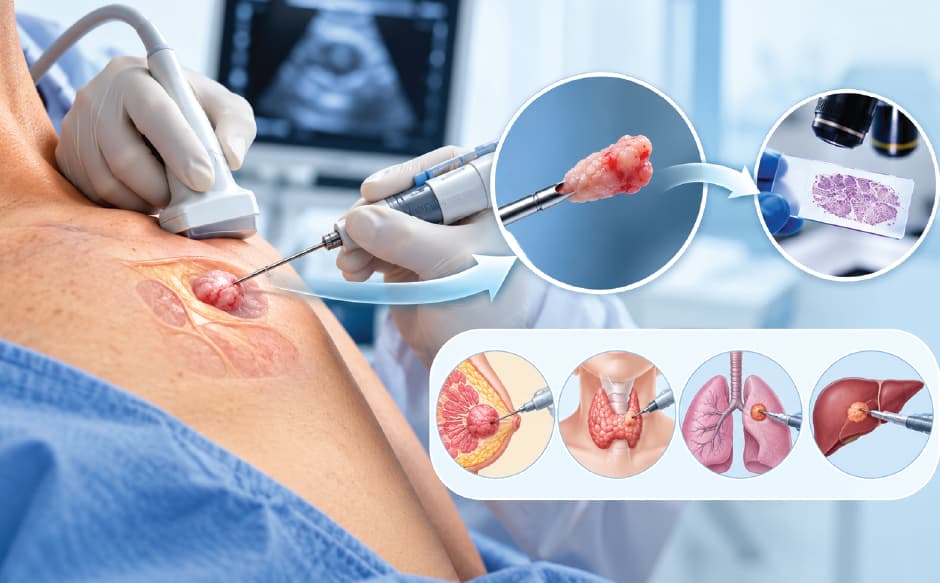
Genetic testing for endometrial cancer usually starts with tumour testing (immunohistochemistry or microsatellite instability testing) on a biopsy sample, followed by germline testing (a blood or saliva test) if the tumour result suggests a hereditary pattern. It's worth knowing that tumour screening alone isn't foolproof, in the FORCE-reported study cited above, about half of patients who carried an inherited mutation had tumours that did not show microsatellite instability, meaning family history still matters even when a single test comes back reassuring.
Genetic counselling is typically recommended if you have:
- Been diagnosed with endometrial cancer before age 50
- A personal or family history matching the red flags above
- A known Lynch syndrome or BRCA mutation elsewhere in the family
The value of testing isn't limited to the person diagnosed. A confirmed mutation opens the door to cascade testing for siblings, children, and parents, allowing relatives who test positive to start earlier and more frequent screening, long before any symptoms appear.
What Actually Causes Most Endometrial Cancer (It's Usually Not Genetics)
Since hereditary causes explain only a small fraction of cases, it's worth being equally clear about what drives the other 90%+. The strongest, well-documented risk factors are:
-
Obesity: Excess fat tissue produces additional oestrogen, which stimulates the endometrial lining
-
Type 2 diabetes and insulin resistance
-
Prolonged, unopposed oestrogen exposure, including certain hormone therapies, early menstruation, or late menopause
-
PCOS and chronic anovulation
-
Never having been pregnant
-
Age, most cases occur after 50
Warning Signs You Shouldn't Ignore
Regardless of whether the cause is genetic or not, the symptoms that should prompt a visit to a gynaecologist are the same:
-
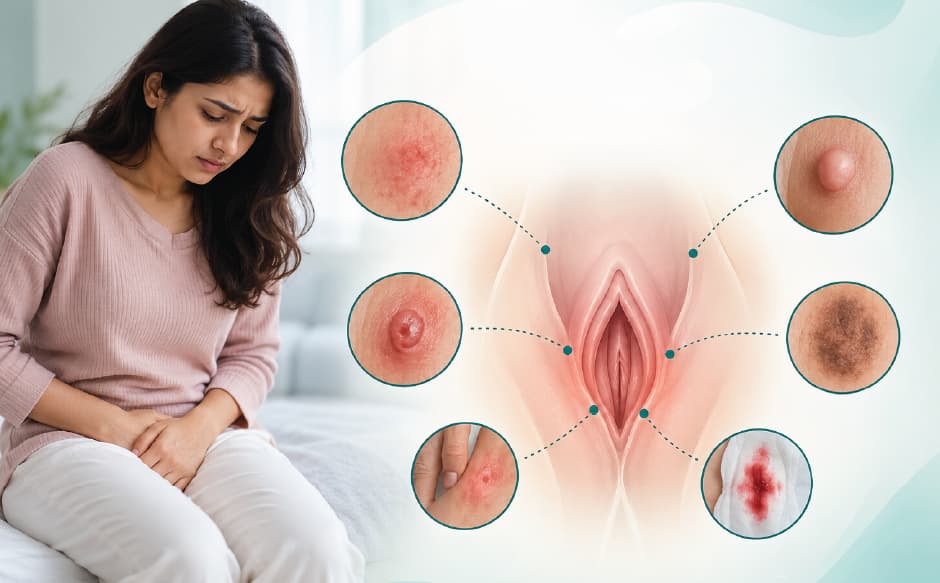
Any bleeding after menopause, even a small amount or spotting
-
Heavier, longer, or more irregular periods than usual (especially in women over 40)
-
Unusual vaginal discharge, watery or blood-tinged
-
Pelvic pain or pressure that doesn't resolve
-
Unexplained weight loss alongside any of the above
Postmenopausal bleeding, in particular, is abnormal until proven otherwise. It is the presenting symptom in the vast majority of endometrial cancer cases and is usually what leads to an early, highly treatable diagnosis.
Why NAVA Cancer Institute at Baby Memorial Hospital Is a Trusted Choice for Endometrial Cancer Care
Let's talk about this practically, the way we would if you were sitting across from us asking, "Okay, but where do I actually go for this?"
If you've been flagged as higher-risk, because of family history, early-onset symptoms, or a genetic test result, the hospital you choose matters almost as much as the diagnosis itself.
Baby Memorial Hospital (BMH), Kozhikode, has been part of North Kerala's healthcare landscape for over 38 years, and its dedicated cancer centre, NAVA Cancer Institute, brings together medical oncology, surgical oncology, radiation oncology, and gynaecologic care under one multidisciplinary tumour board, which matters enormously for a cancer type where the treatment plan depends on genetics, staging, and hormone status all at once.
A few things worth knowing if you're weighing your options:
-
Multidisciplinary tumour boards: Every case is reviewed jointly by gynaecologic oncologists, medical oncologists, radiation oncologists, and pathologists before a treatment plan is finalised, reducing the chance of a one-size-fits-all approach.
-
Advanced diagnostics and surgery: BMH's facilities include PET-CT, dual 1.5T MRI units, and the Da Vinci robotic surgical system, enabling minimally invasive hysterectomy and staging surgery with faster recovery, a meaningful consideration for women who want to return to normal life sooner.
-
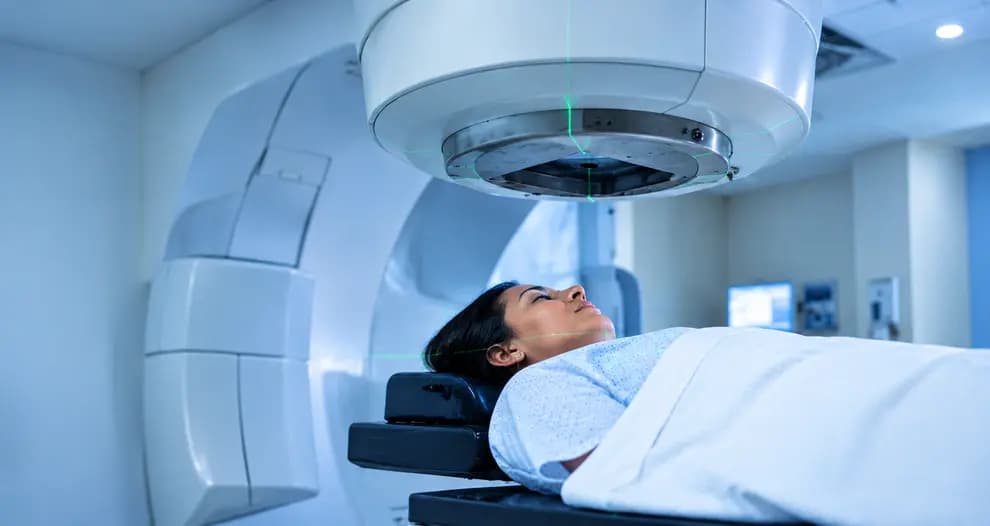
Radiation infrastructure: NAVA Cancer Institute is equipped with LINAC TrueBeam and brachytherapy technology for precise, image-guided radiotherapy when it's needed alongside or after surgery.
-
Experienced oncology consultants: The surgical oncology team, including consultants like Dr. John J. Alapatt, and radiation oncology specialists such as Prof. Dr. P.R. Sasindran, bring years of tertiary cancer-centre experience to complex gynaecologic cancer cases.
-
Accessible, transparent cost structure: As a tertiary referral hospital serving both Kerala residents and a growing number of patients from other states and abroad, BMH is known for offering advanced cancer care, da vinci robotic surgery, precision radiotherapy, and comprehensive diagnostics, at a cost meaningfully lower than equivalent treatment in many other countries, without compromising on the technology or expertise involved.
-
Support beyond treatment: Nutrition counselling, psychological support, and pain management are integrated into the care pathway, not offered as an afterthought.
None of this replaces a personal conversation with a specialist about your specific case, but if you're trying to understand whether a hospital can actually handle a genetically complex or early-onset endometrial cancer diagnosis with the seriousness it deserves, this is the kind of infrastructure and team depth to look for.
Conclusion
Endometrial cancer is not always hereditary, but certain family patterns and inherited mutations meaningfully raise risk. Knowing your family history and understanding which genetic conditions apply to you empowers better health decisions. If you have been diagnosed with endometrial cancer before age 50, have close relatives with early-onset cancers, or suspect a hereditary syndrome in your family, a conversation with your doctor or a genetic counsellor is a sensible next step. Genetic testing is safe, affordable, and increasingly accessible, and the knowledge you gain can guide your own healthcare and inform relatives of their risks.
You are not alone in navigating these concerns. Healthcare providers, genetic counsellors, and support communities exist to help you make informed, personalised choices. Early detection and proactive management can significantly improve outcomes for hereditary cancers.
Every family history is different, and reading about risk percentages online is never a substitute for a proper evaluation. You can chat with our medical assistant on the Whatsapp for quick guidance on next steps, or reach out directly to the gynaecologic oncology team at NAVA Cancer Institute, Baby Memorial Hospital, Kozhikode, to book a consultation.
Medical Disclaimer: This article is intended for general informational and educational purposes only and does not constitute medical advice, diagnosis, or treatment. Endometrial cancer risk, symptoms, and genetic factors vary by individual, and only a qualified healthcare provider can assess your personal risk based on your complete medical and family history. Please consult a gynaecologic oncologist or genetic counsellor at Baby Memorial Hospital or another qualified medical facility for personalised evaluation and care.