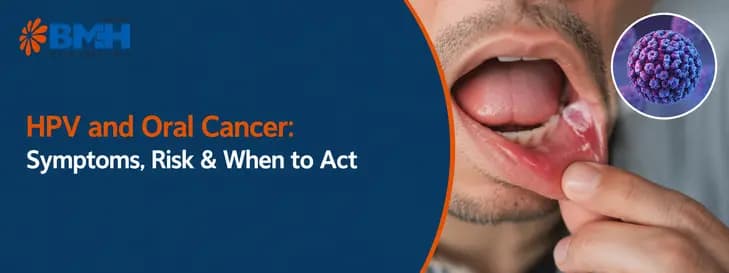

Human papillomavirus (HPV) is now the leading cause of oral cancer in many developed nations, and cases are rising in India too. Most people infected with HPV never develop cancer, but when high-risk strains persist in the mouth and throat, they can trigger changes that eventually turn cancerous.
The good news is that understanding your risk and staying informed about screening can help you catch problems early, when treatment is most effective.
What Is HPV, and How Does It Actually Cause Oral Cancer?
Human papillomavirus is a group of more than 200 related viruses, a small number of which are classified as "high-risk" because they can drive normal cells toward cancerous change. In the mouth and throat, the strain responsible for the overwhelming majority of cases is HPV-16, the same high-risk strain best known for causing cervical cancer.
HPV is transmitted through skin-to-skin and mucosal contact, most commonly oral sexual contact. Once the virus infects the lining of the oropharynx, it can integrate two viral genes, E6 and E7, into the host cell's machinery.
These genes disable two of the body's most important tumour-suppressor proteins (p53 and Rb), allowing infected cells to divide unchecked. Pathologists identify this HPV-driven pathway by testing tumour tissue for p16, a protein that accumulates when this process is underway, p16-positive status is now the standard clinical marker used to confirm HPV-related disease.
This is a fundamentally different carcinogenic route from tobacco- or alcohol-driven oral cancer, which develops through direct chemical damage to the mucosal lining over years of exposure. That difference in "how the cancer starts" is also why HPV-related cases tend to appear in younger patients, with no history of smoking or chewing tobacco, and why their tumours often respond differently to treatment.
Oral Cavity Cancer vs. Oropharyngeal Cancer: The Distinction
Many patient-facing articles use "oral cancer" and "HPV" in the same sentence without clarifying an important anatomical distinction, and it matters for anyone trying to understand their own risk.
| Oral Cavity Cancer | Oropharyngeal Cancer | |
|---|---|---|
| Location | Lips, front two-thirds of the tongue, inner cheeks, gums, floor and roof of the mouth | Tonsils, base of the tongue, soft palate, back wall of the throat |
| Primary cause | Tobacco (smoked and smokeless), betel/areca nut, alcohol | High-risk HPV (chiefly HPV-16), with tobacco/alcohol as co-factors |
| HPV prevalence in Indian patients | ~16% | ~22% |
| Typical patient profile | Older adults with a tobacco or areca-nut habit | Increasingly, younger to middle-aged adults with no tobacco history |
The figures above come from a systematic review and meta-analysis of Indian head-and-neck cancer patients published in JCO Global Oncology.
Symptoms: What HPV-Related Oral and Oropharyngeal Cancer Looks Like
Oral HPV infection itself is almost always silent, there is no reliable early symptom, and no blood or swab test that can predict who will progress to cancer (UCSF Health). This is precisely why symptom awareness for the cancer, rather than the infection, matters so much.
| Site | Watch for |
|---|---|
| Throat / tonsils (oropharyngeal) | Persistent sore throat lasting over 2–3 weeks, a sensation of something stuck in the throat, pain or difficulty swallowing, hoarseness, earache without ear infection, a painless lump in the neck |
| Mouth (oral cavity) | A mouth sore or ulcer that hasn't healed in 3 weeks, a red or white patch on the gums or tongue, unexplained bleeding, loose teeth or ill-fitting dentures |
A painless lump in the neck is, in practice, one of the most common first signs that brings HPV-positive oropharyngeal cancer patients to a doctor, often because the primary tumour on the tonsil or base of tongue is small and easy to miss on self-examination, while the lymph node it has spread to is not.
Any of these symptoms lasting beyond two to three weeks warrants an ENT or oncology evaluation, not because most cases turn out to be cancer, but because early-stage disease is dramatically easier to treat than late-stage disease.
Who Is at Risk?
-
HPV-16 exposure: the dominant risk factor for oropharyngeal cancer specifically, transmitted through oral sexual contact.
-
Multiple lifetime sexual partners and oral sex practice: associated with higher rates of oral HPV infection (ecancer references an urban-vs-rural difference tied to these behavioural patterns).
-
Sex: HPV-related oropharyngeal cancer is roughly four times more common in men than in women (American Dental Association, MouthHealthy).
-
Age: commonly diagnosed between the late 40s and 60s, though the HPV-driven subset skews younger than tobacco-driven oral cancer.
-
Immunosuppression: including HIV infection or long-term immunosuppressive medication, which reduces the body's ability to clear HPV naturally.
-
Concurrent tobacco and alcohol use: does not cause HPV infection but can compound risk and worsen outcomes when combined with HPV-positive disease.
It's worth noting explicitly: unlike tobacco-driven oral cancer, a large proportion of HPV-related oropharyngeal cancer patients have no conventional "risk profile" at all, no smoking history, no alcohol history, no visible warning signs before a lump appears. This is exactly why symptom vigilance, not lifestyle profiling alone, is the safety net that matters most for this specific cancer type.


Diagnosis: How Doctors Confirm HPV-Related Oral Cancer
There is currently no screening test that can predict which oral HPV infections will progress to cancer, and testing healthy individuals for oral HPV is not recommended by major oncology bodies, since roughly 1% or fewer of high-risk oral HPV infections ever progress to malignancy (Oral Cancer Foundation). Diagnosis instead follows a suspicious symptom or finding:
-
Clinical and endoscopic examination: direct visualisation of the oral cavity and, using a flexible nasolaryngoscope, the oropharynx.
-
Imaging: CT, MRI, or PET-CT to map the extent of disease and check lymph node involvement.
-
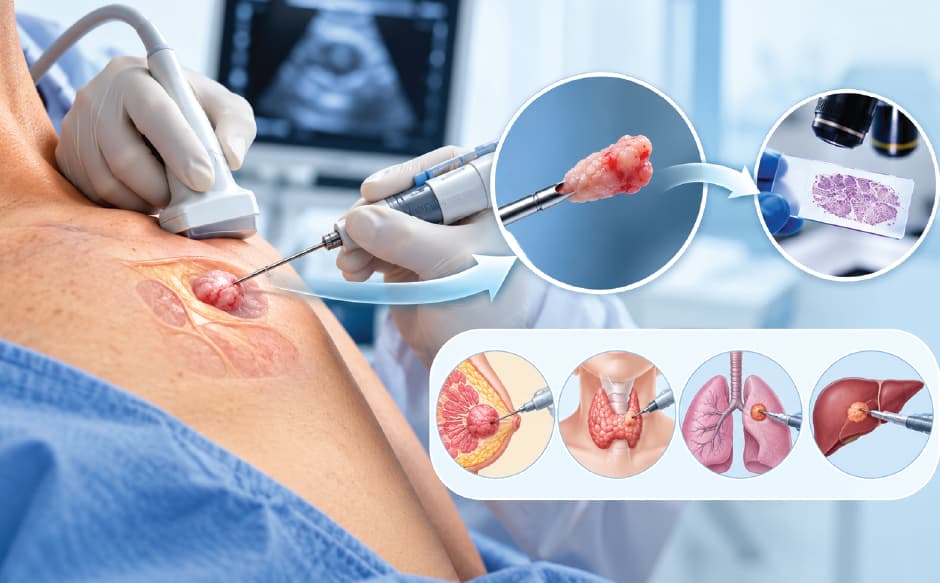
Biopsy with p16 immunohistochemistry: tissue sampling followed by staining for the p16 protein, the clinical proxy used to confirm HPV-driven cancer; some centres additionally run HPV DNA or E6/E7 mRNA testing for confirmation
At NAVA Cancer Institute, BMH, every suspected head-and-neck cancer case, including oropharyngeal presentations, goes through this structured pathway, with p16 status routed to the multidisciplinary tumour board so that HPV status factors directly into the staging and treatment discussion. (For the full diagnostic workflow used across all head-and-neck cancer types
Treatment Options at a Glance
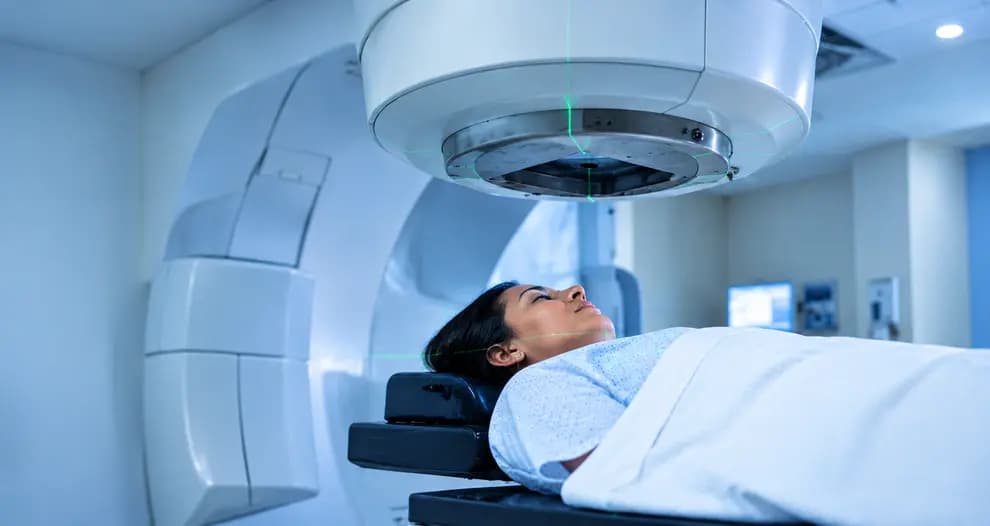
Treatment for HPV-related oral and oropharyngeal cancer follows the same core modalities used across head-and-neck oncology, surgery (including transoral robotic surgery for accessible oropharyngeal tumours), radiation therapy (IMRT/VMAT), chemoradiation, and immunotherapy for recurrent or metastatic disease.
What changes with confirmed HPV-positive status is the conversation around treatment intensity: because outcomes are generally better, some centres and clinical trials are actively studying "de-escalated" treatment protocols for HPV-positive patients, aiming to reduce long-term side effects like dry mouth and swallowing difficulty without compromising cure rates.
This is an evolving, actively researched area, and treatment de-escalation should only ever be considered within a structured tumour board discussion, not as a default assumption.
For a detailed breakdown of surgical, radiation, and systemic treatment options used across head-and-neck cancer, see BMH's Head and Neck Cancer treatment guide.
Prevention: Can the HPV Vaccine Really Stop Oral Cancer?
The HPV vaccine (commonly Gardasil 9 in India) protects against the high-risk HPV strains, including HPV-16, responsible for the large majority of HPV-related cancers. The CDC recommends two doses for boys and girls aged 11–12, with catch-up vaccination approved through age 45.
Here's the honest caveat, worth stating plainly rather than glossing over: large-scale clinical studies confirming that HPV vaccination directly prevents oropharyngeal cancer are still maturing, simply because these cancers typically take 15–30 years to develop after infection, and widespread HPV vaccination programmes are more recent.
What is well-established is that the vaccine prevents the initial HPV infection in the strains responsible for the disease, and preventing infection is, mechanistically, the most direct route to preventing the cancers that infection can eventually cause. Beyond vaccination, consistent condom or dental dam use during oral sexual contact lowers (though does not eliminate) transmission risk, since HPV can infect skin not covered by protection.
Why Patients Across India and Abroad Choose BMH's NAVA Cancer Institute for HPV Related Cancer Care
For patients diagnosed with HPV-related oropharyngeal cancer, treatment planning at NAVA Cancer Institute, Kozhikode, is based on multidisciplinary review rather than a single specialist's recommendation. Biopsy and p16 results, imaging, tumour location, stage, and overall health are reviewed collectively to determine the most appropriate treatment approach.
What Patients Can Access at NAVA Cancer Institute
-
Multidisciplinary tumour board: Head-and-neck surgical oncology, radiation oncology, medical oncology, pathology, and speech-language specialists contribute to treatment planning.
-
Head-and-neck surgical expertise: Dr. John J. Alapatt, Senior Consultant in Surgical Oncology, manages complex head-and-neck cancer surgery, including robotic oncosurgery where appropriate.
-
Specialised radiation oncology: Dr. P.R. Sasindran, Senior Consultant in Radiation Oncology, leads head-and-neck radiation planning and uses techniques such as IMRT and IGRT to deliver more precisely targeted treatment.
-
Integrated treatment planning: Surgery, radiation, and systemic therapy can be considered together based on the cancer's stage and individual clinical factors rather than following a one-size-fits-all pathway.
-
Second-opinion support: Patients who already have a biopsy, p16 report, PET-CT, CT/MRI, or treatment recommendation can seek a multidisciplinary review before proceeding with treatment.
Support for Patients Travelling to Kozhikode
Patients from other Indian states and overseas can coordinate diagnosis and treatment through BMH's international patient services. Support can include medical documentation, appointment coordination, treatment scheduling, accommodation assistance, and interpreter support.
For patients travelling from the Gulf, Bangladesh, Sri Lanka, and other regions, this can make it possible to complete specialist evaluation and cancer treatment in one coordinated centre rather than arranging separate consultations across multiple hospitals.
If you have a new HPV-related cancer diagnosis or want an independent review of an existing treatment plan, you can consult BMH's NAVA Cancer Institute in Kozhikode.
Conclusion
The link between HPV and oral cancer is no longer a footnote in oncology, it's actively reshaping who gets diagnosed with head-and-neck cancer in India and why. The most important practical takeaway is the one this article has tried to make precise rather than vague: HPV's strongest link is to oropharyngeal cancer (the throat), not oral cavity cancer (the front of the mouth), and a persistent sore throat, hoarseness, or painless neck lump lasting beyond two to three weeks deserves evaluation regardless of your tobacco history.
The reassuring counterpart is that HPV-positive disease, when caught and staged correctly, tends to respond better to treatment than its tobacco-driven counterpart. Vaccination remains the single most effective long-term prevention tool available, and timely evaluation remains the most effective near-term one.
If any of the symptoms described above sound familiar, don't wait for them to resolve on their own, get evaluated by an ENT specialist or head-and-neck oncologist.
Chat with Our Cancer Care Assistant, available 24/7 to help you understand your symptoms, the diagnostic process, and connect you with the right specialist at NAVA Cancer Institute, BMH.
Medical Disclaimer: This article is intended for general health information and educational purposes only. It does not constitute medical advice and should not replace professional consultation with a qualified healthcare provider. Symptoms described here may have multiple causes, and only a trained clinician can evaluate your individual situation. If you are experiencing any of the symptoms described above, particularly those lasting more than two to three weeks, please consult an ENT specialist or oncologist promptly.