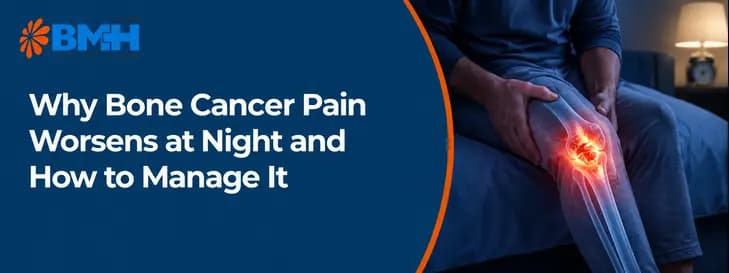

Bone cancer pain that wakes you at night or intensifies when you lie down is a sign your body needs urgent medical attention. This type of pain often stems from tumour growth pressing on nerves, inflammation around the affected bone, and reduced physical activity after dark that changes blood flow and increases pressure within the bone. Understanding why this happens, and how it differs from arthritis or simple muscle strain, helps you recognise when to contact an oncology specialist.
What Is Bone Cancer and How Does Night Pain Develop
Bone cancer, or primary bone malignancy, is a rare tumour that starts in bone tissue itself, not cancer that has spread from elsewhere in your body. When a tumour grows, it damages healthy bone structure and irritates surrounding nerve endings and soft tissues. This damage triggers inflammation and swelling that press on nerves, creating sharp, throbbing, or aching pain. At night, your body's natural pain-suppressing chemicals (called endogenous opioids) drop, making you more sensitive to discomfort. Additionally, lying down changes how blood flows through and around the affected bone, potentially increasing internal pressure and nerve irritation. The combination of reduced activity, horizontal positioning, and lower pain tolerance at night creates an ideal storm for intensified bone cancer pain. Young people and older adults alike can develop bone cancer, though it most commonly appears in people aged 10-30 years or over 60. If you notice persistent bone pain that doesn't improve with rest or over-the-counter pain relief, seeking evaluation is essential.
Why Does Bone Cancer Pain Worsen at Night Compared to Daytime
Nighttime bone cancer pain worsens for several interconnected reasons that make evening and early morning hours particularly difficult. First, during the day you move and bear weight on your limbs, which actually helps prevent fluid buildup and reduces nerve pressure around the tumour site. When you stop moving at night, inflammatory fluid accumulates inside the bone cavity, raising pressure on pain-sensitive nerves. Second, your body's circadian rhythm (24-hour internal clock) causes cortisol and other natural pain-fighting hormones to decline sharply after sunset. This means your nervous system becomes hypersensitive exactly when you need sleep most. Third, lying down shifts your body weight and changes gravitational forces on the affected bone, sometimes compressing nearby nerves differently than when you're upright. Finally, psychological factors matter: when you're in bed with fewer distractions, you pay more attention to pain signals that you might ignore during busy daytime hours. According to research published in the Journal of Pain and Symptom Management, nocturnal pain flares are among the most distressing symptoms reported by bone cancer patients, often disrupting sleep and quality of life. This disruption can slow healing and recovery, making it even more important to address nighttime pain promptly with a specialist.
Key Symptoms of Bone Cancer You Should Never Ignore
Recognising bone cancer symptoms early improves your chances of effective treatment and management. The most common warning sign is persistent bone pain that doesn't ease with rest, ice, or standard pain relievers after two to three weeks. This pain may feel deep, throbbing, or sharp and often occurs in the leg, arm, pelvis, or spine, anywhere large bones exist. Beyond pain, watch for these additional red flags: a lump or swelling near the bone that feels warm and tender; stiffness or reduced movement in a nearby joint; unexplained limping or difficulty bearing weight on the affected limb; fractures or breaks that happen with minor injury or no clear cause; and general fatigue, fever, or unintentional weight loss that suggests your body is fighting illness.
Many patients also report pain that wakes them from sleep or prevents them from finding a comfortable position at night. Some experience pain that radiates down an arm or leg if the tumour is pressing on a nerve. Swelling may appear gradually or suddenly, and the skin over the affected area might feel warm or show visible redness. These symptoms can mimic sports injuries, arthritis, or growing pains, especially in younger patients, which is why professional evaluation is crucial. Never assume bone pain is normal or will resolve on its own; persistent symptoms warrant imaging and specialist assessment.
How Bone Cancer Pain Differs From Arthritis and Other Conditions
Distinguishing bone cancer pain from arthritis, fibromyalgia, or musculoskeletal strain is vital because each condition requires different treatment. Below is a comparison of key differences:
| Feature | Bone Cancer Pain | Arthritis Pain | Muscle Strain |
|---|---|---|---|
| Location | Localised to one bone; deep and constant | Multiple joints; symmetric (both knees, for example) | Diffuse muscle area; often bilateral |
| Night Severity | Markedly worse at night; may wake you from sleep | Worse with morning stiffness, improves with movement | Usually improves when you rest |
| Age of Onset | Any age, but peaks at 10-30 and 60+ | Gradual onset, usually 40+ years old | Immediate onset after activity |
| Swelling | Warm, tender, rapidly growing lump | Gradual, symmetric, sometimes warm | Minor puffiness, resolves quickly |
| Response to NSAIDs | Minimal relief from ibuprofen or naproxen | Significant relief; pain control improves | Pain disappears within days |
| Systemic Symptoms | Fatigue, fever, weight loss, night sweats | Fatigue may occur but no fever or sweats | None; isolated to affected area |
Bone cancer pain is typically focused in one spot, doesn't follow the bilateral (both-sides) pattern of many joint conditions, and fails to improve with standard anti-inflammatory medicines. The presence of a visible or palpable lump, combined with pain that intensifies at night and doesn't respond to rest or over-the-counter analgesics within 3-4 weeks, strongly suggests the need for specialist imaging. Arthritis, by contrast, usually affects multiple joints symmetrically and improves with movement and anti-inflammatory drugs. If you're uncertain, a specialist can order imaging (X-rays, CT, MRI) to provide a definitive answer.


When to Seek Specialist Care and Diagnostic Evaluation
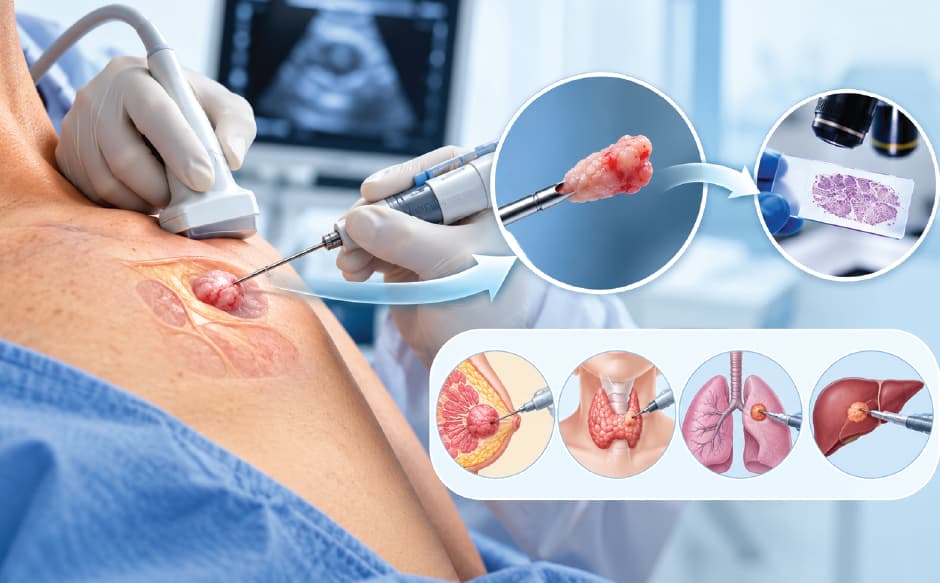
You should contact an oncology specialist if you experience bone pain lasting more than two to three weeks, especially if it worsens at night, doesn't improve with rest or over-the-counter pain relief, or is accompanied by a growing lump, fever, or unexplained weight loss. Early evaluation is not only reassuring if the pain proves benign, but it also ensures prompt diagnosis and treatment planning if cancer is present. Don't wait for pain to become unbearable or for multiple symptoms to accumulate before reaching out. A specialist evaluation typically begins with a detailed medical history and physical examination, followed by imaging studies such as X-rays, CT scans, or MRI to visualise bone structure and any abnormalities. In some cases, a biopsy (small tissue sample taken under local or general anaesthesia) confirms whether a lesion is cancerous. These diagnostic steps usually take one to two weeks from initial consultation to final results. Early detection of bone cancer significantly improves treatment options and outcomes, allowing specialists to plan surgery, radiation, chemotherapy, or a combination tailored to your specific tumour type, size, and location. If you live in or near Kozhikode, Kannur, Thodupuzha, Payyanur, or Vadakara, reputable oncology centres in these regions can provide comprehensive evaluation and care planning.
Managing and Reducing Nighttime Bone Cancer Pain
Once a cause is confirmed, pain control is approached in layers rather than through a single medication:
- Analgesic timing: Doses are often adjusted to specifically cover the overnight cortisol dip, rather than being spread evenly across waking hours alone.
- Bone-modifying agents: Medications such as bisphosphonates or denosumab reduce the rate of bone breakdown and lower the risk of skeletal-related events like fractures.
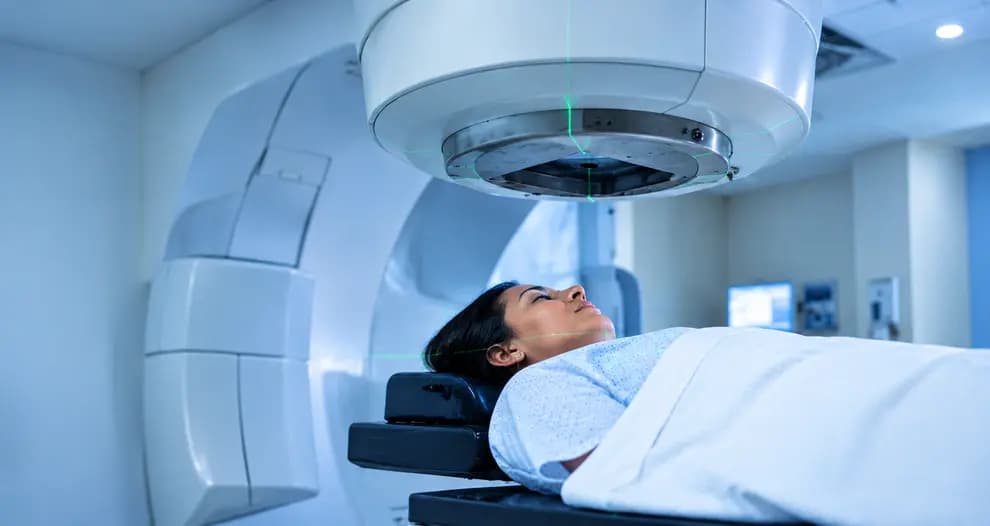
- Palliative radiotherapy: For a localised, painful bone metastasis, a short course of targeted radiotherapy provides substantial and often rapid pain relief.
- Orthopaedic stabilisation: When imaging shows a bone at high risk of fracture, surgical stabilisation can pre-emptively reinforce it before a break occurs.
- Non-drug measures: Positioning that offloads pressure from the affected bone, a supportive mattress, gentle warmth, and relaxation routines before bed reduce the mechanical and attentional contributors to night pain alongside medical treatment.
Why Patients Across India Choose NAVA Cancer Institute at Baby Memorial Hospital for Bone Cancer and Bone Metastases Care
If you're trying to make sense of a diagnosis or a loved one's symptoms right now, it helps to know what a well-coordinated care pathway for this specific problem actually looks like, because bone pain from cancer is rarely a one-specialist problem.
At NAVA Cancer Institute, part of Baby Memorial Hospital (BMH) in Kozhikode, patients presenting with unexplained or night-worsening bone pain are seen through a multidisciplinary tumour board that brings medical oncology, surgical oncology, radiation oncology, and orthopaedic input together for the same case, so a patient isn't shuttled between departments to get a single, coordinated diagnosis and plan. Imaging (X-ray, CT, MRI, and bone scan) and oncology consultation are available on the same campus, which matters when the diagnostic pathway described above needs to move quickly.
For patients whose bone pain turns out to be from metastatic disease, NAVA Cancer Institute's radiation oncology unit, led by Prof. Dr. P.R. Sasindran, provides targeted palliative radiotherapy aimed specifically at pain relief for bone metastases. Where a bone is structurally compromised and needs surgical reinforcement or tumour resection, surgical oncology under Dr. John J. Alapatt coordinates with orthopaedic oncology to plan stabilisation alongside the patient's broader cancer treatment, rather than treating the bone issue as separate from the cancer care.
BMH has also grown into a recognised referral point for patients travelling from across Kerala, other Indian states, and neighbouring countries, largely because Kozhikode's international airport makes the city easier to reach for both domestic and international patients, and because treatment costs at Indian tertiary centres like BMH remain considerably lower than comparable care in the West or the Gulf, without a reduction in the depth of the multidisciplinary team involved.
For a symptom like night-worsening bone pain, where getting from “something feels wrong” to “we know what this is and how we're treating it” quickly genuinely changes outcomes, that combination of speed, coordination, and affordability is what patients and their families tend to notice most.
Conclusion
Bone pain that worsens at night is a real, physiologically explainable pattern, driven by a nighttime dip in the body's natural anti-inflammatory hormone, reduced daytime distraction, mechanical pressure changes from lying down, cooler circulation, and, when cancer is involved, direct nerve sensitisation by the tumour itself.
It is not, by itself, proof of cancer; most cases have benign, treatable explanations. But when it is persistent, unrelieved by rest or painkillers, and paired with swelling, weight loss, or a personal history of cancer, it is exactly the pattern that deserves prompt imaging and a specialist opinion rather than being managed with painkillers alone.
Whether the underlying cause turns out to be a rare primary bone tumour or, far more commonly, metastatic spread from another cancer, early, coordinated evaluation, of the kind offered through NAVA Cancer Institute's multidisciplinary tumour board at Baby Memorial Hospital, is what allows pain to be controlled and the underlying disease to be treated effectively.
Persistent or night-worsening bone pain deserves a proper evaluation, not guesswork. You can chat with our medical assistant for guidance on next steps, or connect directly with the oncology team at NAVA Cancer Institute, Baby Memorial Hospital, Kozhikode.
Medical Disclaimer: This article is for general informational purposes only and is not a substitute for professional medical advice, diagnosis, or treatment. Always seek the advice of a qualified physician or oncologist regarding any medical condition, symptoms, or before making any decisions related to your health or treatment. If you are experiencing severe or worsening symptoms, seek medical attention promptly.