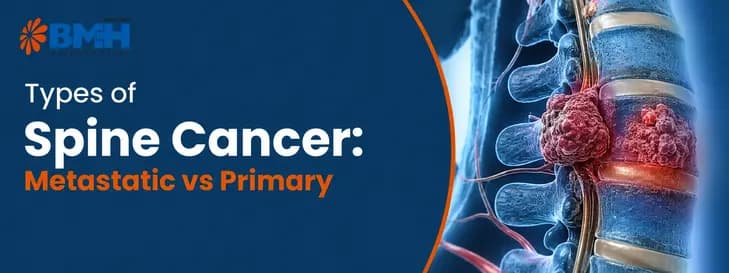

Spine cancer falls into two main categories: primary tumors that start in the spine itself, and metastatic tumors that spread from cancer elsewhere in your body. Understanding which type you or a loved one may have is the first step toward effective treatment.
This article breaks down what separates primary spine tumours from metastatic (secondary) ones, by origin, type, location, symptoms, and how doctors actually tell them apart on imaging and biopsy, so you know what questions to ask before your next appointment.
What Is Spine Cancer, Exactly?
The spine is made up of 33 vertebrae (bones) stacked around the spinal cord and the nerve roots that branch out to the rest of the body. A "spinal tumour" can grow in any of these structures, the bone itself, the discs between vertebrae, the protective membranes around the spinal cord, or the cord and nerves directly. Where a tumour sits, and whether it originated there or arrived from another organ, together determine what kind of spine cancer a person actually has.
Also Read: Spinal Tumor vs Spine Cancer: What's the Difference?
Types of Primary Spine Tumours
Primary spine tumours are classified as benign or malignant, and the split matters for how urgently they're treated.
Benign primary tumours (most common overall):
-
Hemangioma: The single most common primary spine tumour, usually found incidentally on imaging done for unrelated reasons; rarely needs treatment.
-
Osteoid osteoma / osteoblastoma: Small, painful bone lesions typically in younger patients.
-
Schwannoma and neurofibroma: Grow from the covering of nerve roots.
-
Meningioma: Arises from the membrane covering the spinal cord; more common in middle-aged and older women.
Malignant primary tumours (rarer, but require oncologic management):
-
Chordoma: A slow-growing but locally aggressive cancer, most often at the base of the spine or skull.
-
Chondrosarcoma: Arises from cartilage-forming cells; uncommon in the spine but possible.
-
Osteosarcoma: An aggressive bone cancer, more typically seen in the limbs but occasionally the spine.
-
Plasmacytoma / multiple myeloma: The most common malignant primary spinal tumour, accounting for roughly 20–30% of malignant cases; it's a cancer of plasma cells in the bone marrow.
Key Differences Between Primary and Metastatic Spine Cancer
Primary and metastatic spine cancers differ fundamentally in origin, prevalence, and treatment approach. Review the table below to understand these distinctions clearly.
| Feature | Primary Spine Cancer | Metastatic Spine Cancer |
|---|---|---|
| Origin | Starts directly in spine tissue | Spreads from cancer elsewhere |
| Frequency | Rare (fewer than 10,000 cases/year globally) | Common (97% of malignant spine tumors) |
| Cell Type | Osteosarcoma, chondrosarcoma, or Ewing's sarcoma | Depends on primary cancer source |
| Age of Onset | Often affects younger adults and children | Typically affects adults over 50 |
| Prognosis | Varies widely; depends on grade and stage | Reflects overall cancer burden |
| Treatment Focus | Remove or control the spine tumor | Address spine and primary cancer |
Primary tumors are generally treated with surgery and/or radiation aimed at the spine itself. Metastatic disease requires a multidisciplinary approach that combines chemotherapy, radiation, immunotherapy, or hormone therapy depending on the primary cancer type. Your oncologist will tailor recommendations based on imaging findings, your overall health, and the cancer's stage.


Symptoms: How Primary and Metastatic Tumours Present Differently
Both types can cause similar early symptoms, which is exactly why self-diagnosis is unreliable:
-
Persistent back or neck pain, especially pain that worsens at night or while lying down (a pattern less typical of mechanical/muscular back pain).
-
Pain that doesn't improve with rest, stretching, or over-the-counter medication.
-
Numbness, tingling, or weakness in the arms or legs.
-
Changes in bowel or bladder control (a red-flag symptom requiring urgent evaluation).
-
Unintentional weight loss, fatigue, or a known history of cancer.
The presence of a known primary cancer diagnosis is the single biggest clue pointing toward a metastatic origin. Someone with no cancer history and a slow-growing, well-defined lesion is statistically more likely to have a primary, often benign, tumour.
Also Read: Early Stage Cancer Treatment Options That Actually Work
How Doctors Diagnose and Tell the Two Apart
Imaging alone often can't distinguish primary from metastatic disease with certainty, the workup usually includes several layers:
-
MRI with contrast: the first-line imaging tool, giving detailed views of the tumour, spinal cord, and surrounding soft tissue.
-
CT scan: better for assessing bone destruction and structural stability.
-
PET-CT: helps locate a primary tumour elsewhere in the body if metastasis is suspected, and checks for additional spread.
-
Image-guided biopsy: often the deciding step, confirming the tissue type under a microscope when imaging alone is inconclusive.
-
TNM staging: for confirmed metastatic disease, doctors use the Tumour-Node-Metastasis system tied to the original cancer, not a separate spine-specific stage.
-
Spinal Instability Neoplastic Score (SINS): a scoring system that grades mechanical instability of the spine to help decide whether surgery is needed regardless of tumour type.
Treatment Approaches by Tumour Type
Treatment goals diverge sharply once origin is confirmed:
-
Primary, benign tumours are frequently monitored or surgically removed with curative intent, since complete removal often means the problem is resolved.
-
Primary, malignant tumours (like chordoma or osteosarcoma) typically need wide surgical resection, sometimes "en bloc" removal of the tumour in one piece, often combined with radiation.
-
Metastatic tumours are rarely treated with the goal of removing "all" cancer, since the disease is already systemic. Instead, treatment focuses on relieving spinal cord compression, stabilising the spine, and controlling pain, commonly through a combination of separation surgery (decompressing the cord surgically) followed by stereotactic body radiotherapy (SBRT), alongside systemic treatment (chemotherapy, targeted therapy, or immunotherapy) directed at the original cancer.
Because the surgical techniques themselves, from minimally invasive decompression to robotic-assisted approaches, deserve their own explanation, we've covered that in detail separately if you want to go deeper into what spinal tumour surgery actually involves.
How NAVA Cancer Institute at BMH Approaches a Spinal Tumour Diagnosis
At NAVA Cancer Institute, Baby Memorial Hospital, Kozhikode, spinal tumour diagnosis begins with one critical question: Is the tumour primary to the spine, or has cancer spread to the spine from another organ? Getting this distinction right helps determine whether surgery, radiotherapy, systemic treatment, or a combination is appropriate.
The approach brings multiple specialists and diagnostic services together:
-
Spine surgery: Led by senior consultant Dr. Sandesh Pacha, fellowship-trained in spine surgery at the Indian Spinal Injuries Centre, New Delhi, and Nanoori Hospital, South Korea.
-
Multidisciplinary tumour board: Spine surgery, medical oncology, surgical oncology, and radiation oncology review complex cases together before treatment is finalised.
-
Advanced imaging: In-house dual 1.5T MRI and Discovery IQ PET-CT help assess the tumour, its extent, and possible spread.
-
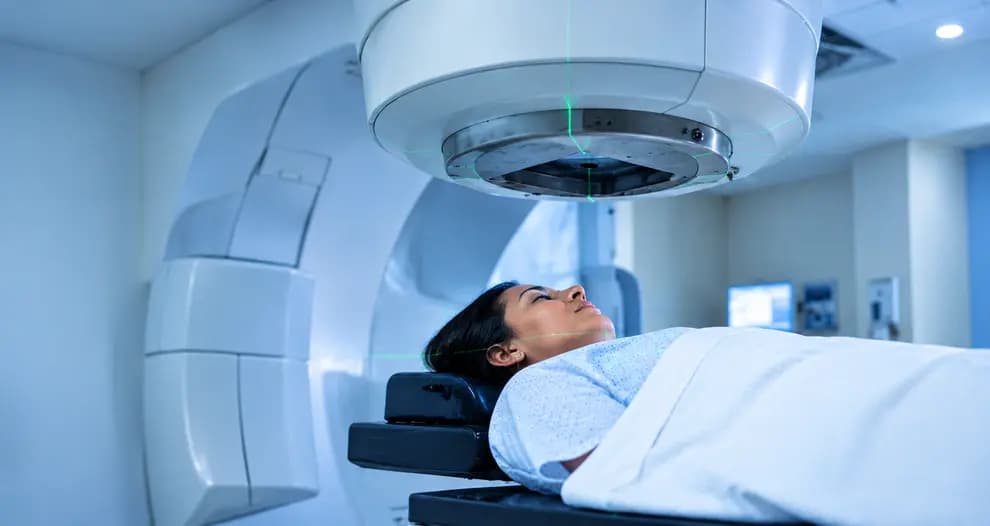
Treatment planning: Depending on the diagnosis, patients may be considered for TrueBeam LINAC radiotherapy, surgery, systemic cancer treatment, or combined approaches.
-
Robotic surgery: Da Vinci X robotic surgery is available when clinically appropriate for eligible cancers.
This integrated approach is particularly important because treatment can vary significantly depending on the diagnosis. A patient with a single spinal metastasis and otherwise controlled cancer may be considered for focused local treatment, while someone with widespread metastatic disease may require a different strategy focused on overall disease control.
For patients travelling from across Kerala, other Indian states, or Gulf countries, having imaging, specialist consultation, diagnosis, staging, and multidisciplinary treatment planning coordinated within one centre can also reduce repeated hospital visits. Remote second opinions are available for patients who already have scans, biopsy reports, or a diagnosis from another hospital and want their case reviewed before deciding on treatment.
The goal is straightforward: establish the diagnosis accurately first, then select the treatment that best fits the tumour type, extent of disease, and the patient's overall condition.
Conclusion
The distinction between primary and metastatic spine cancer isn't a technicality, it's the single factor that determines whether treatment aims to cure or to control, and which specialists need to be in the room from day one.
Given that metastatic tumours outnumber primary ones by more than 10 to 1, a new spine finding almost always warrants a search for a primary cancer elsewhere before any treatment decision is finalised.
If you or a family member has been told there's a mass on the spine, the most useful first question to ask your care team isn't "what's the treatment?" it's "do we know yet where this started?"
Chat with our medical assistant on the NAVA Cancer Institute page for guidance on next steps, or book a consultation with our spine and oncology tumour board at Baby Memorial Hospital, Kozhikode.
Medical Disclaimer: This article is intended for general informational purposes only and does not constitute medical advice, diagnosis, or treatment. Every patient's condition is unique, and only a qualified spine surgeon or oncologist can evaluate your specific imaging, symptoms, and history to recommend an appropriate course of action. Please consult a healthcare professional for personalised medical guidance. Baby Memorial Hospital and NAVA Cancer Institute are not responsible for decisions made solely on the basis of this content.