
Triple negative breast cancer (TNBC) is a subtype of breast cancer that lacks three important protein markers: estrogen receptors, progesterone receptors, and HER2 protein. This absence of these markers makes TNBC more challenging to treat than other breast cancer types because many targeted therapies don't work.
This article breaks down what actually defines TNBC, why it behaves differently from other breast cancers, and what the real treatment options look like today.
What Is Triple Negative Breast Cancer?
Triple negative breast cancer is a form of breast cancer where cancer cells test negative for three key proteins: estrogen receptor (ER), progesterone receptor (PR), and human epidermal growth factor receptor 2 (HER2). When pathologists examine your cancer cells under a microscope and run special tests, they look for these three proteins.
If all three tests come back negative, your cancer is classified as triple negative. This classification matters because it changes which treatments your doctor can recommend. About 10 to 15 percent of all breast cancers are triple negative, according to research published in Cancer Management and Research.
Triple negative breast cancer often grows quickly and is considered more aggressive than hormone-positive types. However, aggressive growth also means some treatments may work effectively against it.
Characteristics That Set TNBC Apart
TNBC isn't simply "breast cancer without receptors" it behaves differently in ways that shape how it's managed.
Faster growth, higher grade at diagnosis. TNBC tumours are more often diagnosed at a higher histological grade, meaning the cells look more abnormal under a microscope and tend to divide more quickly than typical hormone-receptor-positive tumours.
A recurrence pattern that front-loads risk. Unlike hormone-receptor-positive breast cancers, where recurrence risk stays elevated for a decade or more, TNBC's recurrence risk is highest in the first three years after treatment and drops meaningfully after that, which is why the follow-up schedule in the first 36 months tends to be more intensive.
More common in younger women. While breast cancer overall skews toward postmenopausal women, TNBC is disproportionately diagnosed in women under 40 and in premenopausal patients generally.
Distinct metastasis pattern. When TNBC does spread, it more frequently travels to the lungs, brain, and bones rather than following the bone-first pattern more typical of hormone-receptor-positive disease, a detail that shapes what surveillance imaging a treatment team will order
How Does Triple Negative Breast Cancer Differ From Other Breast Cancer Types?
Breast cancer classification depends on what proteins appear on cancer cells, and this determines treatment options. Triple negative cancer lacks the three main targets that other breast cancers have, which limits hormone therapy and HER2-targeted drugs. Here's how the main types compare:
| Feature | Hormone-Positive | HER2-Positive | Triple Negative |
|---|---|---|---|
| Estrogen receptors | Present | May be present | Absent |
| Progesterone receptors | Present | May be present | Absent |
| HER2 protein | Absent | Overproduced | Absent |
| Treatment approach | Hormone therapy effective | Trastuzumab and similar drugs | Chemotherapy primary |
| Growth rate | Often slower | Moderate to fast | Often rapid |
Because triple negative cancers lack these protein targets, doctors typically rely on chemotherapy as the main treatment rather than targeted therapies. Hormone blockers and HER2-targeting drugs won't work because the cancer cells don't have those receptors. This doesn't mean treatment is impossible, it means your oncology team will focus on different, often systemic approaches that attack cancer cells directly.
What Causes TNBC? Risk Factors to Know
No single cause has been identified, TNBC, like most cancers, results from an accumulation of genetic and biological factors rather than one trigger. That said, a few associations are well established:
-
BRCA1 mutations. More than 75% of tumours in women who carry a BRCA1 mutation turn out to be triple-negative. This is why genetic counselling and BRCA testing are now a standard part of the workup for TNBC patients, particularly those diagnosed young or with a family history of breast or ovarian cancer.
-
Age and menopausal status. Premenopausal women carry disproportionately higher risk.
-
Family history. A first-degree relative with breast or ovarian cancer raises risk, independent of confirmed BRCA status.
-
Ethnic and genetic ancestry patterns. Certain population groups, including African American women in the US and, as the data above shows, Indian women, show consistently higher TNBC rates, suggesting a genetic or population-level component that researchers are still working to fully map.
Worth saying plainly: there's no credible evidence linking TNBC to lifestyle triggers like deodorant use, underwire bras, or specific foods. Those remain persistent myths, not risk factors backed by data.


Recognising the Symptoms
TNBC doesn't announce itself differently from other breast cancers in most cases, which is exactly why regular screening matters more than symptom-watching alone.
The most common finding is a new, painless lump in the breast or underarm area, often felt as firm and irregular in shape rather than smooth. Less common but still important signs include:
- Dimpling or puckering of the skin over the breast
- Nipple retraction (turning inward) or unusual discharge
- Persistent swelling or a change in breast size or shape
- Skin redness or thickening (rare, but can indicate more advanced disease)
One detail worth knowing: because TNBC tends to grow faster than other subtypes, it's disproportionately represented among "interval cancers"; tumours that appear and become noticeable between two scheduled mammograms rather than being caught on routine screening.
This is one reason clinicians recommend that any new breast change be evaluated promptly, regardless of how recently a mammogram came back clear.
Also Read: Early Signs of Cancer Recurrence: 10 Signs to Know
How TNBC Is Diagnosed and Staged
Diagnosis typically follows a consistent pathway: a clinical breast exam, followed by imaging (mammogram and/or ultrasound), followed by a core needle biopsy if imaging shows a suspicious finding. The biopsy tissue is what gets tested for ER, PR, and HER2 status via IHC, this is the step that actually confirms a TNBC diagnosis.
From there, staging (Stage 0 through Stage IV) is determined using tumour size, lymph node involvement, and whether cancer has spread to distant organs, the standard TNM framework used across breast cancer subtypes.
Genetic testing for BRCA1/BRCA2 mutations is now routinely recommended alongside this workup, both because it affects treatment choice (see PARP inhibitors below) and because it has implications for family members.
Also Read: Breast Cancer Early Signs: When to Get Mammogram Screening
Treatment Options for Triple-Negative Breast Cancer
Because TNBC doesn't respond to hormone therapy or HER2-targeted drugs, chemotherapy remains the backbone of treatment, a meaningful difference from other breast cancer subtypes, where targeted therapy often takes precedence.
| Treatment | What It Targets | Typically Used When | Approx. Duration |
|---|---|---|---|
| Surgery (lumpectomy or mastectomy) | Removes the primary tumour | Early-stage disease, or after tumour-shrinking (neoadjuvant) chemotherapy Single procedure + recovery | |
| Chemotherapy | Kills rapidly dividing cancer cells throughout the body | Almost all TNBC stages, often given before surgery (neoadjuvant) to shrink the tumour first | 4–6 months typical |
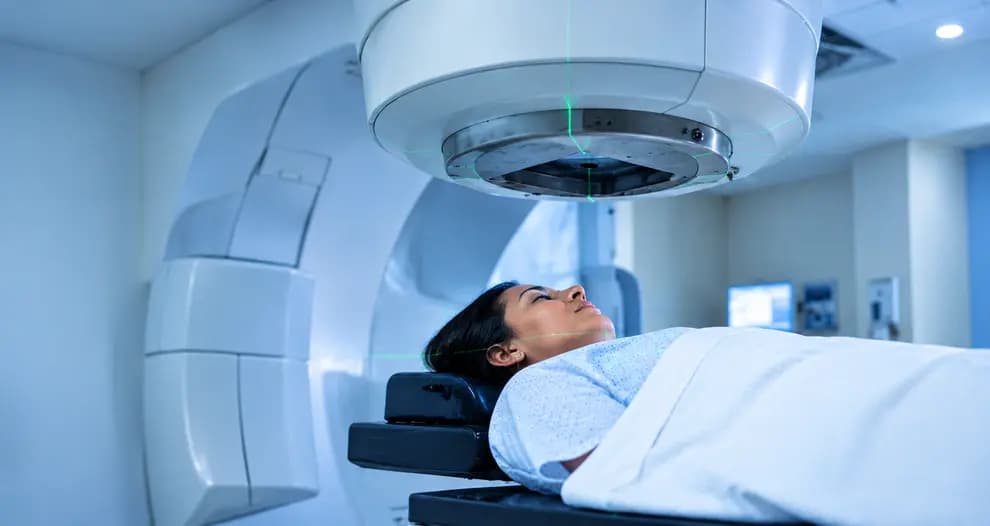
| Radiation therapy | Destroys residual cancer cells in the breast/chest wall area | After lumpectomy (usually), sometimes after mastectomy for larger or node-positive tumours | 3–6 weeks |
| Immunotherapy (checkpoint inhibitors) | Helps the immune system recognise and attack cancer cells | Increasingly used alongside chemotherapy in early and advanced TNBC with specific biomarker (PD-L1) status | Given in cycles alongside chemo |
| PARP inhibitors | Blocks a DNA-repair pathway cancer cells rely on | Specifically for patients with a confirmed BRCA1/BRCA2 mutation | Oral, ongoing as maintenance |
| Clinical trials | Access to newer targeted agents | When standard options are limited or in advanced/recurrent disease | Varies by trial |
The single biggest shift in TNBC treatment over the past several years has been the addition of immunotherapy and PARP inhibitors to what used to be a chemotherapy-only playbook, both of which depend on precise biomarker and genetic testing to know who will actually benefit.
Also Read: Targeted Therapy vs Chemotherapy: How to Choose the Right Treatment
Why Patients Across India Choose NAVA Cancer Institute at BMH for Breast Cancer Care
If you've recently received a breast cancer diagnosis, especially triple-negative breast cancer (TNBC), choosing the right treatment centre is an important decision. Patients often look beyond the diagnosis itself to understand whether the hospital has the specialists, diagnostic capabilities, and multidisciplinary coordination needed for complex cases.
At NAVA Cancer Institute, Baby Memorial Hospital (BMH), Kozhikode, breast cancer cases, including TNBC, are reviewed through a multidisciplinary tumour board involving specialists from multiple disciplines.
Multidisciplinary Breast Cancer Care
The tumour board brings together:
- Surgical oncology
- Medical oncology
- Radiation oncology
- Pathology and diagnostic specialists
This coordinated approach helps specialists determine the appropriate sequence and combination of chemotherapy, surgery, radiation therapy, and other systemic treatments based on the individual patient's cancer characteristics.
Advanced Diagnosis and Staging
For TNBC, accurate diagnosis and receptor testing are particularly important because treatment decisions depend heavily on the tumour's biological characteristics.
BMH's oncology infrastructure includes:
- Digital mammography
- Dual 1.5T MRI systems
- PET-CT
- SPECT imaging
- Molecular and immunohistochemistry (IHC) testing
These investigations can help confirm receptor status, assess disease extent, and determine whether treatments such as immunotherapy or PARP inhibitors may be appropriate for eligible patients.
Specialist-Led Cancer Treatment
The institute provides access to specialists across different areas of cancer care.
-
Radiation oncology: TrueBeam image-guided radiotherapy and GammaMedplus iX brachytherapy are available. Prof. Dr. P. R. Sasindran leads radiation oncology and brings more than 37 years of experience in the field.
-
Surgical oncology: Consultants including Dr. John J. Alapatt provide specialist surgical cancer care, including management of complex cases.
Why Location Matters for Patients From Across India
For patients from North Kerala and neighbouring regions, having comprehensive cancer services in Kozhikode can reduce the need for repeated travel to major metropolitan cities during lengthy treatment schedules.
This can be particularly relevant when treatment involves:
- Multiple chemotherapy cycles
- Regular radiation sessions
- Follow-up imaging
- Periodic specialist consultations
- Long-term surveillance
- International and Domestic Patient Support
Also Read: International Patient Services at BMH Hospital Kerala
NAVA Cancer Institute at BMH also treats patients from across India and international locations. Patient support services include:
- Case management assistance
- Coordination for consultations and treatment
- Multilingual communication in Malayalam, Hindi, and English
- Support for international patients
Treatment costs may also be more accessible than comparable cancer care in countries such as the UK or US, while patients continue to receive care within the hospital's established oncology protocols and available technology.
If you or someone you support has recently received a triple-negative breast cancer diagnosis, the most useful next step is to discuss the actual pathology and imaging reports with a breast cancer specialist.
Rather than relying only on general information, a specialist can review the tumour's stage, receptor status, overall health, and previous investigations to determine which treatment options may be appropriate.
Also Read: Which Hospital Offers the Best Breast Cancer Treatment Options in Kerala?
Conclusion
Triple-negative breast cancer is a more aggressive subtype, and in India specifically, a considerably more common one than global statistics suggest, but "aggressive" is not the same as "untreatable."
Chemotherapy remains central to treatment, and it's now regularly paired with immunotherapy or PARP inhibitors depending on a patient's specific biomarker and genetic profile, options that simply didn't exist a decade ago.
The outcomes that matter most, catching recurrence early, matching the right therapy to the right patient, and getting a coordinated plan rather than a fragmented one, depend heavily on accurate testing and a multidisciplinary team working from the same information.
If you're navigating a recent diagnosis, treat this article as a starting point for the right questions to ask, not a substitute for a conversation with your oncology team.
Chat with NAVA Cancer Institute's medical assistant, available in Malayalam, Hindi, and English, for guidance on next steps, or to book a consultation with our oncology team at Baby Memorial Hospital, Kozhikode.
Medical Disclaimer: This article is intended for general informational purposes only and does not constitute medical advice, diagnosis, or treatment recommendations. Triple-negative breast cancer is a complex condition, and treatment decisions should always be made in consultation with a qualified oncologist based on an individual's complete medical history, pathology reports, and diagnostic tests. If you have symptoms or concerns, please consult a healthcare professional promptly.