
When someone is told cancer was caught “early,” the very next question is almost always: now what? The honest answer is that early-stage disease has more treatment paths than people expect, and picking the right one depends on details most patients never hear before they walk into an oncologist's office.
This guide walks through what early-stage actually means, the five main treatment routes available today, how oncologists choose between them, and what questions are worth asking before starting a plan. Along the way, we'll also look at how a regional cancer programme, NAVA Cancer Institute at Baby Memorial Hospital (BMH) in Kozhikode, has structured its early-stage cancer care.
What Does “Early Stage” Actually Mean?
“Early stage” isn't a single medical term, it's shorthand for a range of formal classifications. Doctors typically describe cancer using the TNM system: T for the size and extent of the primary tumour, N for whether nearby lymph nodes are involved, and M for whether the cancer has spread (metastasised) to distant organs. These are then rolled into an overall stage, usually written as Stage 0 through Stage IV.
TNM Staging in Plain Language
Stage 0 refers to abnormal cells that haven't yet become invasive (carcinoma in situ). Stage I means a small, localised tumour with no lymph node involvement. Stage II generally means the tumour is somewhat larger, or shows minimal nearby spread, but is still localised to the organ of origin. Collectively, Stage 0 to Stage II is what most oncologists mean when they say “early stage.”
Also Read: Cancer Stages Explained: What Your Diagnosis Means
The Core Early-Stage Cancer Treatment Options
There are five broad categories of treatment used for early-stage disease. Most patients will receive one, or a combination of two.
1. Surgery: Still the First Move for Most Solid Tumours
For the majority of early-stage solid tumours, breast, colorectal, lung, kidney, thyroid, and oral cavity cancers among them, surgical removal of the tumour remains the single most effective treatment.
Because the cancer hasn't spread beyond its point of origin, removing it physically can be curative on its own. Minimally invasive and robotic-assisted techniques have made this option less disruptive than it used to be, allowing tumours to be removed through small incisions with more precision around blood vessels and nerves, which usually means shorter hospital stays and faster recovery than traditional open surgery. For many Stage I cancers, surgery alone, without any chemotherapy or radiation afterward, is sufficient.
2. Radiation Therapy: External Beam vs. Brachytherapy
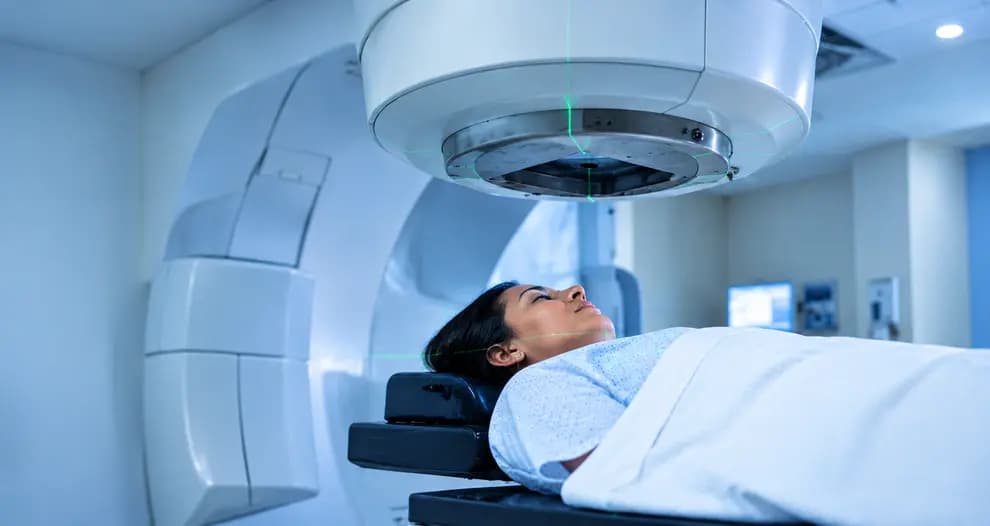
Radiation is used either as the primary treatment or, more often at an early stage, after surgery to kill any microscopic cancer cells left behind. There are two broad delivery methods. External beam radiation therapy (EBRT) aims high-energy beams at the tumour site from outside the body; image-guided versions like IMRT (intensity-modulated) and VMAT (volumetric modulated arc therapy) shape the beam precisely around the target while sparing healthy tissue. Brachytherapy, by contrast, places a radioactive source directly inside or next to the tumour bed, commonly used for cervical, breast, prostate, and head and neck cancers, delivering a high dose locally over a much shorter timeframe than external radiation. Choosing between them, or combining both, depends on tumour location, the organs nearby, and how much healthy tissue needs protecting.
3. Targeted Therapy: Treating the Tumour's Biology, Not Just Its Location
Targeted therapy is a newer category that only works if a tumour carries a specific genetic mutation or protein the drug is built to block. Unlike traditional chemotherapy, which affects all rapidly dividing cells, targeted drugs interfere with the exact molecular pathway driving that particular tumour's growth.
This requires biomarker or genomic testing of the tumour tissue before any drug is chosen, testing that has become far more accessible and affordable in the last five years. For certain early-stage lung, breast, and blood cancers, targeted therapy is now standard of care rather than an experimental add-on.
Also Read: Targeted Therapy for Cancer: Who Needs It, Cost & Treatment in Kerala
4. Chemotherapy: When It's Still Used at an Early Stage
Chemotherapy at an early stage is usually given as adjuvant therapy, after surgery, to reduce the chance of recurrence, particularly when there's a moderate risk of microscopic spread that imaging can't detect.
It's less commonly used as the sole treatment for early-stage solid tumours, though it remains central for early-stage blood cancers like certain leukaemias and lymphomas, where there's no single tumour to surgically remove.
5. Active Surveillance: When Watching Is the Right Call
For a subset of very slow-growing, low-risk early-stage cancers, particularly certain prostate cancers, active surveillance (also called watchful waiting) can be a legitimate option instead of immediate treatment.
This involves regular monitoring through imaging and blood tests, with treatment starting only if the disease shows signs of progressing. It sounds counterintuitive to “do nothing” with a cancer diagnosis, but for the right tumour profile, it avoids the side effects of unnecessary treatment without compromising outcomes.


How Oncologists Actually Choose Between These Options
No two early-stage diagnoses are treated identically. The choice depends on several factors working together:
| Factor | How It Shapes the Decision |
|---|---|
| Tumour size and location | Determines whether surgery is feasible without major functional loss |
| Biomarker / genetic profile | Decides eligibility for targeted therapy over standard chemotherapy |
| Lymph node involvement | Even minimal involvement can shift the plan toward combined treatment |
| Patient's overall health | Determines tolerance for surgery, anaesthesia, or systemic therapy |
| Patient preference | Increasingly factored in via shared decision-making, especially surgery-vs-radiation choices |
Choosing the Right Treatment for You
Choosing a treatment plan is a partnership between you and your doctors. Ask your oncologist about the goal of treatment, cure, control, or symptom relief, and realistic outcomes. Understand what each option involves, expected side effects, and how it will affect your daily life. Some patients benefit from a second opinion before starting treatment. Mayo Clinic Oncology resources emphasise that informed patients tend to have better adherence to treatment and overall satisfaction.
Consider your values and preferences: some patients prioritise maximum chance of cure even if it means more side effects, while others prefer gentler approaches with acceptable cure rates. Your age, overall health, family situation, and work are all legitimate factors in your decision. There is rarely a single "right" answer, the best treatment is one that offers the best outcomes for your cancer while aligning with your goals and life circumstances. Take time to process information, ask questions, and involve trusted family members in discussions.
Why Patients Choose NAVA Cancer Institute at Baby Memorial Hospital
NAVA Cancer Institute at Baby Memorial Hospital brings medical, surgical, radiation, paediatric, haemato-oncology, nuclear medicine, and bone marrow transplant services together under one multidisciplinary team. Each case is reviewed by a tumour board, helping patients begin the right treatment without unnecessary delays.
Key strengths of Baby Memorial Hospital include:
- Multidisciplinary tumour board for personalised treatment planning.
- Advanced technology, including TrueBeam LINAC, GammaMedplus iX HDR Brachytherapy, Da Vinci X Robotic Surgery, and Discovery IQ PET-CT.
- Experienced specialists across all major oncology disciplines.
- Comprehensive care for both Indian and international patients.
- Recognised among Newsweek's India's Best Hospitals 2026.
By combining specialist expertise, advanced technology, and coordinated care in one centre, NAVA Cancer Institute enables many patients to receive comprehensive cancer treatment closer to home, reducing the need to travel to other metropolitan cities.
Conclusion
Early-stage cancer is, in the truest sense, the best version of a difficult diagnosis to receive. It comes with more treatment options, higher cure rates, and often less invasive care than an advanced-stage diagnosis of the same disease. Surgery, radiation, targeted therapy, chemotherapy, and active surveillance each serve a specific purpose depending on tumour type, location, and biology, and the right combination is rarely one-size-fits-all.
What ultimately matters most is speed: getting from symptom to diagnosis to treatment plan without unnecessary delays, since the data consistently shows that survival odds shift dramatically based on how early treatment begins. Choosing a centre that can coordinate diagnosis, staging, and treatment under one roof, rather than across multiple referrals, is often what determines whether that speed is possible.
If you or a family member has recently been diagnosed with early-stage cancer and want to understand the options available at NAVA Cancer Institute, you can chat with our care coordination assistant to discuss your reports and next steps.
Medical Disclaimer This article is for general informational purposes only and is not a substitute for professional medical advice, diagnosis, or treatment. Always consult a qualified oncologist or physician regarding any medical condition or before making treatment decisions. Baby Memorial Hospital and NAVA Cancer Institute do not guarantee specific outcomes; treatment plans vary based on individual diagnosis and health status.