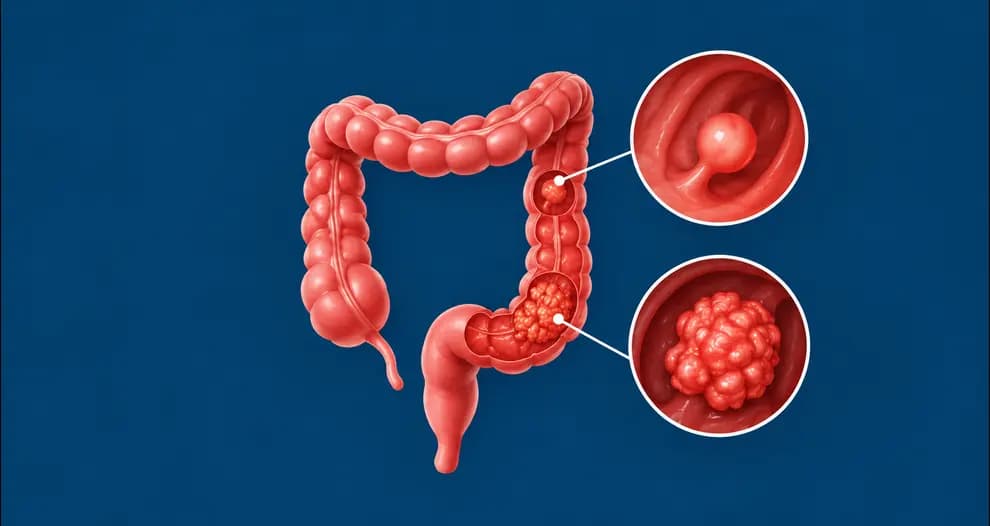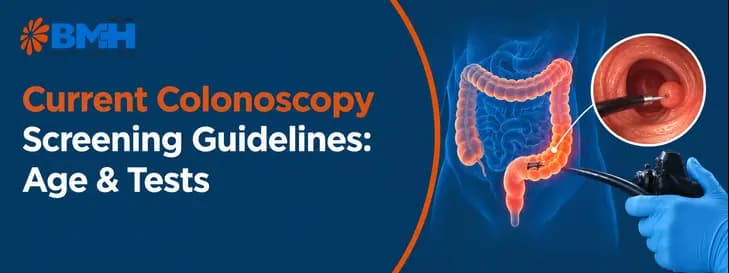

Colonoscopy screening can detect bowel cancer and precancerous polyps before they become life-threatening. For patients with certain risk factors, family history, age, or inflammatory bowel disease, earlier and more frequent screening may be essential to prevent colorectal cancer.
The short answer: if your risk is average, begin regular screening at age 45. If you choose colonoscopy and it is normal, repeat it every 10 years until 75. Higher-risk people start earlier and return sooner. This guide explains each rule, who it applies to, and how to act on it.
Current Colonoscopy Screening Guidelines at a Glance
| Age group | What the guidelines advise |
|---|---|
| 45 to 49 | Start screening if average risk (USPSTF grade B) |
| 50 to 75 | Regular screening for all average-risk adults |
| 76 to 85 | Decide individually, based on health, past screening and preferences |
| Over 85 | Screening should no longer be done |
"Average risk" means no personal history of colorectal cancer or adenomatous polyps, no inflammatory bowel disease, and no known inherited syndrome such as Lynch syndrome or familial adenomatous polyposis.
Ages 45 to 49: the newest group
The American Cancer Society lowered its starting age from 50 to 45 in 2018, and the USPSTF followed in 2021. The USPSTF is confident that screening from 50 to 75 brings substantial benefit, and moderately confident about the same for 45 to 49.
Ages 50 to 75: the core screening window
This is where the evidence is strongest. A person in good health with a life expectancy beyond ten years should continue regular screening through age 75.
Ages 76 to 85 and beyond
Here the question is not "what is the guideline" but "what is the benefit for this person". A patient who has had regular normal screens and has heart or lung disease may gain little. A fit 78-year-old who has never been screened may gain a lot. The USPSTF asks clinicians to weigh overall health, prior screening and patient preference.
Why Was the Screening Age Lowered to 45?
Because cancers are appearing in younger adults. The ACS reported a 51 percent rise in colorectal cancer among people under 50 since 1994, and based its new starting age on that trend and on modelling of benefit versus burden. For readers in Kerala and the Gulf, the practical lesson is simple: a 46-year-old with a lasting bowel change should not be told "you are too young".
Which Screening Tests Are Recommended, and How Often?
Colonoscopy is not the only guideline-backed option. The ACS lists stool, visual and, since 2026, blood-based tests. The tests differ in how often you repeat them and in what happens when they are abnormal.
| Test | How often | What it does | Key limit |
|---|---|---|---|
| Colonoscopy | Every 10 years if normal | Views the whole colon and removes polyps in the same sitting | Needs bowel prep and sedation |
| CT colonography | Every 5 years | Imaging of the colon, no scope | Polyps found need a colonoscopy |
| Flexible sigmoidoscopy | Every 5 years | Views only the lower colon | Misses the upper colon |
| FIT or high-sensitivity gFOBT | Every year | Detects hidden blood in stool | Must be repeated every year |
| Multitarget stool DNA test | Every 3 years | Looks for blood and tumour | DNA in stool |
| Blood test (Shield) | Every 3 years | Looks for tumour DNA in blood | Only for people who decline stool or visual tests |
Who Needs Colonoscopy Earlier or More Often?
The average-risk rules do not apply to everyone. The ACS notes that people at increased or high risk may need to start before 45, be screened more often, or have specific tests. Typical groups:
- A parent, brother, sister or child who had colorectal cancer or advanced polyps.
- A personal history of colorectal cancer or adenomatous polyps.
- Ulcerative colitis or Crohn's disease of the colon.
- A known inherited syndrome, or several relatives with colon, uterine or related cancers.
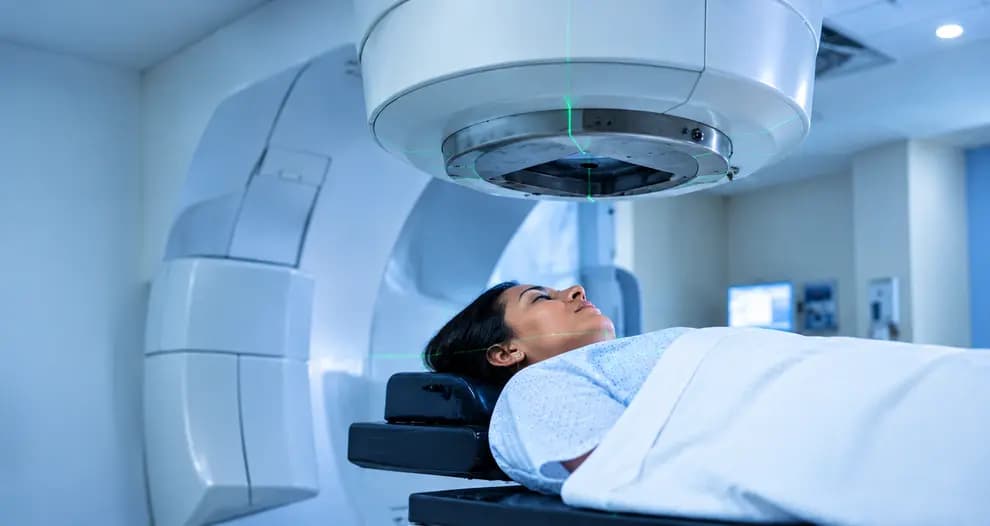
- Past radiation to the abdomen or pelvis. The ACS says screening often begins 10 years after radiation or at age 35, whichever is later. In these cases, follow-up scopes are commonly every 1 to 3 years, depending on risk factors and earlier findings. The exact plan should come from your gastroenterologist, not a general chart.


Screening Colonoscopy vs Diagnostic Colonoscopy
This is a distinction most guideline pages skip. Screening is for people with no symptoms. A diagnostic colonoscopy is for people who have symptoms, and the age cut-offs do not apply. Do not wait for your next scheduled screen if you notice:
- Blood in the stool or black stools
- A bowel habit change that lasts more than a few weeks
- Unexplained weight loss, ongoing abdominal pain or iron-deficiency anaemia
If your colonoscopy is normal, your doctor may extend the interval to 5-10 years. However, if polyps are found and removed, you'll likely need repeat screening within 3-5 years. Those with inflammatory bowel disease may require even more frequent surveillance. Your medical team will personalise your schedule based on colonoscopy results, not on age alone.
What Happens During a Colonoscopy Screening?
Colonoscopy is a minimally invasive procedure where a doctor inserts a thin, flexible tube with a camera (colonoscope) into your colon to examine the entire bowel lining. The procedure typically takes 20-30 minutes and allows your doctor to spot and remove polyps or take biopsies if needed.
The typical colonoscopy process unfolds as follows:
- Preparation: You receive sedation (usually twilight anesthesia) to keep you comfortable and unaware during the procedure.
- Insertion: The colonoscope is gently advanced through the rectum and colon.
- Inspection: Your doctor carefully examines the entire colon lining, looking for polyps, inflammation, or abnormalities.
- Removal or biopsy: If polyps are found, they are removed using a wire loop tool (polypectomy) or sampled for testing.
- Recovery: You wake in the recovery area; sedation effects wear off within a few hours.
Most patients experience mild discomfort or bloating but no pain during the procedure due to sedation. After colonoscopy, you should arrange transportation home and rest for the remainder of the day; you can resume normal activities the next day.
Why Choose Baby Memorial Hospital for Colonoscopy in Kerala
Choosing a hospital for colonoscopy involves more than finding a convenient appointment. Patients need access to experienced specialists, appropriate diagnostic facilities and timely follow-up if a biopsy or further treatment is required.
Baby Memorial Hospital (BMH), Kozhikode, established in 1987, offers medical and surgical gastroenterology through its Institute of Liver and Gastro Sciences. Its multispecialty setup allows patients to seek further evaluation and care within the same hospital when needed.
For patients travelling from Malabar, other parts of India or the Gulf, BMH offers several practical considerations:
- Specialist-led evaluation: A gastroenterology consultation helps determine whether colonoscopy is appropriate based on symptoms, age and family history.
- Follow-up care: If a polyp or suspicious area is found, the doctor can advise on biopsy, further investigations or treatment.
- Travel planning: Patients can enquire about appointment availability, preparation instructions and the expected timeline before travelling.
- Cost clarity: Request an estimate covering the consultation, bowel preparation, procedure, sedation where applicable and any biopsy or pathology charges.
The right time to undergo colonoscopy depends on your symptoms, medical history and screening needs. Consult a gastroenterologist to understand which test is appropriate for you.
Need help planning your colonoscopy at BMH? Chat with our Medical Assistant to enquire about appointments and the next steps.
Conclusion
The current colonoscopy screening guidelines come down to four rules: start at 45 if your risk is average, repeat a normal colonoscopy every 10 years until 75, individualise the decision from 76 to 85, and start earlier if your family or medical history says so. Stool and blood tests are real options, but a positive result always leads back to a colonoscopy, and symptoms should never wait for a screening date. If you are 45 or older, or have a family history, the most useful step this week is to book a consultation and get your own schedule in writing.
Have a question about preparation, cost or which test suits you? Start a chat with the BMH medical assistant