
Surgery has long been a cornerstone of cancer care, but modern oncology offers many powerful alternatives. Today, radiation therapy, chemotherapy, immunotherapy, and targeted drugs can treat cancers effectively without operating room intervention.
This article walks through what non-surgical cancer treatment actually involves, which cancers respond best to it, how oncologists decide between surgery and non-surgical care, and what the process looks like at a hospital that runs all of these options under one roof.
What Does "Cancer Treatment Without Surgery" Actually Mean?
Non-surgical cancer treatment refers to any approach that controls, shrinks, or eliminates a tumour without physically cutting it out. It isn't one treatment, it's a category that includes several distinct medical approaches, each working through a different biological mechanism:
-
Systemic drug therapies that travel through the bloodstream (chemotherapy, targeted therapy, hormone therapy, immunotherapy).
-
Localized energy-based therapies that destroy cancer cells with radiation (external beam radiotherapy, brachytherapy, radioiodine therapy).
-
Combination protocols that pair two or more of the above, sequenced around a patient's specific cancer type and stage
The common thread across all of these is that they either work throughout the body or target a very specific area, without the recovery time, anaesthesia risk, or scarring associated with an operation.
Is Every Cancer Treatable Without Surgery? Setting Realistic Expectations
No, and any resource that implies otherwise isn't giving you the full picture. Surgery remains the standard of care for many solid tumours, particularly when they're localized, accessible, and the patient is fit for anaesthesia. What has changed is the range of situations where non-surgical treatment can be curative, not just palliative.
Three factors typically decide whether a patient is a genuine candidate for non-surgical management:
-
Cancer type and biology: Blood cancers, lymphomas, and certain hormone-driven or genetically distinct solid tumours respond differently to systemic therapy than tumours that need physical removal.
-
Stage at diagnosis: Early, localized disease has more non-surgical options than cancer that has already invaded surrounding structures.
-
Patient fitness: Age, organ function, and comorbidities affect whether surgery is even safely possible, which sometimes makes non-surgical treatment the necessary path rather than the preferred one.
The 6 Non-Surgical Cancer Treatment Options Explained
Not every cancer requires surgery. Depending on the type, stage, and genetic characteristics of the disease, oncologists may recommend one or more non-surgical treatments that can shrink, control, or even eliminate cancer while preserving healthy tissue whenever possible.
1. Chemotherapy
Chemotherapy uses cytotoxic drugs to kill fast-dividing cells, administered orally or intravenously. It's used as a standalone curative treatment for several blood cancers and lymphomas, and as a systemic option for solid tumours that have spread beyond a single site. Side effects are dose- and drug-dependent, and modern supportive-care protocols have significantly reduced the severity of nausea, fatigue, and immune suppression compared to a decade ago.
2. External Beam Radiation Therapy (EBRT)
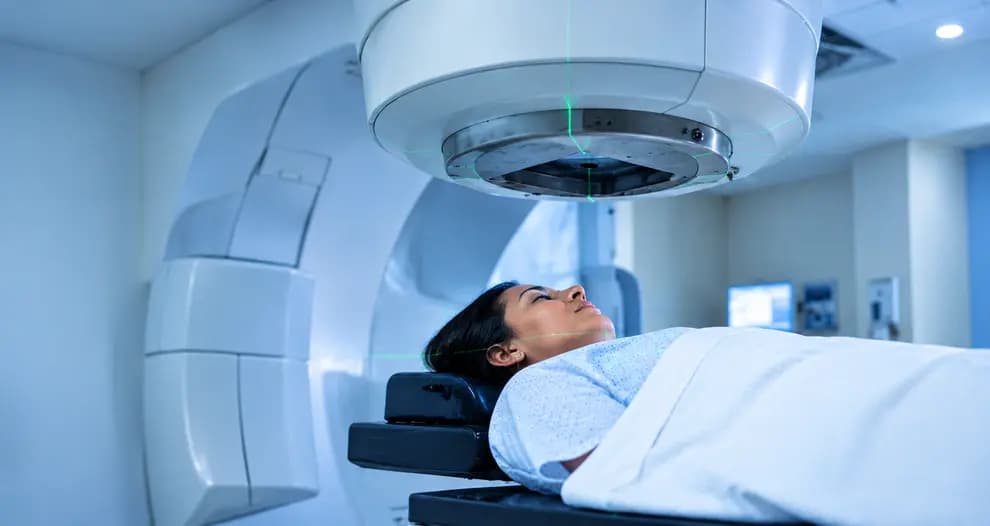
EBRT delivers high-energy X-ray beams from outside the body, precisely aimed at a tumour using CT-based imaging for guidance. Image-guided systems can now shape the radiation beam around a tumour's exact contours, sparing healthy tissue nearby, a meaningful advance from the wider-field radiation used in earlier decades.
3. Brachytherapy (Internal Radiation)
Brachytherapy places a sealed radioactive source directly inside or immediately next to the tumour, inside the cervix, prostate, or oesophagus, for example, delivering a concentrated dose over a short distance. Because the radiation source sits at the tumour itself, doses can often be higher with less impact on surrounding organs than external radiation alone. It's commonly used for cervical, endometrial, prostate, head and neck, and breast cancers.
4. Immunotherapy
Immunotherapy trains the patient's own immune system to recognize and attack cancer cells, rather than attacking the tumour directly with drugs or radiation. It has produced some of the most closely watched results in oncology recently: in a 2025 clinical trial led by Memorial Sloan Kettering Cancer Center and published in the New England Journal of Medicine, close to 80% of patients with mismatch repair-deficient (MMRd) tumours achieved a complete response using immunotherapy alone, without surgery, chemotherapy, or radiation (MSK Cancer Center, 2025). This isn't yet the standard approach for most cancers, but it signals where oncology is heading for genetically distinct tumour types.
Also Read: Difference Between Chemotherapy and Immunotherapy in Cancer Treatment
5. Targeted Therapy
Targeted therapy uses drugs designed against a specific genetic mutation or protein driving a patient's cancer, identified through biomarker or genomic testing. Because it targets a molecular feature rather than all fast-dividing cells, it typically causes fewer of the broad side effects associated with conventional chemotherapy, though it depends entirely on the tumour actually carrying a targetable mutation.
6. Hormone Therapy and Nuclear Medicine (Radioiodine)
Hormone-driven cancers, certain breast and prostate cancers, can be managed by blocking or lowering the hormones that fuel tumour growth. Separately, radioiodine (I-131) therapy is a nuclear medicine treatment used mainly for thyroid cancer, where radioactive iodine is absorbed selectively by thyroid tissue, destroying residual or cancerous cells from within after diagnosis.


Comparing the Non-Surgical Options
| Treatment | How It Works | Typically Used For | Invasiveness |
|---|---|---|---|
| Chemotherapy | Systemic drugs kill fast-dividing cells | Leukaemia, lymphoma, metastatic solid tumours | Non-invasive (IV/oral) |
| External Beam Radiation | High-energy beams target tumour from outside | Localized solid tumours, adjuvant/primary treatment | Non-invasive |
| Brachytherapy | Radioactive source placed inside/near tumour | Cervical, prostate, head & neck, breast | Minimally invasive |
| Immunotherapy | Activates immune system against cancer cells | Melanoma, lung, MMRd tumours, select solid cancers | Non-invasive (IV) |
| Targeted Therapy | Drugs attack specific genetic mutations | Biomarker-positive breast, lung, other solid cancers | Non-invasive (IV/oral) |
| Radioiodine (I-131) | Radioactive iodine absorbed by thyroid tissue | Thyroid cancer | Minimally invasive |
Which Cancers Respond Best to Non-Surgical Treatment?
Not every diagnosis carries the same non-surgical options, but certain cancers consistently show strong outcomes without an operation:
-
Blood cancers and lymphomas: Leukaemia and most lymphomas are systemic diseases by nature, so chemotherapy, targeted therapy, and in some cases bone marrow transplant form the primary treatment, not surgery.
-
Early-stage cervical cancer: A combination of external radiation and brachytherapy can be curative, particularly when the tumour is confined to the cervix.
-
Localized prostate cancer: Many men with low- to intermediate-risk prostate cancer are candidates for radiotherapy or brachytherapy as a definitive treatment alternative to prostatectomy.
-
Differentiated thyroid cancer: After diagnosis, radioiodine therapy is often used to eliminate residual thyroid tissue, reducing recurrence risk without further surgical intervention.
-
Select head and neck cancers: Radiation combined with chemotherapy is a recognized primary treatment for certain oropharyngeal and laryngeal cancers where surgery would significantly affect speech or swallowing.
If you're wondering where these non-surgical cancer treatments are available under one roof, here's why many patients consider NAVA Cancer Institute.
Why Patients Choose NAVA Cancer Institute for Non-Surgical Cancer Treatment
For patients exploring cancer treatment without surgery, having every treatment decision coordinated by one multidisciplinary team can make a significant difference. At NAVA Cancer Institute, Baby Memorial Hospital (BMH), Kozhikode, specialists in medical, radiation, surgical, paediatric, and haemato-oncology work together to create personalised treatment plans based on each patient's diagnosis and stage of cancer.
What sets the centre apart?
- Multidisciplinary Tumour Board for collaborative treatment planning.
- Advanced technologies, including TrueBeam LINAC, GammaMedplus iX Brachytherapy, Discovery IQ PET-CT, and in-house I-131 therapy.
- Comprehensive cancer care from diagnosis and staging to chemotherapy, radiation, immunotherapy, targeted therapy, and bone marrow transplant support.
- International patient services with multilingual assistance and dedicated care for patients travelling from the Gulf and other countries.
The most suitable non-surgical treatment always depends on your cancer type, stage, overall health, and molecular profile, making an expert oncology consultation essential.
Also Read: 20 Questions To Ask Your Oncologist: Complete Guide
The Cost Question: Why Affordability Drives This Search
A significant share of people searching for non-surgical cancer treatment options are doing so because surgery, and the associated hospital stay, anaesthesia, and recovery time, comes with a cost that's hard to plan around, especially for patients travelling from outside the region or from abroad. Non-surgical protocols, particularly outpatient chemotherapy and radiotherapy delivered over scheduled sessions, can be budgeted and planned in a way that emergency surgical admissions often can't.
This is part of why Kerala, and Kozhikode specifically, has become a recognizable destination for cancer care from patients across South India and the Gulf: treatment costs at Kerala's tertiary hospitals are generally lower than equivalent care in metro cities or overseas, without a compromise on the technology used.
BMH positions its NAVA Cancer Institute around exactly this combination, comprehensive oncology infrastructure at costs that are accessible for both Indian and international patients, with case management support to handle travel, visas, and treatment planning logistics for those coming from outside Kerala.
Conclusion
Cancer treatment without surgery isn't a single therapy, it's a set of options, from chemotherapy and radiation to immunotherapy and targeted drugs, each suited to specific cancer types, stages, and patient circumstances. The right path depends on a genuine multidisciplinary review of your diagnosis, not a general online search.
What's changed in recent years is how strong these non-surgical options have become, and hospitals that run medical, radiation, and surgical oncology together, like NAVA Cancer Institute at Baby Memorial Hospital, are built specifically to make that first, most important decision as informed as possible.
If you or a family member are trying to understand your options, the most useful next step is a conversation with an oncology team that can actually review your reports, not another article.
Chat with our medical assistant now to get help understanding your reports, treatment options, or to book a consultation with the oncology team at NAVA Cancer Institute, Baby Memorial Hospital.
Medical Disclaimer: This article is intended for general informational purposes only and does not constitute medical advice, diagnosis, or treatment recommendations. Every cancer diagnosis is different, and treatment decisions should only be made in consultation with a qualified oncologist who has reviewed your complete medical history, pathology, and imaging reports. If you are experiencing symptoms or have received a cancer diagnosis, please consult a licensed healthcare professional promptly.