
A thyroid cancer diagnosis often raises one urgent question: where can you find the right care? Kerala has seen a notable rise in thyroid cancer detection, especially among women, largely due to stronger screening and diagnostic systems.
The encouraging news is that thyroid cancer is among the most treatable cancers, with excellent long-term outcomes when detected early. Since papillary thyroid cancer accounts for most cases and carries a highly favorable prognosis, timely diagnosis, experienced specialists, and access to advanced treatment can significantly influence recovery. This guide explains your options and what to look for when choosing care.
What Is Thyroid Cancer?
The thyroid is a butterfly-shaped gland at the base of your neck. It produces hormones that regulate metabolism, heart rate, and body temperature. When cells in this gland grow abnormally and uncontrollably, thyroid cancer develops.
Most people are surprised to learn that thyroid cancer is often silent in its early stages, a painless lump in the neck, detected during a routine ultrasound or a physical exam, is usually the first clue.
Types of Thyroid Cancer
1. Papillary Thyroid Carcinoma (PTC): The most common type, making up about 80–85% of all cases. It grows slowly and responds well to treatment. This is also the most frequently diagnosed type in Kerala.
2. Follicular Thyroid Carcinoma: The second most common, accounting for around 4% of cases. It can spread to blood vessels and distant organs like the lungs or bone if not caught early.
3. Medullary Thyroid Carcinoma (MTC): Arises from C-cells (parafollicular cells) that produce calcitonin. Unlike papillary and follicular types, it does not respond to radioiodine therapy. A family history of MTC is an important risk factor.
4. Anaplastic Thyroid Carcinoma: Rare but aggressive. It accounts for around 1% of thyroid cancers and progresses rapidly. Early, specialised intervention is critical.
As thyroid cancer progresses, subtle changes in the body can sometimes provide the earliest warning signs.
Common Signs and Symptoms
Thyroid cancer often develops quietly, and many symptoms may appear mild or easy to overlook at first. While these signs do not always indicate cancer, persistent or unexplained changes should never be ignored.
You should consult a specialist promptly if you notice:
- A lump or swelling in the front of the neck
- Persistent hoarseness or voice changes
- Difficulty swallowing or breathing
- Swollen lymph nodes in the neck
- Unexplained pain in the neck or throat
- A feeling of tightness around the throat
Many of these symptoms can be caused by benign conditions, but only a proper evaluation, including blood tests, ultrasound, and fine needle aspiration cytology (FNAC) can rule out malignancy.
Identifying thyroid cancer involves more than finding a neck lump; understanding the exact type and extent of disease is what guides the next steps in treatment.
How Thyroid Cancer Is Diagnosed: Tests, Scans, and What to Expect
A thyroid cancer diagnosis is built through a step-by-step evaluation process designed to confirm the condition and determine how far it has progressed. Doctors combine imaging, laboratory tests, and tissue analysis to create a clear treatment roadmap.
The following diagnosis methods are commonly used to accurately diagnose and stage thyroid cancer:
Step 1: Clinical Examination
A physician palpates the neck for nodule size, consistency, mobility, and lymph node involvement. A hard, fixed, irregular nodule raises more concern than a soft, mobile one.
Step 2: Thyroid Function Tests (TFT)
Blood tests measuring TSH, Free T3, Free T4, and thyroglobulin. Most thyroid cancers do not affect thyroid function tests, a normal TSH does not rule out cancer. Calcitonin is checked specifically if medullary carcinoma is suspected.
Step 3: Neck Ultrasound
The most critical first-line imaging. The radiologist evaluates nodule characteristics, echogenicity, margins, presence of microcalcifications, vascularity, and lymph node morphology. The TIRADS (Thyroid Imaging, Reporting and Data System) classification guides the next step.
Step 4: Fine Needle Aspiration Cytology (FNAC)
A thin needle is inserted into the nodule, usually under ultrasound guidance, to collect cells for microscopic examination. This is an outpatient procedure done with minimal discomfort. Results are classified using the Bethesda System (I to VI), which determines whether observation, repeat biopsy, or surgery is recommended.
Step 5: Advanced Imaging (if needed)
CT or MRI of the neck and chest to assess local invasion or lymph node involvement. A PET-CT scan is used for staging in advanced or recurrent cases, and for detecting iodine-negative metastases.
Step 6: Molecular / Genetic Testing
In cases where FNAC results are indeterminate (Bethesda III/IV), molecular testing for BRAF V600E mutation, RET fusions, or RAS mutations helps decide between surgery and continued surveillance. For medullary carcinoma, RET germline testing is essential for family members too.
Also Read: PET Scan vs CT Scan vs MRI for Cancer: Which Is Right for You?
Once the diagnosis is confirmed, the focus shifts from identifying the disease to selecting the most effective treatment approach for long-term recovery.


Thyroid Cancer Treatment Options in Kerala: What Patients Should Know
Thyroid cancer treatment is highly individualized and depends on the cancer type, stage, risk of recurrence, and overall patient health. While surgery remains the foundation of treatment for most patients, additional therapies may be recommended to reduce recurrence risk and improve outcomes.
Below are the commonly used treatment approaches for thyroid cancer and when they are typically considered:
1. Surgery (Thyroidectomy)
The cornerstone of thyroid cancer treatment. Depending on the extent of cancer, surgeons may perform:
- Total Thyroidectomy: Removal of the entire thyroid gland, standard for most differentiated thyroid cancers
- Lobectomy: Removal of one lobe, suitable for very small, low-risk tumours
- Lymph Node Dissection: When cancer has spread to nearby lymph nodes
2. Radioactive Iodine (RAI) Therapy / Radioiodine (I-131)
After surgery, RAI is used to destroy any remaining thyroid tissue or cancer cells. Since the thyroid naturally absorbs iodine, radioactive iodine (I-131) selectively destroys overactive thyroid cells or thyroid cancer cells while sparing most other tissues, making it a safe, effective, and well-established treatment.
3. Thyroid Hormone Suppression Therapy
After a thyroidectomy, patients take synthetic thyroid hormone (levothyroxine) both to replace the function of the removed gland and to suppress TSH, which can stimulate residual cancer cells to grow.
4. Targeted Therapy
For radioiodine-refractory or advanced thyroid cancers, targeted drugs, such as sorafenib or lenvatinib (tyrosine kinase inhibitors), have shown significant benefit. Molecular testing of the tumour guides this decision.
5. External Beam Radiation Therapy (EBRT)
Used in cases where surgical removal is incomplete, or for anaplastic and medullary thyroid cancers that do not respond to radioiodine.
6. Chemotherapy & Immunotherapy
Generally reserved for aggressive, recurrent, or metastatic cases that do not respond to other modalities.
Also Read: Targeted Therapy vs Chemotherapy: How to Choose the Right Treatment
Choosing the right cancer centre is not only about treatment availability, it is about how seamlessly every stage of care works together for the patient.
NAVA Cancer Institute at Baby Memorial Hospital: Integrated Thyroid Cancer Care Under One Roof
For thyroid cancer patients, delays and fragmented care across multiple centres can complicate treatment. NAVA Cancer Institute at Baby Memorial Hospital (BMH), Kozhikode was designed to bring diagnosis, treatment, imaging, and long-term follow-up into a single coordinated system.
For patients evaluating thyroid cancer care in Kerala, key features include:
- Dedicated Head & Neck Oncology Team: Fellowship-trained specialists collaborate across ENT, surgical oncology, endocrinology, radiation oncology, and nuclear medicine.
- In-house Radioiodine (I-131) Therapy: Licensed nuclear medicine facilities allow surgery, radioiodine treatment, and post-treatment imaging at one location.
- Advanced Imaging Infrastructure: PET-CT, SPECT, MRI, and specialised diagnostic systems support precise staging and follow-up.
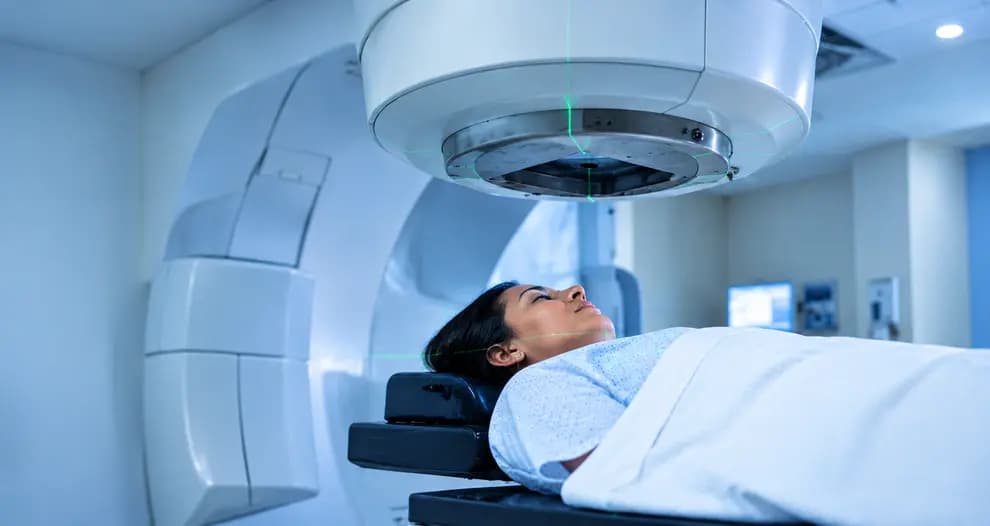
- Precision Radiation Technology: Varian TrueBeam LINAC enables highly targeted treatment for complex thyroid cancer cases requiring radiotherapy.
- Weekly Multidisciplinary Tumour Board: Complex cases are reviewed collectively by oncologists, radiologists, pathologists, and surgeons before treatment decisions.
- Integrated Diagnostics: FNAC, frozen sections, molecular testing, and pathology reporting are available within the same ecosystem.
- Comprehensive Support Services: Nutrition guidance, psychological counselling, and supportive care are built into the treatment pathway.
This integrated model reduces treatment gaps and creates a more coordinated experience for patients navigating thyroid cancer care.
Book an Oncology appointment at BMH today!
Beyond technology and treatment protocols, patients often look for something equally important, trust, accessibility, and confidence in the healthcare system they choose.
Why Patients Across India and Overseas Choose BMH Kozhikode?
With nearly four decades of healthcare experience, Baby Memorial Hospital (BMH) has grown into a large multi-specialty institution serving patients across Kerala and beyond. Its evolution from long-standing oncology services to the NAVA Cancer Institute reflects a continued focus on specialised cancer care.
On the oncology and cancer front specifically, BMH's achievements speak for themselves:
-
AHPI Healthcare Excellence Award 2024: "Excellence in Hospital Operations (Clinical)"
-
Apollo Hospital THIT Award: "Best Use of AI in Healthcare"
-
Multiple AHPI awards (2021–2025) across critical care, emergency services, nursing, and digital health innovation
-
Collaboration with the American Oncology Institute (AOI): South Asia's leading cancer hospital network, laying the clinical foundation now evolved into NAVA Cancer Institute.
-
DNB Post-Graduate programmes in oncology and allied specialties, accredited since 2006, ensuring the clinical team trains, researches, and practices at academic standards.
Some more reasons patients choose BMH include:
- 38+ years of institutional experience with a broad multi-specialty network
- Strategic location in Kozhikode, a major healthcare hub with strong connectivity across North Kerala and Gulf countries
- Comprehensive care at accessible costs, reducing travel and treatment burdens often associated with metro cities
- Dedicated international patient services, including teleconsultations, medical visa support, travel assistance, and multilingual coordination
For many patients, this combination of accessibility, continuity, and coordinated care makes treatment planning significantly easier.
Understand in detail about International Patient Services at BMH Hospital Kerala
Before choosing surgery, it is important to remember that selecting the right surgeon also means asking the right questions about expertise, planning, and long-term care.
Important Questions to Ask Before Thyroid Cancer Surgery
A thyroid cancer consultation should be a two-way conversation. Understanding your surgeon’s experience, the treatment process, and possible outcomes can help you make informed decisions and feel more confident about your care journey.
Consider asking these key questions during your consultation:
- How many thyroid surgeries do you perform each year, especially for cancer cases?
- Will intraoperative frozen section analysis be used if needed during surgery?
- Is intraoperative nerve monitoring (IONM) available to help protect the vocal cord nerve?
- Will my case be reviewed in a multidisciplinary tumour board?
- Can radioiodine treatment and follow-up care be completed at the same hospital?
- What are the risks of complications such as voice changes or calcium-related issues after surgery?
Treatment is only one part of the journey, understanding what life looks like after recovery can help patients feel more prepared and reassured about the future.
Life After Thyroid Cancer: Recovery, Follow-Up, and Long-Term Health
For most patients, thyroid cancer has one of the strongest long-term outlooks among all cancers. Many survivors return to normal routines, careers, and family life, with ongoing care focused largely on monitoring and maintaining health.
Here are some important aspects of long-term thyroid cancer survivorship:
-
Lifelong thyroid hormone replacement: Patients undergoing total thyroidectomy typically require daily levothyroxine to replace thyroid function and maintain hormone balance.
-
Regular follow-up monitoring: Blood tests, thyroglobulin levels, and periodic neck ultrasounds help detect changes early.
-
Understanding recurrence: Most recurrences, when they occur, are detected in neck lymph nodes and are often manageable with timely treatment.
-
Short-term dietary adjustments: Low-iodine diets may be needed before radioiodine therapy, but long-term food restrictions are uncommon.
-
Pregnancy and fertility considerations: Most women can safely plan future pregnancies after treatment with appropriate medical guidance.
The key takeaway is reassuring: for the majority of patients, thyroid cancer becomes a condition managed over time rather than one that defines life permanently.
Conclusion
Thyroid cancer is one of the most treatable cancers when diagnosed early and managed through a coordinated care pathway. Successful treatment depends on accurate diagnosis, experienced surgical care, advanced therapies, and structured long-term follow-up.
At Baby Memorial Hospital’s NAVA Cancer Institute, patients benefit from an integrated approach that combines specialised expertise, advanced technology, and comprehensive support services under one roof, making quality thyroid cancer care more accessible for patients across Kerala, India, and abroad.
Our BMH Medical Assistant can help you understand your diagnosis, know which specialist to consult, plan your visit, or simply get clarity on what thyroid cancer treatment involves.
Start a Conversation with BMH Medical Assistant
Medical Disclaimer The information in this article is for general educational purposes only. It does not constitute medical advice, diagnosis, or a treatment recommendation. Thyroid cancer is a complex condition, and individual cases vary significantly in type, stage, and appropriate management. All clinical decisions should be made in consultation with a qualified oncologist, endocrinologist, or head and neck surgeon. If you have received a diagnosis or are concerned about symptoms, please seek professional evaluation promptly.