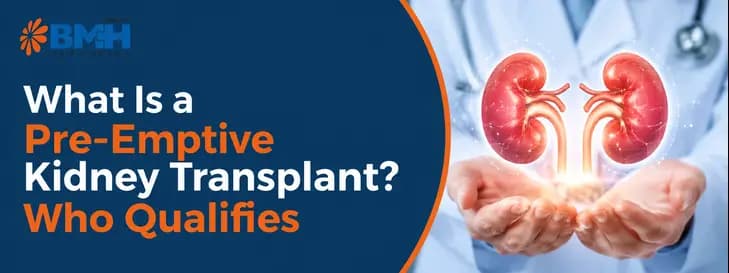

A pre-emptive kidney transplant is a kidney transplant you receive before your kidney disease advances to the stage where you need dialysis. Unlike standard transplantation, which usually happens after months or years on dialysis, a pre-emptive transplant allows you to skip dialysis altogether, often resulting in better long-term outcomes, fewer complications, and a significantly improved quality of life. This guide explains how pre-emptive transplantation works, who can benefit, and what the procedure involves.
What is a pre-emptive kidney transplant
A pre-emptive kidney transplant is a surgical procedure in which you receive a donor kidney while your own kidneys still have some remaining function, before dialysis becomes necessary. Your kidneys filter waste and excess water from your blood; when kidney disease progresses and your kidneys no longer work well enough, you typically need dialysis to do this job artificially. However, a pre-emptive transplant lets you transition directly from declining kidney function to a functioning transplanted kidney, without the need for dialysis in between.
The transplanted kidney is usually placed in your lower abdomen, and the surgeon connects its blood vessels and ureter (the tube that carries urine) to your own blood vessels and bladder. You will take immunosuppressive medicines for life to prevent your immune system from rejecting the new kidney. Studies published in The Journal of the American Society of Nephrology show that patients who receive pre-emptive transplants experience better graft survival rates and improved quality of life compared to those who undergo dialysis first.
Pre-emptive transplant vs transplant after dialysis
| Factor | Pre-emptive | After starting dialysis |
|---|---|---|
| Dialysis access | No fistula or catheter needed | Needs vascular access and repeat procedures to keep it working |
| Diet | Less restrictive than on dialysis | Fluid and mineral limits |
| Health at surgery | Usually better, since dialysis wear hasn’t built up | Variable |
| Treatment cost | Generally lower | Ongoing dialysis costs |
| Donor timing | Needs a ready living donor or early listing | Waiting happens while on dialysis |
How is a pre-emptive kidney transplant different from standard transplantation
The key difference lies in timing: a pre-emptive transplant happens before dialysis, while a standard transplant occurs after you have been on dialysis for some time. This timing matters because avoiding dialysis protects your remaining kidney function, reduces wear and tear on your blood vessels, and allows the new kidney to begin working in a healthier environment.
Compare the two pathways:
| Factor | Pre-Emptive Transplant | Standard Transplant |
|---|---|---|
| When it occurs | Before dialysis starts | After dialysis months/years |
| Kidney function at time of transplant | Some remaining | Very little or none |
| Blood vessel health | Better preserved | May be compromised |
| Graft survival (long-term) | Typically longer | Typically shorter |
| Quality of life before transplant | Fewer restrictions | Dialysis schedule required |
Patients who avoid dialysis often experience fewer infections, better nutrition, fewer bone and heart complications, and better overall survival. Your nephrologist (kidney specialist) will monitor your kidney function closely and discuss pre-emptive transplant timing with you well before you would need dialysis.
Who is eligible for a pre-emptive kidney transplant
Eligibility for a pre-emptive kidney transplant depends on several medical and practical factors. Your kidney function must have declined to a point where transplant is medically appropriate, usually when your estimated glomerular filtration rate (eGFR, a measure of how well your kidneys work) falls below 15-20 millilitres per minute per 1.73 metres squared. However, you must not yet require dialysis to stay healthy. Your doctors will also assess your overall health, including heart and lung function, to ensure you can safely undergo surgery and take lifelong immunosuppressive medicines.
You must have a suitable donor, which in India is most commonly a living donor, often a family member, close friend, or altruistic stranger who has been medically and emotionally evaluated. The donor's kidney function and blood type compatibility with you are crucial. Your blood pressure, blood sugar, and other conditions must be reasonably controlled. You should also be motivated and able to commit to regular follow-up appointments, medicines, and lifestyle changes after transplant. Age alone is not a barrier; both older and younger patients can be candidates. Psychological evaluation and counselling are part of the assessment to ensure you understand the procedure, its risks, and your responsibilities long-term.


What happens during the pre-emptive kidney transplant process
The pre-emptive kidney transplant involves several stages, beginning with evaluation and ending with long-term follow-up care. Here's the typical pathway:
Evaluation phase: You and your donor undergo detailed medical tests, imaging, and blood work. Your nephrologist, transplant surgeon, and other specialists assess suitability. A coordinator also provides education about the procedure, medicines, and lifestyle.
Surgery: The transplant is performed under general anaesthesia, typically lasting 2-3 hours. The surgeon usually places the new kidney in your lower abdomen on one side (your original kidneys usually remain in place unless they are infected or severely damaged). Tiny blood vessels and the ureter are connected carefully. Recovery in hospital typically takes 5-7 days; you will be monitored closely for bleeding, infection, and early signs of rejection.
Immediate post-operative period: You begin immunosuppressive medicines immediately to prevent your body from attacking the new kidney. Hospital stay and initial medicines require close supervision, and your transplant team will teach you how to take medicines correctly, recognise warning signs, and manage diet and activity.
Long-term management: Regular clinic visits, blood tests, and imaging ensure your new kidney is working and that you are tolerating your medicines well.
Pre-emptive kidney transplant care at BMH Kozhikode
Pre-emptive transplant works best when one team follows you from kidney disease through surgery. At Baby Memorial Hospital (BMH), Kozhikode:
Nephrology: The department manages CKD, diabetic nephropathy and kidney biopsy with renal histopathology and immunofluorescence. It runs a 14-bed dialysis unit around the clock, with dedicated units for HBsAg- and HCV-positive patients.
Transplant facilities: The urology department lists a twin operating theatre for transplants and a four-bed renal transplant ICU.
Recent activity: In October 2025, a kidney and liver from a brain-dead donor were transplanted at BMH. The kidney transplant was led by Dr. Sunil George, Dr. Paulose Chally and Dr. Anjana.
Access: The BMH website offers English, Arabic and Malayalam, with an international patients page for NRI and Gulf families.
Bring your latest eGFR, creatinine and urine reports, and ask for an evaluation plan that includes donor work-up.
Conclusion
A pre-emptive kidney transplant is a kidney transplant before dialysis begins, and for suitable patients it is the preferred route. Success depends on timing: seeing a nephrologist early, tracking eGFR, starting donor conversations and getting a transplant evaluation 6-12 months before dialysis is expected. It isn’t risk-free, since surgery comes sooner and anti-rejection medicines are lifelong. If your eGFR is trending down, don’t wait for dialysis to start the conversation. Book a transplant evaluation consultation through BMH’s Contact Us page.
Medical disclaimer: This article is for general information only and isn’t medical advice, diagnosis or treatment. Eligibility and timing for a kidney transplant depend on your individual health. Consult a qualified nephrologist or transplant physician before making decisions. Never delay or change treatment because of something you read online.