
Lung cancer staging and prognosis are two terms you will hear frequently after diagnosis, and both directly influence your treatment plan. Staging describes the size and spread of cancer in your body, while prognosis is your doctor's estimate of how the disease may progress. Understanding these concepts helps you make informed decisions about care and have realistic conversations with your medical team.
What Are Lung Cancer Stages and Why They Matter
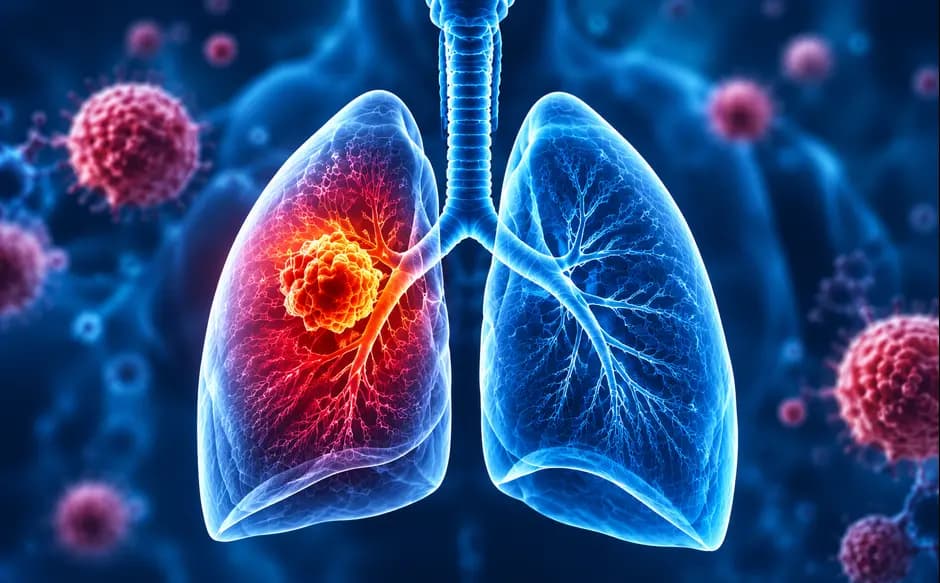
Lung cancer stages range from 0 (earliest) to IV (most advanced), and they tell your doctors how far cancer has spread beyond the lungs. Stage 0 means abnormal cells are present but have not become invasive cancer yet. Stages I and II indicate cancer is confined mainly to the lungs. Stage III means cancer has spread to lymph nodes or nearby tissues in the chest. Stage IV indicates cancer has spread to other organs such as the brain, liver, or bones. Knowing your stage is critical because it guides which treatments your oncologists will recommend, whether surgery, chemotherapy, radiation, targeted therapy, or immunotherapy.
The cancer stage also influences survival statistics, though these are population averages and not predictions for any individual patient. Your doctors will use staging information alongside your overall health, age, and other factors to develop a personalised treatment strategy.
What Do “Stage” and “Prognosis” Actually Mean?
Stage describes how far the cancer has physically spread at the time it's found, whether it's confined to the lung, has reached nearby lymph nodes, or has travelled to distant organs. It's a snapshot taken at diagnosis, not a running score that updates daily.
Prognosis is a forecast, typically expressed as a 5-year relative survival rate, built from how large groups of patients with the same stage have historically fared. It's a statistical guide, not a personal prediction. Two patients with an identical stage can have very different outcomes depending on tumour biology, overall health, and how quickly treatment begins.
How Doctors Stage Lung Cancer: The TNM System Explained
Nearly every hospital worldwide, including BMH, stages lung cancer using the TNM system from the American Joint Committee on Cancer (AJCC), a shared clinical language that keeps a stage III diagnosis in Kozhikode comparable to one in Boston or Dubai.
Tumor (T), Node (N), Metastasis (M)
-
T (Tumor): the size of the primary tumour and whether it has grown into nearby structures.
-
N (Node): whether cancer cells have reached nearby or distant lymph nodes.
-
M (Metastasis): whether the cancer has spread to distant organs such as the brain, bones, liver, or the other lung.
How NSCLC Stages 0–IV Are Built from T, N and M
Non-small cell lung cancer (NSCLC), which accounts for roughly 80–85% of all lung cancers, combines T, N and M scores into an overall stage from 0 (earliest) to IV (most advanced). Stages I, II and III each have sub-stages (for example, IIIA, IIIB, IIIC) that reflect finer differences in tumour size and lymph node spread.
Small Cell Lung Cancer (SCLC): Limited-Stage vs Extensive-Stage
Small cell lung cancer, which makes up the remaining 10–15% of cases, is more often described using a simpler two-tier system: limited-stage (confined to one lung and nearby lymph nodes) or extensive-stage (spread beyond the chest). SCLC tends to grow and spread faster than NSCLC, which is why this simpler, faster-to-apply system is still widely used alongside TNM.
Understanding the Five Stages of Lung Cancer
Lung cancer is classified into five stages, each with distinct characteristics and treatment implications. Below is an overview of how each stage is defined and what it typically means for your care pathway.
| Stage | Description | Typical Location |
|---|---|---|
| 0 | Abnormal cells present, not yet invasive | Inner lining of airways |
| I | Small tumor confined to the lung | One lobe of one lung |
| II | Larger tumor or spread to nearby lymph nodes | One lung with nearby node involvement |
| III | Spread to lymph nodes within the chest cavity | Multiple lymph nodes or chest tissues |
| IV | Spread to other organs (brain, liver, bones, adrenal glands) | One or more distant organs |
Stage I and early-stage II cancers are often treated with surgery to remove the affected portion of lung, sometimes combined with chemotherapy to reduce recurrence risk.
Stage III cancers typically require a combination of chemotherapy and radiation, or chemotherapy followed by surgery if the cancer can be completely removed.
Stage IV lung cancer cannot be cured with surgery alone, so treatment focuses on extending life and managing symptoms, options include targeted therapy if your tumor has a specific genetic mutation, immunotherapy, or chemotherapy. Your oncologist will discuss which approach is most appropriate for your particular cancer type and personal circumstances.


Lung Cancer Survival Rates by Stage
Survival statistics are usually reported using three broader groups, localized, regional, and distant, rather than the full TNM sub-stages, because that's how national cancer registries track outcomes.
According to the American Cancer Society, the 5-year relative survival rate for non-small cell lung cancer falls from 67% when it's localized to just 12% once it has spread to distant organs, a gap that underlines exactly why early detection changes outcomes so dramatically.
| SEER Stage Group | NSCLC 5-Year Relative Survival | SCLC 5-Year Relative Survival |
|---|---|---|
| Localized (confined to the lung) | 67% | 34% |
| Regional (spread to nearby lymph nodes/tissue) | 40% | 20% |
| Distant (spread to other organs) | 12% | 4% |
| All stages combined | 32% | 9% |
What Actually Changes Prognosis Beyond Stage
Stage explains most, but not all, of the picture. Four other factors regularly move the needle:
1. Tumour Biology and Genetic Mutations
Mutations such as EGFR, ALK, and ROS1, along with PD-L1 expression, determine whether a patient is a candidate for targeted therapy or immunotherapy instead of, or alongside, chemotherapy. Patients with an EGFR mutation on targeted treatment have seen median survival extend to well beyond the historical 12-month average for metastatic disease, depending on the specific drug and biomarker profile.
2. Performance Status and Overall Health
A patient's general fitness, measured by how well they carry out daily activities, affects whether they can tolerate surgery, chemotherapy, or radiation, and heavily influences the treatment options a tumour board will even consider.
3. Weight Loss, Age and Comorbidities
Unintentional weight loss of more than 5% of body weight before treatment begins, along with conditions like heart or lung disease, is associated with a less favourable prognosis, independent of stage.
4. Access to Timely, Multidisciplinary Care
Time from a suspicious scan to a confirmed diagnosis, and then to the first treatment, matters. A delayed biopsy, a delayed PET-CT, or a treatment plan made without input from every relevant specialist can quietly shift a patient's outlook, regardless of the stage on paper.
What Makes BMH a Practical Choice for Lung Cancer Care
Choosing a hospital for lung cancer treatment involves more than looking at the name of the institution. Patients and families typically want access to accurate diagnosis, cancer staging, specialist consultations, advanced imaging, pathology, treatment planning, and supportive care within a coordinated system. Baby Memorial Hospital (BMH) brings several of these services together within its multi-specialty hospital setup in Kozhikode.
For patients considering BMH for lung cancer care, some of the relevant advantages include:
-
Multidisciplinary expertise: Lung cancer care may involve pulmonology, medical oncology, radiation oncology, surgical oncology, radiology, pathology, and critical care. Having these specialties within the same hospital can support coordinated evaluation and treatment planning.
-
Diagnostic and staging facilities: Investigations such as CT scans, PET-CT, biopsy, molecular or biomarker testing, and pathology review can help doctors determine the type and stage of lung cancer before treatment is selected.
-
Cancer treatment under one system: Depending on the diagnosis and stage, treatment may involve surgery, chemotherapy, targeted therapy, immunotherapy, radiation therapy, or a combination of approaches.
-
Access to advanced oncology infrastructure: BMH's cancer services include technologies such as TrueBeam radiation therapy and PET-CT, which can play a role in cancer diagnosis, treatment planning, and radiation delivery.
-
Support for complex cases: A large multi-specialty hospital can also provide access to critical care and other medical specialties when patients have additional health needs or require more complex treatment.
For Kerala patients, having these services available in Kozhikode can reduce the need to coordinate every stage of care between separate facilities. Patients travelling from the Gulf or elsewhere may also benefit from BMH's international patient support and its location in Kozhikode, with Calicut International Airport providing access to the region.
Cost is another factor families may consider when comparing cancer treatment options. However, treatment costs vary substantially according to cancer stage, investigations, treatment modality, medicines, hospital stay, and individual clinical requirements. Rather than assuming that one hospital will be cheaper or better suited to every patient, it is more useful to obtain a case-specific treatment estimate and understand exactly what it includes.
Ultimately, choosing a cancer centre should come down to whether the hospital has the specialists, diagnostic capabilities, treatment options, and supportive services appropriate for the individual case. A second opinion for cancer can also be useful when treatment involves major surgery, advanced systemic therapy, or multiple treatment options.
Also Read: Lung Cancer Treatment Cost In India: Complete Guide
Conclusion
Stage remains the strongest single predictor of lung cancer outcomes, but it has never been the only one. Tumour biology, overall health, and how quickly a patient moves from a suspicious finding to a confirmed, multidisciplinary treatment plan all shape prognosis in ways the raw survival statistics can't fully capture.
That's precisely why the diagnostic pathway, not just the treatment itself, deserves as much scrutiny as the stage on the report. Whether a diagnosis has just come in or a scan needs a second look, getting accurate staging and a clear, multidisciplinary opinion early is the single most useful step a patient or family can take next.
Chat with our virtual assistant on WhatsApp for guidance on next steps, or to request a specialist review from BMH's oncology team.
Medical Disclaimer: This article is for general informational purposes only and does not constitute medical advice, diagnosis, or treatment. Lung cancer staging and prognosis vary by individual case. Always consult a qualified oncologist or pulmonologist for evaluation and a personalised treatment plan