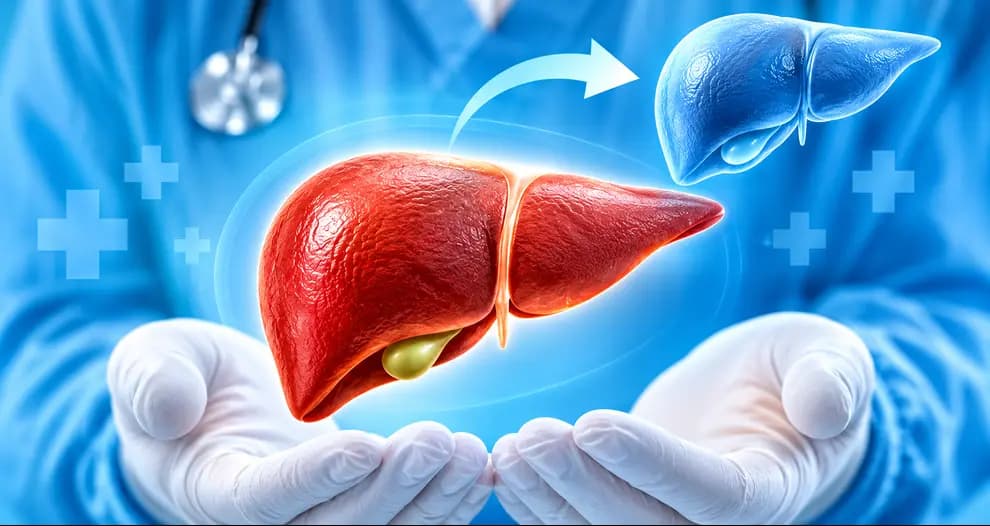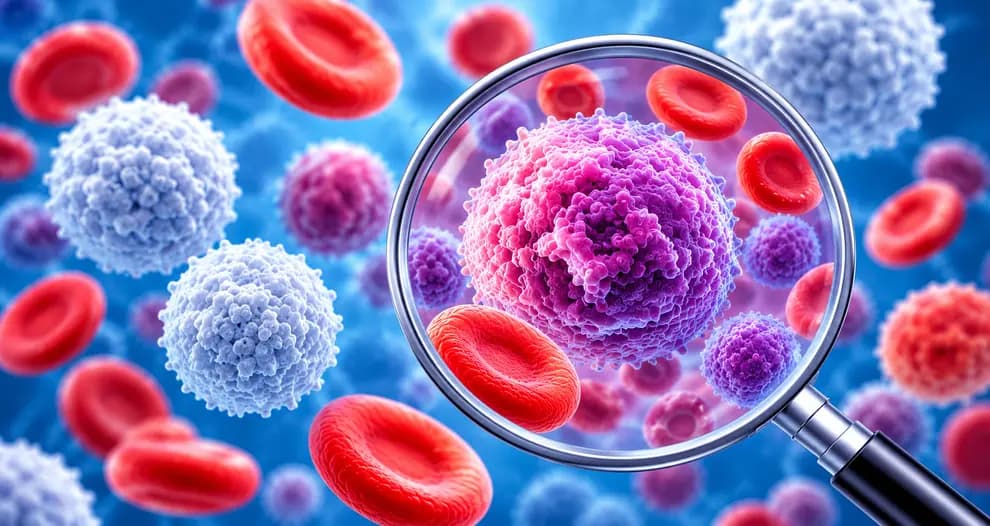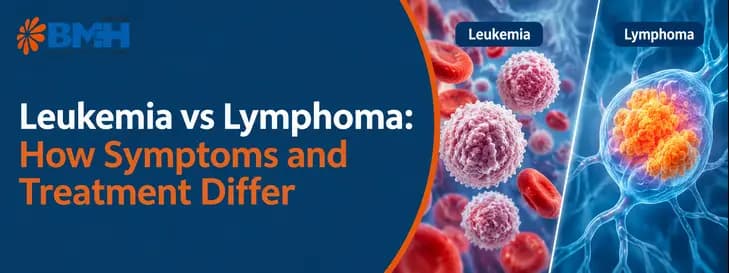

Leukemia and lymphoma are both blood cancers, but they develop in different parts of your immune system and require distinct treatment approaches. Many people confuse these two conditions because they share some overlapping symptoms like fatigue and swollen lymph nodes
Patients often hear one word first and struggle to understand what it means for tests and treatment. This guide explains where each cancer begins, how symptoms and diagnosis differ, what treatment looks like, and what to ask your doctor.
Leukemia vs Lymphoma at a Glance
| Feature | Leukemia | Lymphoma |
|---|---|---|
| Where it starts | Bone marrow, where abnormal white blood cells are made | Lymph nodes and the wider lymphatic system |
| Main spread | Bone marrow and bloodstream; can reach nodes, spleen, liver | Lymph nodes, spleen; can reach bone marrow, lungs, liver |
| Typical first sign | Fatigue, infections, bruising | Painless swollen node, often neck, armpit or groin |
| Usual diagnostic clue | Blood count, bone marrow biopsy | Lymph node biopsy plus imaging |
| Main types | Acute and chronic forms (ALL, AML, CLL, CML) | Hodgkin and non-Hodgkin |
What Is Leukemia?
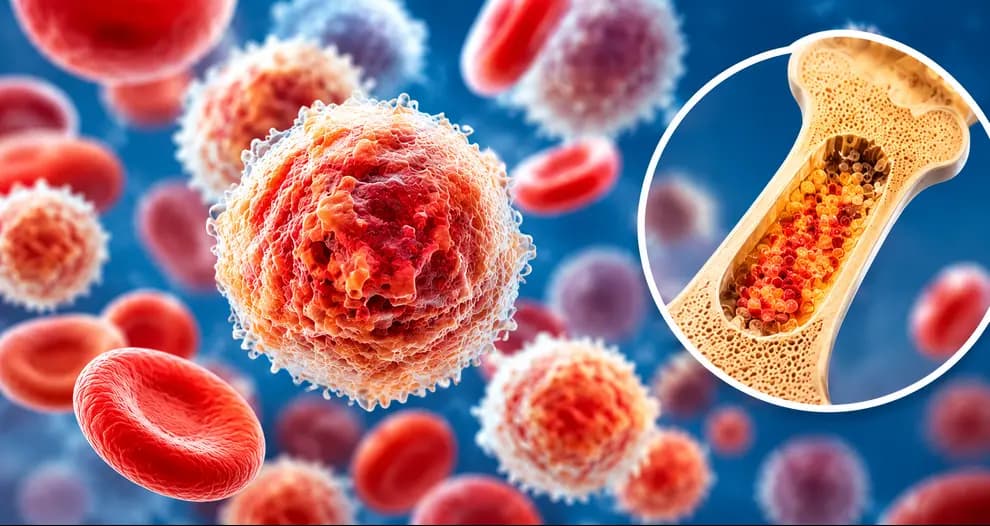
Leukemia happens when the bone marrow makes abnormal white blood cells that don’t work properly. The marrow is the spongy tissue where blood cells are made. As abnormal cells multiply, they crowd the marrow, which leaves less room for the healthy cells that carry oxygen, fight infection and help blood clot. clevelandclinic
Acute vs chronic leukemia
Acute leukemias develop quickly and need prompt treatment. Chronic leukemias often progress slowly, and some patients are monitored for a time before treatment starts. The four main groups are ALL, AML, CLL and CML.
Who gets leukemia?
It affects children and adults. In India, lymphoid leukaemia is the leading childhood cancer site, per ICMR’s National Cancer Registry Programme. Because paediatric and adult leukemia are managed differently, families should look for a centre with a paediatric oncology and transplant service.
What Is Lymphoma?
Lymphoma begins in lymphocytes, the infection-fighting cells that live in lymph nodes and other lymphatic tissue. The body has roughly 400 to 800 lymph nodes, so lymphoma can appear in many places. Abnormal cells build up and can form masses in nodes, the spleen or other tissue. clevelandclinic
Hodgkin lymphoma
Hodgkin lymphoma is marked by Reed-Sternberg cells. It is most often diagnosed between ages 20 and 34, which is why it is often called a young adult cancer. cancer
Non-Hodgkin lymphoma (NHL)
NHL is a larger, more varied group. It can start in nodes or in other lymphatic tissue, including the spleen, tonsils and bone marrow. Because subtypes behave so differently, an accurate pathology report is the most important step in planning treatment.
Symptoms: Where They Overlap and Where They Differ
Both cancers can cause fever, night sweats, weight loss and fatigue. SEER lists fever, weight loss, fatigue and night sweats as Hodgkin lymphoma symptoms.
| Pattern | More typical of leukemia | More typical of lymphoma |
|---|---|---|
| Lymph nodes | Can swell, but not usually the lead sign | Painless swelling that does not go away |
| Blood-related | Frequent infections, easy bruising, paleness | Less prominent early |
| Bones | Bone or joint pain | Less typical |
| Chest/abdomen | Enlarged spleen or liver possible | Chest pain or breathlessness if chest nodes enlarge |
Symptoms alone cannot tell the two apart. Many are also caused by common infections, so the key signals are persistence and pattern: a node that stays swollen for weeks, or fatigue with unusual bruising.


How Doctors Diagnose Each
Diagnosis follows the disease’s location.
For leukemia, doctors usually start with a blood count and examine the marrow. Blood and bone marrow tests are used to diagnose leukaemia, and a sample of marrow is checked for abnormal cells.
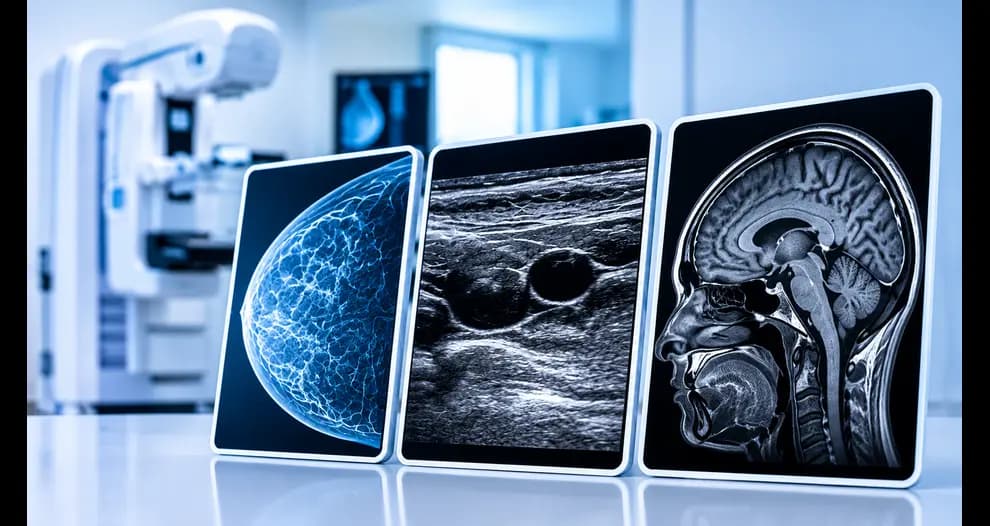
For lymphoma, the standard step is a biopsy of an affected node. One hospital source calls the lymph node biopsy the gold standard, with imaging used to stage the disease and a marrow biopsy in selected cases. renovahospitals
Why a biopsy is non-negotiable: the exact subtype determines the treatment plan. A scan or blood test alone is rarely enough to start therapy.
Treatment Approaches for Leukemia and Lymphoma
Treatment depends on the exact type, stage, age and overall health. Options commonly include:
Chemotherapy: used in both, in different regimens. Targeted therapy and immunotherapy: selected based on the cancer’s biology. Radiation: more often used in lymphoma. Bone marrow (stem cell) transplant: considered for selected patients in both diseases. Transplant may be considered for blood cancers including leukemia and lymphoma, but it is not suitable for every patient.
Haemato-Oncology Care at BMH Kozhikode and Treatment Costs
BMH’s Department of Haematology, Haemato-Oncology and Bone Marrow Transplant manages benign and malignant blood disorders, including blood cancers, through chemotherapy, immunotherapy, targeted therapy and stem cell transplantation.
Treatment planning may involve:
- Personalised treatment: Therapy is selected based on the diagnosis, disease subtype, test results, overall health and response to previous treatment.
- Transplant options: Allogeneic, haploidentical and matched unrelated donor transplants may be considered when clinically appropriate. Paediatric bone marrow transplantation is also listed among BMH’s services.
- Advanced therapies: CAR T-cell and BiTE therapy are listed as areas of expertise in Dr Shinto’s profile; confirm current availability directly with BMH.
- International patient support: English, Malayalam and Arabic language options can help patients travelling from abroad coordinate their care.
Treatment costs depend on the medicines required, chemotherapy cycles, hospital stay and whether transplantation is necessary. Request a written estimate detailing the treatment plan, investigations, medicines and expected additional expenses before proceeding.
Conclusion
Leukemia and lymphoma share a family name but not a starting point. Leukemia begins in the marrow and blood; lymphoma begins in the lymphatic system. That difference drives symptoms, tests and treatment, and it’s why a confirmed diagnosis from the right biopsy matters more than any online guess. If you or a family member has been told one of these words, a hematology team that treats both, with transplant capability when needed, can help you move from uncertainty to a plan. BMH’s haemato-oncology department in Kozhikode is one place to start. Contact BMH to arrange a consultation. Chat with our assistant today!