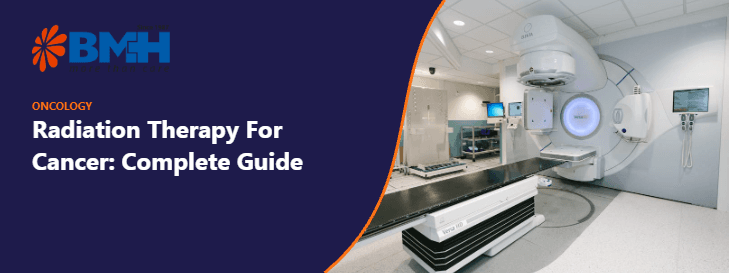

Hearing the words "you may need radiation" can be overwhelming. Yet radiation therapy is one of the most studied, refined and effective tools in modern cancer care. Approximately 50% of all cancer patients receive radiation therapy at some point, and it contributes to nearly 40% of curative cancer treatments worldwide, according to The Lancet Oncology Commission on expanding global access to radiotherapy.
This guide explains, in plain language, how radiation therapy works, the types available in 2026, the step-by-step process, side effects, recovery, costs in India, and the questions every patient should ask before starting treatment.
What is Radiation Therapy for Cancer?
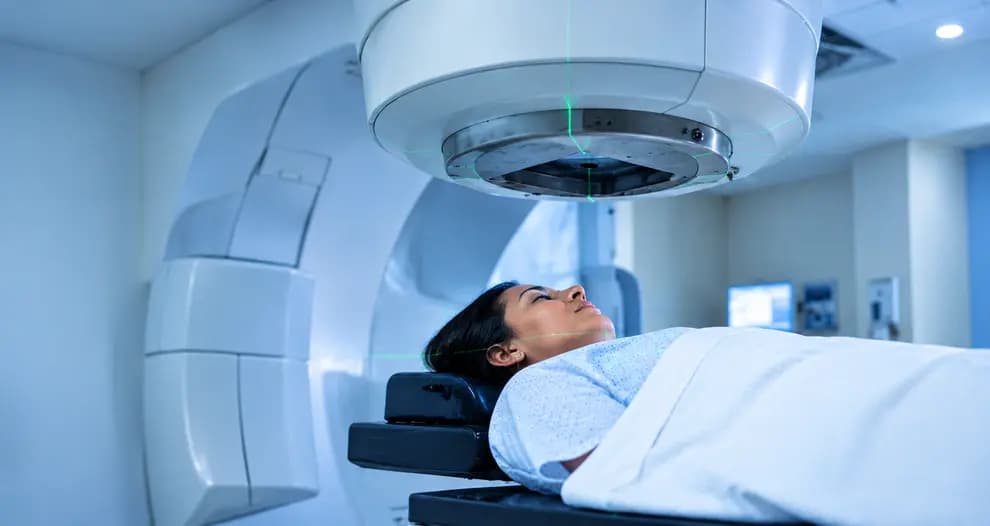
Radiation therapy, often referred to as radiotherapy, is a localized treatment that uses ionizing radiation to destroy the reproductive capacity of cancer cells. While chemotherapy circulates through the entire bloodstream, radiation is "site-specific."
In 2026, the focus has shifted entirely toward Precision Radiotherapy, where the goal is to deliver the maximum lethal dose to the malignancy while ensuring the "Entry" and "Exit" doses through healthy tissue are negligible.
Radiation may be given with four goals:
- Curative: to eliminate the cancer
- Adjuvant: after surgery to kill residual cells
- Neoadjuvant: before surgery to shrink a tumour
- Palliative: to relieve pain, bleeding or pressure
| Treatment | How it acts | Where it acts |
|---|---|---|
| Surgery | Removes tumour | Local |
| Chemotherapy | Kills dividing cells via drugs | Whole body |
| Radiation therapy | Damages cancer-cell DNA | Local / regional |
| Immunotherapy | Activates the immune system | Whole body |
How Does Radiation Therapy Work in the Body?
Radiation creates breaks in cancer-cell DNA. Cancer cells repair poorly and die during division; healthy cells repair faster this difference is called the therapeutic window.
The dose is split into small daily fractions (typically over 3–7 weeks), measured in Gray (Gy). Fractionation maximises tumour kill while letting healthy tissue recover overnight.
However, the treatment approach varies depending on the cancer type, tumour location, stage, and overall treatment goals.
Types of Radiation Therapy for Cancer
Modern radiation oncology uses several highly specialised techniques to deliver radiation with greater precision, fewer side effects, and better tumour control outcomes.
The main types of radiation therapy used in cancer treatment include:
1. External Beam Radiation Therapy (EBRT)
The most common form (~80% of all radiotherapy). Modern sub-techniques include:
- 3D-CRT: beams shaped to tumour outline
- IMRT: modulates beam intensity; standard for head-and-neck, prostate
- VMAT: rotational IMRT, delivered in 2–4 minutes
- IGRT: uses daily imaging for millimetre accuracy
- SBRT/SABR: very high doses in 1–5 sessions for small lung, liver or spine tumours
- SRS: single-session high-dose treatment for brain lesions
2. Internal Radiation (Brachytherapy)
A radioactive source is placed inside or next to the tumour intracavitary (cervix, uterus) or interstitial (prostate, breast). Delivered as HDR (high-dose rate, minutes) or LDR (low-dose rate, days).
3. Systemic Radiation (Radiopharmaceuticals)
Radioactive drugs given orally or by injection e.g., I-131 for thyroid cancer, Lu-177 PSMA for advanced prostate cancer, Lu-177 DOTATATE for neuroendocrine tumours, Ra-223 for bone metastases.
4. Proton Beam Therapy
Uses protons that release most of their energy precisely at the tumour (the Bragg peak), sparing tissue beyond it particularly valuable for paediatric and skull-base cancers.
5. Intraoperative Radiation Therapy (IORT)
A single targeted dose delivered during surgery increasingly used in early-stage breast cancer.
6. Emerging Modalities
FLASH radiotherapy (ultra-fast dose), MR-Linac (real-time MRI-guided treatment) and AI-driven adaptive planning are reshaping precision oncology globally.
Because radiation can be precisely targeted, it plays a role in treating many different types of cancer across the body.
Which Cancers Are Treated With Radiation Therapy?
Radiation therapy can be used alone or combined with surgery, chemotherapy, immunotherapy, or targeted therapy depending on the cancer type and stage.
Some of the most common cancers treated with radiation therapy include:
- Breast (post-lumpectomy / post-mastectomy)
- Prostate (curative EBRT or brachytherapy)
- Lung (SBRT for early stage; chemoradiation for stage III)
- Head and neck
- Cervix (EBRT + brachytherapy is the global standard)
- Brain (SRS, glioma, metastases)
- Rectum (short-course neoadjuvant)
- Lymphomas (involved-site RT)
- Bone and brain metastases (palliative)
Before treatment starts, your care team maps the tumour carefully so radiation can be delivered safely and accurately.
The Radiation Therapy Treatment Process: Step by Step
Radiation therapy follows a planned sequence, from consultation and simulation to daily treatment sessions and follow-up care.
Here is what patients can usually expect during the process:
Step 1. Consultation
A radiation oncologist reviews scans, biopsy and goals of treatment. Bring a list of questions.
Step 2. CT Simulation & Mapping
A planning CT (sometimes with MRI/PET fusion) is taken in your treatment position. Immobilisation devices (masks, vacuum bags, breath-hold) and tiny skin marks ensure daily reproducibility.
Step 3. Treatment Planning (1–2 weeks)
A medical physicist and dosimetrist design a plan that delivers the prescribed dose to the tumour while sparing nearby organs. The plan is verified through quality-assurance checks on the linear accelerator.
Step 4. Daily Treatment
Sessions run Monday–Friday, 15–30 minutes each, for 3–7 weeks (shorter with hypofractionation or SBRT). The radiation itself takes only 2–5 minutes.
Step 5. On-Treatment Reviews
Weekly oncologist reviews and cone-beam CT imaging confirm accuracy and manage side effects early.
Step 6. Follow-Up & Survivorship
First review at 4–6 weeks post-treatment, then every 3–6 months with imaging and labs.
Most side effects of radiation therapy are temporary and manageable, but knowing which symptoms are expected and which require immediate medical attention helps patients feel more prepared during treatment.
Side Effects of Radiation Therapy What's Normal, What's Not
Side effects vary depending on the treatment area, radiation dose, and overall health, but many patients continue normal daily activities during therapy. Here are some commonly expected side effects and warning signs to watch for:
Short-term (acute)
Fatigue, skin redness or peeling, and site-specific effects — mucositis (head-neck), dysphagia (chest), cystitis or diarrhoea (pelvis), hair loss only in the treated field.
Long-term (late)
Fibrosis, lymphedema, fertility changes (pelvic RT), cardiac/pulmonary effects (chest RT), cognitive changes (brain RT), and a small risk of secondary cancers (usually <1%).
Managing side effects
Use fragrance-free emollients, avoid metal-based deodorants in treated areas, protect skin from sun, eat soft high-protein meals, hydrate, and continue light exercise.
Choosing the right radiation oncology centre can directly influence treatment accuracy, safety, comfort, and long-term outcomes during cancer care.
How to Choose a Radiation Oncology Centre?
Not all radiation centres offer the same level of technology, expertise, or multidisciplinary support, so patients should evaluate more than just location or cost.
When comparing radiation oncology centres, consider the following factors:
- NABH or JCI accreditation
- A multidisciplinary tumour board
- Modern linear accelerators with IGRT/VMAT capability
- HDR brachytherapy suite (especially for gynae cancers)
- On-site medical physicist team
- Transparent costs and insurance support
- Survivorship and supportive-care services
Comprehensive cancer centres in India that meet most of these criteria include large tertiary hospitals such as Tata Memorial, AIIMS, Apollo, and Baby Memorial Hospital, Kozhikode, whose Centre for Oncology offers IMRT, IGRT, SBRT, SRS and HDR brachytherapy under one multidisciplinary roof. Always evaluate any centre against the checklist above rather than by reputation alone.
Fear and misinformation often make radiation therapy sound more dangerous than it actually is, which can increase anxiety before treatment begins.
Radiation Therapy Myths and Facts: What Patients Should Really Know
Many common beliefs about radiation therapy are outdated or inaccurate, especially with today’s highly targeted treatment technologies.
Here are some of the most common myths patients hear and the facts behind them:
| Myth | Fact |
|---|---|
| Radiation makes you radioactive | False for EBRT; minor short-term precautions only for some brachytherapy/systemic RT |
| Radiation is painful | The treatment itself is painless |
| You'll lose all your hair | Hair loss occurs only in the treated area |
| Radiation always causes cancer later | Secondary-cancer risk exists but is small and outweighed by curative benefit |
Advanced radiation therapy depends not only on technology, but also on coordinated cancer care, treatment planning accuracy, and long-term patient support.


Advanced Modalities at NAVA Cancer Institute, BMH
Baby Memorial Hospital features a suite of 2026-generation technologies that place it among the top oncology centers in South Asia.
1. Volumetric Modulated Arc Therapy (VMAT)
VMAT is the evolution of IMRT. Instead of the machine stopping and firing from several fixed angles, the LINAC rotates in a continuous 360-degree arc around the patient.
The Benefit: Treatment that used to take 20 minutes now takes less than 3 minutes. This reduces the chance of the patient moving during the dose, which is critical for tumors near the heart or brain.
2. Image-Guided Radiation Therapy (IGRT)
IGRT involves taking a mini-CT scan (Cone Beam CT) while the patient is on the treatment table before the beam is turned on. In 2026, BMH uses Daily IGRT, ensuring that if the patient has lost weight or if their internal organs have shifted slightly, the beam is adjusted in real-time to hit the center of the tumor.
3. Surface-Guided Radiation Therapy (SGRT)
One of the most significant additions to the NAVA Cancer Institute in 2026 is SGRT. Using 3D thermal and optical cameras, the system monitors the patient's skin surface.
Tattoo-less Radiation: Patients no longer need permanent ink marks on their skin.
Automatic Gating: If a patient coughs or moves even 2 millimeters, the radiation beam automatically shuts off in milliseconds, preventing accidental exposure to healthy tissue.
4. Brachytherapy (Internal Radiotherapy)
For gynecological cancers (Cervix and Endometrium), BMH offers High-Dose Rate (HDR) Brachytherapy. This involves placing a temporary radioactive source directly inside the tumor. In 2026, BMH utilizes "Image-Based Brachytherapy," using MRI scans to guide the source placement, resulting in a 20% improvement in local control for cervical cancer.
Why Patients Choose Radiation over Surgery
-
Organ Preservation: In cancers of the larynx (voice box) or rectum, radiation can eliminate the tumor while allowing the patient to speak or move their bowels normally, avoiding permanent stomas or voice loss.
-
Outpatient Convenience: Patients at BMH can typically undergo radiation in the morning and return to work or family activities by the afternoon.
-
No Anesthesia Risk: For elderly patients or those with heart conditions, radiation is the safest path to a cure.
Radiation Oncology at Baby Memorial Hospital: A Closer Look
BMH Kozhikode is one of the few centers in Kerala to achieve the 2026 NABH Digital Health Standards. This means your radiation data, imaging, and AI-planning records are encrypted and accessible via a secure patient portal, allowing for seamless second opinions or follow-ups anywhere in the world.
For patients in Kerala and across South India seeking comprehensive radiation oncology care, Baby Memorial Hospital's (BMH) Centre for Oncology has emerged as one of the region's most equipped multidisciplinary cancer facilities. It checks every box on the vendor-neutral selection criteria outlined earlier in this guide.
Key features of the department include:
- Advanced precision radiation techniques designed to target tumours while minimising exposure to nearby healthy tissue
- A multidisciplinary oncology model where radiation oncologists work alongside medical and surgical oncology teams
- Individualised treatment planning based on cancer type, tumour stage, imaging findings, and patient health status
- Modern imaging and radiotherapy infrastructure, including the Varian TrueBeam Radiotherapy System for image-guided precision treatment
- Support for multiple cancer types requiring external beam radiation therapy and combined-modality treatment approaches
- Dedicated international patient assistance for treatment coordination, travel support, accommodation, and follow-up care.
If you are weighing where to undergo radiation therapy, the questions worth asking any centre including BMH, are the ones from the checklist above: Is the accelerator IGRT-capable? Is there a tumour board? Is HDR brachytherapy available on site? Is supportive care integrated?
At BMH's Centre for Oncology, the answer to each is yes, which is why it is increasingly chosen by patients seeking modern, protocol-driven cancer care without travelling out of Kerala.
To learn more or book a radiation oncology consultation, visit the Baby Memorial Hospital Centre for Oncology or speak directly with our oncology coordinator.
Conclusion
Radiation therapy has evolved from broad 2D fields to millimetre-precise, AI-planned, image-guided treatment that cures or controls cancer for millions of patients each year while sparing far more healthy tissue than before.
Whether you ultimately choose a national centre like Tata Memorial or AIIMS, or a regional comprehensive centre like Baby Memorial Hospital's Centre for Oncology in Kozhikode, the right questions and the right multidisciplinary team make the biggest difference to outcomes and quality of life. If you're based in Kerala or South India, BMH is a strong place to start that conversation. Book an appointment today!
This article is for general educational purposes only and is not a substitute for professional medical advice, diagnosis or treatment. Always consult a qualified oncologist for guidance specific to your condition.